2025 K-State AI Symposium: Humans and the Machine
Oct. 14-16, 2025
The K-State AI Symposium is a three-day event featuring a variety of panels, lightning talks and workshops. It offers a way for the K-State and Manhattan communities to expand their knowledge of AI. Participants will learn about recent advances in AI; how AI can be used for educational purposes; AI applications in various disciplines, including agriculture, engineering and the humanities; as well as some of the ethical issues surrounding AI.
Email Dr. Raelynne M. Hale at raehale@k-state.edu for more information or with questions related to the symposium.
Charles Elkan
Charles Elkan is an affiliate professor of computer science at the University of California, San Diego, where for many years he was a full-time senior professor. Currently, he is a venture partner at Fellows Fund and the chief scientist of Poesis AI. Until 2020, he was a managing director and the global head of machine learning at Goldman Sachs, while from 2014 to 2018 he was the first Amazon Fellow, leading scientists and engineers in Seattle, Palo Alto and New York doing research and development in machine learning for both e-commerce and cloud computing. He earned his Ph.D. at Cornell University and his undergraduate degree at Cambridge University. His students have gone on to professorships at universities that include Columbia and Carnegie Mellon, and to central roles in industry, including as vice president for post-training at OpenAI and as president of Android at Google.
Soumik Sarkar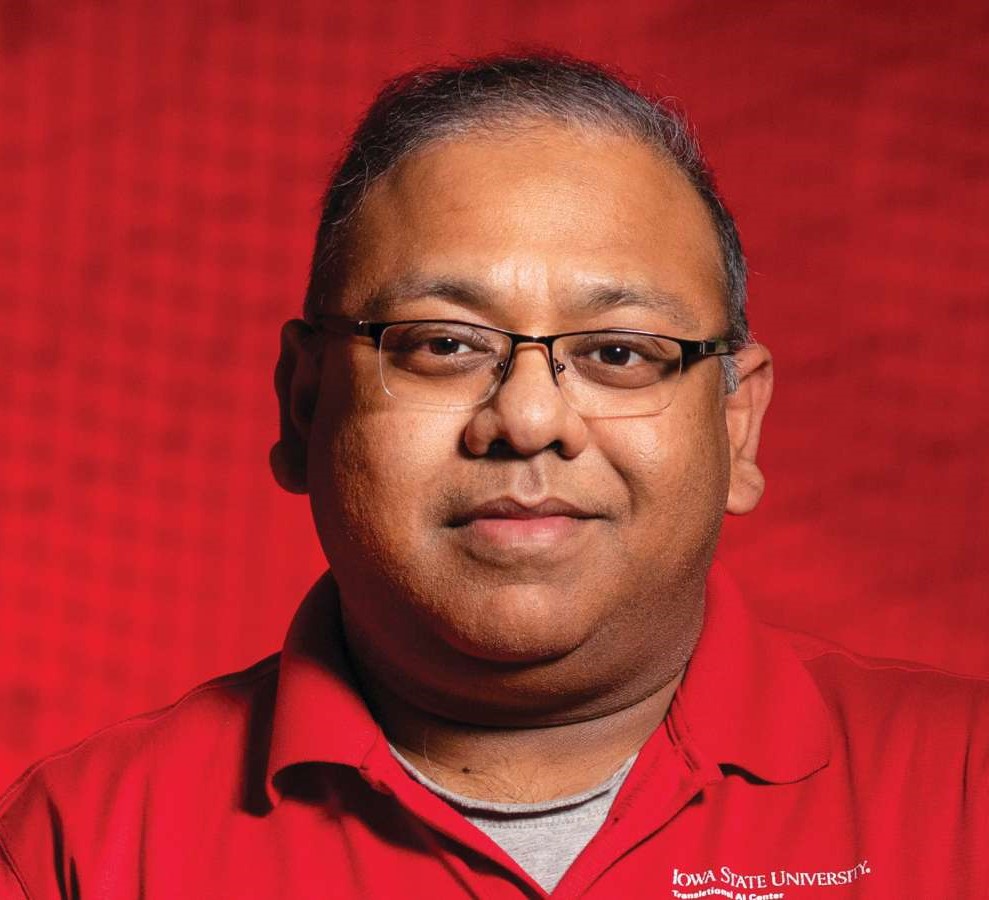
Soumik Sarkar is the director of the Translational AI Center at Iowa State University and the associate director of the NSF/USDA-NIFA AI Institute for Resilient Agriculture (AIIRA). He is a professor of mechanical engineering and computer science, and his research focuses on developing AI and machine learning algorithms for cyber-physical systems with applications to manufacturing, transportation and agriculture. He co‐authored more than 310 peer-reviewed publications and is a recipient of several prestigious honors, including the NSF CAREER Award, the AFOSR Young Investigator Program (YIP) Award and the Presidential Early Career Award for Scientists and Engineers (PECASE).
Learn more about Sarkar’s work.
Rocki Wentzel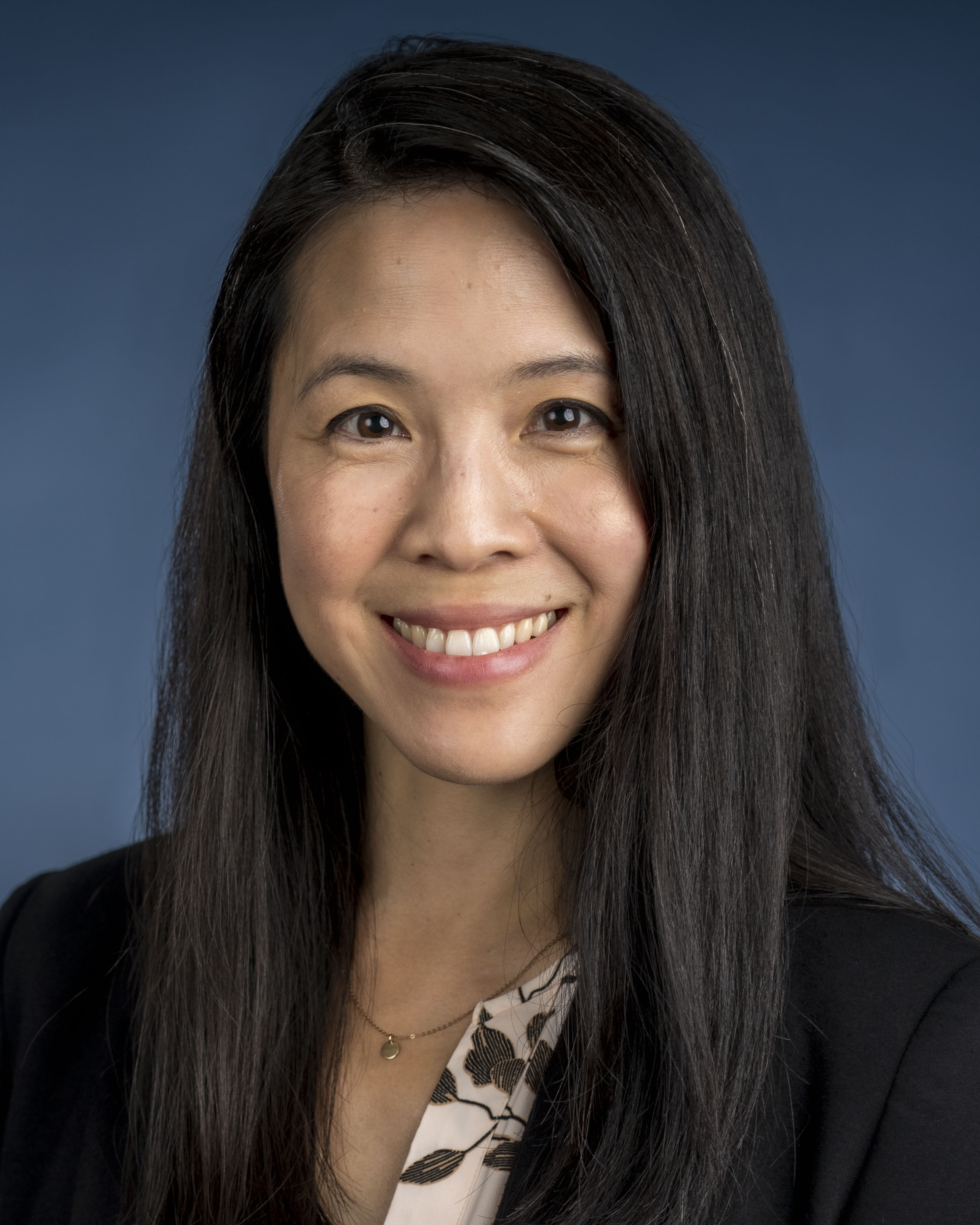
Rocki Wentzel is a professor of classics at Augustana University in Sioux Falls, South Dakota. In the past few years, her work has focused on resonances of Greco-Roman myths in narratives about technology, particularly in film. Her recent publications include a chapter on technological heroes in “Artificial Intelligence in Greek and Roman Epic” (Bloomsbury, 2024), an essay on robots and cyborgs in antiquity for Oxford Classical Dictionary (2023) and an article on Spike Jonze’s 2013 film “Her” in New Voices in Classical Reception Studies (2020). She also teaches freshman seminars and honors courses that explore narratives of technology.
View Wentzel’s university bio.
Brett Karlan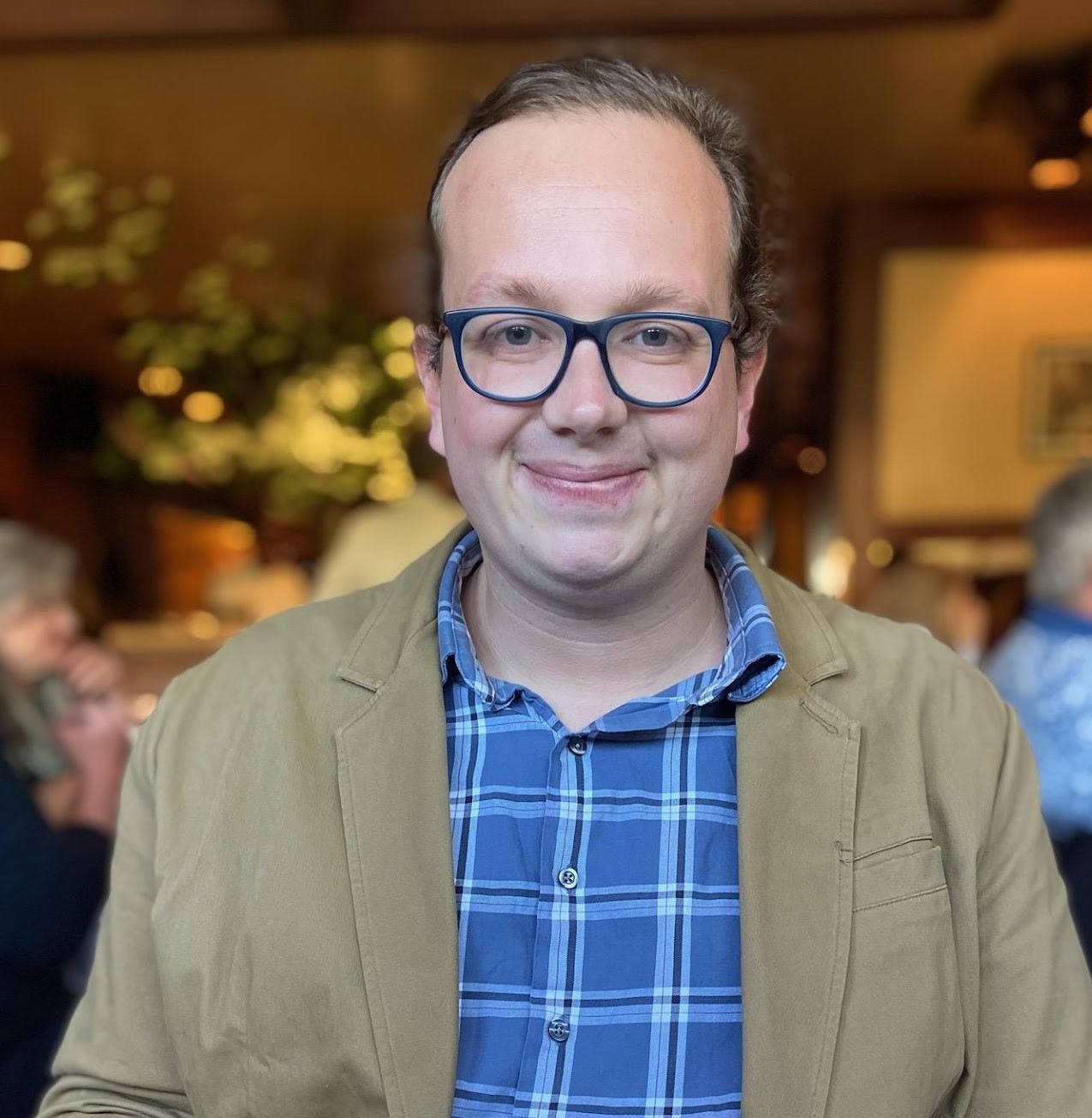
Brett Karlan is an assistant professor of philosophy at Purdue University. He received his Ph.D. from Princeton University and was a postdoctoral fellow at the University of Pittsburgh and at Stanford University. He works on questions in the philosophy of cognitive science (especially psychology and artificial intelligence research) and in normative philosophy (especially epistemology and ethics). His work has been published in Philosophy & Phenomenological Research; the Australasian Journal of Philosophy; Synthese; Ratio; the Journal of Experimental and Theoretical Artificial Intelligence; and Ethics and Information Technology, among other venues. He is a co-primary investigator with Colin Allen on an active Templeton World Charity Foundation grant investigating group rationality, especially in human-AI systems.
Schedule and recordings
|
8 a.m., Hale Library, first-floor entrance Welcome Table and Coffee (Sponsored by ID3A) |
|
8:45-9 a.m., Hale Library, Room 581 (in person and streamed on Zoom) Opening Remarks by President Linton |
|
9-10:30 a.m., Hale Library, Room 581 (in person and streamed on Zoom) Opening Keynote: Large Language Models and Human Cognition Speaker: Dr. Charles Elkan, Venture Partner (Fellows Fund) Session type: Opening Keynote Description: Large language models (LLMs) have remarkable capabilities, but they make mistakes that seem surprisingly elementary. For example, one of today's best LLMs says, "A word like delicious but with one letter different is vicious." Other state-of-the-art LLMs make similar mistakes. I will argue that LLM failures are understandable given the fundamental techniques on which LLMs are built, namely tokenization, transformers, pretraining and alignment. I will then discuss how the failure modes of LLMs are similar to known failure modes of human thought, and how each of the four central techniques has an analog in human cognition and learning. Moving on to multimodal models and the latest agentic and reasoning models, I will explain how similar analysis applies to them also. The discussion will lead to three conclusions: human cognition is based on processing similar to that done by LLMs; human-level artificial intelligence is hence in reach; but superintelligence, for common meanings of that word, is not on the horizon. Watch the recording of Opening Keynote: Large Language Models and Human Cognition |
|
10:30-10:45 a.m. Break |
|
10:45 a.m.-Noon, Hale Library, Room 581 (in person and streamed on Zoom) AI Innovations in Agriculture and Food Science Moderated by: Nick Chong - Venture Partner, Fellows Fund Panelists: Dr. Fengmin Gong, CEO, founder, Metafoodx; Gabe Sibley, CEO, founder, Verdant Robotics; Klaus Mager, CEO, Food with Thought; Brian Moore, CEO, Voxel 51 Session type: Panel Description: Agriculture and food science are rapidly evolving, with AI, precision farming, sustainable practices, and new food technologies transforming how we grow and consume. This panel highlights industry breakthroughs from smarter, AI-powered tools that help farmers adapt to climate challenges to innovations that reduce waste and improve nutrition—showing how science and AI are shaping a more resilient and sustainable future for good. Watch the recording of AI Innovations in Agriculture and Food Science |
|
Noon-1 p.m. Lunch Break (Lunch not provided) |
|
1-2:30 p.m., Hale Library, Room 581 (in person and streamed on Zoom) Keynote: Role of AI in Cyber-Agricultural Systems Speaker: Dr. Soumik Sarker, Director of the Translational AI Center at Iowa State University Session type: Keynote Description: One of the grand challenges of our generation is to get ready to feed nine billion people by 2050 with sustainable use of water and chemicals. However, our current agricultural system is not prepared for it. We are facing unprecedented challenges in adopting sustainable management practices, increasing production and coping with pest and climate stressors that threaten yield, while running a profitable farm operation. With changing climate, our crops are facing deadly biotic and abiotic stresses and diseases. However, to tackle this, we use chemicals indiscriminately, most of which goes to our rivers and water systems, creating dead zones in the river downstream. The harmful chemical run-off increases due to soil compaction which is a direct consequence of using heavy equipment. In this talk, I will share our vision for a new cyber-agricultural system that enables ultra-precision technologies to monitor plants or small plots individually and treat them with minimal chemical input. This approach lowers barriers to entry into agriculture, improves safety and reduces runoff and soil compaction. AI and machine learning play a central role in realizing this vision, and I will highlight recent success stories — from ag foundation models for biotic stress monitoring, to agricultural reasoning models, to advances in AI-enabled agricultural robotics. Watch the recording of Role of AI in Cyber-Agricultural Systems |
|
2:30-2:45 p.m. Break |
|
2:45-4 p.m., Hale Library, Room 581 (in person and streamed on Zoom) Digital Agriculture and AI Chaired by: Ajay Sharda, Kansas State University Panelists: Soumik Sarkar, Iowa State; Yiannis Ampatzidis, University of Florida; Bob Pitzer, Harvest CROO Robotics; Kiju Lee, Texas A&M; Steven J. Thomson, USDA-NIFA Session type: Panel Watch the recording of Digital Agriculture and AI |
|
4-4:15 p.m., Hale Library, Room 581 (in person and streamed on Zoom) T-Shirt Design Award Watch the recording of T-Shirt Design Award |
|
4:30-5:45 p.m., Hale Library, first floor, *IN-PERSON ONLY* Student Research in AI Poster Session and Coffee Break (Sponsored by ID3A) Featuring undergraduate and graduate research in artificial intelligence. |
|
6-7:00 p.m. Dinner Break (Dinner not provided) |
|
7-8 p.m., Manhattan Public Library, second-floor auditorium *IN-PERSON ONLY* SPECIAL SESSION: Community Conversation on AI in Our Lives Panelists: Bruce Glymour (philosophy, Kansas State University), Safia Malallah (computer science, Kansas State University), Rocki Wentzel (classics, Augustana University), Cody J. Wassenberg (IT manager, Manhattan Public Library), Gwen Sibley (scholarly communication and data librarian, Kansas State University), Sanaz Saki Norouzi (Graduate Student in Computer Science) Description: As part of the symposium, join us at Manhattan Public Library for a lively town hall-style community conversation featuring a panel of technology experts and humanities scholars. The discussion will explore how artificial intelligence is shaping our lives today — from the classroom to the workplace to the arts — and what it might mean for our future. Panelists will share their insights, answer audience questions and engage in an open dialogue about both the opportunities and challenges AI presents. Whether you’re curious, cautious or simply want to learn more, this event offers an accessible way to hear from experts, share your perspective and better understand the rapidly changing world of AI. |
|
8 a.m., Hale Library, first-floor entrance Welcome Table and Coffee (Sponsored by the College of Arts and Sciences) |
|
9-10 a.m., Hale Library, Room 581 (in person and streamed on Zoom) *DUAL SESSION* Building the Future: K-AIRES and the Next Wave of Immersive Intelligence A joint presentation by Kansas State University Salina and Pure Imagination Studios Panelists: Michael Oetken (assistant professor and director of K-AIRES Center, K-State Salina), Troy Harding (Distinguished Professor and department head of integrated studies, K-State Salina) and Joshua Wexler (CEO and co-founder of Pure Imagination Studio) Session type: Panel Description: This presentation brings together faculty from Kansas State University Salina and executive leaders from Pure Imagination Studios to share the story behind the formation of the K-AIRES Research Center — a groundbreaking collaboration at the intersection of academia and industry. Presenters will explore how the partnership was developed, the strategic vision guiding the center and the cutting-edge immersive technologies that power its mission. Attendees will gain insight into how artificial intelligence is being integrated into next-generation immersive training simulations, educational platforms and entertainment experiences, positioning K-AIRES as a catalyst for shaping the future of spatial computing and intelligent media design. Watch the recording of Building the Future: K-AIRES and the Next Wave of Immersive Intelligence |
|
9-10 a.m., Hale Library, Room 181 (in person and streamed on Zoom) *DUAL SESSION* Human-Powered Learning in Digital Spaces Panelists: Andie Faber (associate professor of modern languages, Kansas State University), Beth Pesnell (teaching assistant professor, College of Education, Kansas State University), Christina van Ittersum (accessibility-focused instructional designer, Center for Academic Innovation, Kansas State University) Session type: Panel Description: In this new era of generative AI, many educators across disciplines are finding themselves overwhelmed and wondering how they can assess their students' learning, rather than AI capabilities. In this panel, each panelist will present a tool and/or set of practices that educators can use to promote deep learning as well as judicious, intentional, and appropriate implementation of digital tools. Attendees will come away from this panel with concrete strategies that they can immediately implement in their own teaching contexts, whether they teach online or in person. |
|
10-10:15 a.m. Break |
|
10:15-11:45 a.m., Hale Library, Room 581 (in person and streamed on Zoom) *DUAL SESSION* Widening Participation in Artificial Intelligence: AI for Good and the Future of Work Presenters: William H. Hsu (Kansas State University), Andrew Hundt (Carnegie Mellon University), Georgina Curto (Notre Dame University), Jessica Elmore (Council for Advancement and Support of Education), Hau Chan (University of Nebraska-Lincoln) Session type: Workshop Description: This workshop aims at discussing near-term, actionable goals for effective education and outreach regarding artificial intelligence (AI) as a ubiquitous and powerful technology — specifically, coping with the high adoption rate and industrialization of AI and its present and incipient impacts. The focus will be a discussion on the future of work and human-beneficial, sustainable uses of AI and what potential the technology holds for human-compatible uses. Recent surges in automation of physical and intellectual tasks brought by adoption of generative and agentic intelligent systems pose both an opportunity for social and economic change, and risks and harms due to wide-scale use of the technology without commensurate education and preparation for its use. Ideas, questions feedback, challenges, and concerns for discussion and debate are welcome. The workshop will consist of short, invited talks and a panel on widening participation in AI from a wide range of stakeholders. Watch the recording of Widening Participation in Artificial Intelligence: AI for Good and the Future of Work |
|
10:15-11:45 a.m., *ZOOM ONLY* (Hale Library, Room 108 viewing room for in-person participants) *DUAL SESSION* Emerging AI Applications: Graduate Student Research from Salina Moderator: Michael J. Pritchard, assistant professor of machine learning and autonomous systems, K-State Salina Panelists: Graduate Students from K-State Salina’s integrated systems design and dynamics (ISDD) graduate program Session type: Graduate Student Panel Description: This session spotlights AI research conducted by graduate students at K-State Salina. Student presenters will share their work on diverse applications of artificial intelligence, including aerospace systems, predictive modeling, defense technologies and human-machine teaming. Each presentation will highlight not only the technical methods used — such as machine learning, natural language processing and simulation-based design — but also the real-world impact of the research. The session is designed to provide an open forum for discussion and collaboration, allowing faculty, industry and fellow researchers to engage with the next generation of AI innovators. By showcasing the breadth of student projects, the session underscores Salina’s growing role in applied AI research and its integration with industry and defense partnerships. Audience members will leave with a deeper appreciation for both the creativity and rigor of graduate student work in AI. |
|
11:45 a.m.-1 p.m. Lunch Break (Lunch not provided) |
|
Noon-1 p.m., *ZOOM ONLY* (Hale Library, Room 108 viewing room for in-person participants) SPECIAL LUNCH SESSION: Professional development series presentation sponsored by K-State's Teaching and Learning Center (TLC). No registration is needed for this session. Just click on the link above to join. Presented by Cydney Alexis and Theresa Merrick Cassidy in partnership with the Teaching and Learning Center |
|
1-2 p.m., Hale Library, Room 581 (in person and streamed on Zoom) Live Debate: AI and the Workforce Debaters: Session type: Live Debate Description: K-State debaters have been discussing labor policy with their peers across the country. They will showcase their skills in a live public debate on the merits of AI. Debaters will engage in a brief, live debate on the topic: "AI is more beneficial than not for workers." Following the debate, faculty and others will be welcome to question the debaters about their positions and the debate in a cross-examination period following the debate. Watch the recording of Live Debate: AI and the Workforce |
|
2-2:15 p.m. Break |
|
2:15-3:45 p.m., Hale Library, Room 581 *IN-PERSON ONLY* Your Career Startup in the Age of AI Presenters: Bryce Huschka, Founder of Skill X, and Skill Guru, AI-Powered Career Accelerator Session type: Interactive AI x Career Session Description: "Your Career in the Age of AI" is not just another session — it’s a launchpad for students, educators and alumni alike. Guided by K-State’s Skill X framework and Skill Guru’s AI-powered facilitation, this interactive experience explores how AI is transforming the way we learn, teach and design careers. Through live demos and hands-on career design sprints, participants will experiment with practical ways to integrate AI into career development, education and lifelong learning. Whether you’re a student mapping your first steps, a faculty member reimagining how to teach or research with AI, or an alum navigating a career pivot, this session will push you to move beyond “What job should I get?” and start asking “What future can I build with AI at my side?” |
|
3:45-4 p.m., Hale Library, Room 581 gallery Coffee Break (Sponsored by the College of Arts and Sciences) |
|
4-5:30 p.m., Hale Library, Room 581 (in person and streamed on Zoom) Keynote: Human Agency in Narratives of Technology Speaker: Dr. Rocki Wentzel, Classics Professor at Augustana University Session type: Keynote Description: Many of the chief concerns surrounding AI and our humanity — questions of agency, identity and the limits of knowledge — are ones that have occupied us since antiquity and have been at the heart of many narratives since then. By exploring recent films about technological subjects alongside Greco-Roman myths such as Pygmalion, Narcissus, and Orpheus, this talk will consider what our narratives about technology reveal about our values, desires and anxieties and will offer the hopeful perspective that even in the face of rapid technological change, we may not be so quick to surrender our agency as we sometimes fear. Watch the recording of Human Agency in Narratives of Technology |
|
8 a.m., Hale Library, first-floor entrance Welcome Table and Coffee (Sponsored by the College of Arts and Sciences) |
|
9-10 a.m., Hale Library, Room 581 (in person and streamed on Zoom) Agency in Education: Students' Perspectives on AI Moderator: Daniel Robertson (president of ACM SIGAI, undergraduate student, computer science) Panelists: Student members of K-State's ACM Special Interest Group on Artificial Intelligence (ACM SIGAI) Session type: Student Panel Description: A panel of five students will be asked engaging questions about their feelings regarding AI and their role as AI develops. The panel will discuss topics related to AI's use in education, the workforce and daily life. Join us for an important exposé into the pulse of student opinions on AI. Watch the recording of Agency in Education: Students' Perspectives on AI |
|
10 a.m.-1:15 p.m., Hale Library, Sunderland Foundation Innovation Lab Crafting Better Images: How Does Old-school Collage Create Better AI images? Facilitator: Kim Belanger, Head of Education and Outreach at the Beach Museum Session type: Drop in hands-on activity Description: Come by anytime during this session to participate in a hands-on activity! Images of AI have been criticized as being too futuristic, robotic, or misrepresentational of users. This activity station is centered around the idea that humans with lived experiences are behind AI images, not robots. Join the Beach Museum of Art in a hands-on art project where we'll make representational collages old-school style: with scissors, magazines, and glue sticks. Reactivate your imagination as you play and consider how art-making connects us to authentic visual imagery, leading ultimately to better AI images. |
|
10-10:15 a.m. Break |
|
10:15-11:15 a.m., Hale Library, Room 581 (in person and streamed on Zoom) *DUAL SESSION* Redefining Academic Integrity: AI, Cheating, and the Future of Assessment Panelists: Lotta Larson, professor, curriculum and instruction, Kansas State University, and Tom Vontz, professor, curriculum and instruction, Kansas State University, Drew Bradshaw, EdD student at K-State in Curriculum & Instruction with an emphasis in Educational Technology, Maddie Windsor, MS student at Western Governors in Educational Technology and Instructional Design Session type: Panel Description: As generative AI tools like ChatGPT and Claude become widely accessible, higher education faces renewed challenges around academic integrity. While concerns about student cheating are not new, AI introduces innovative, hard-to-detect methods for misrepresentation, such as generating essays, solving problems or rewording sources to evade detection. This session addresses both the "why" and the "how" of AI-enabled academic dishonesty, grounding the conversation in research on student motivation, pressure, and perceptions of fairness. More importantly, we will shift the focus from policing to designing. How can faculty create assignments that make the most of AI's capabilities without reducing students to passive consumers of machine-generated answers? Through real-world examples and collaborative discussion, this session will explore assignment designs that encourage students to use AI as a tool for ideation, analysis, reflection and creativity rather than substitution. We will also examine the growing use of AI syllabus statements: What messages do these policies send to students, and how effective are they in practice? Are they deterrents, invitations for dialogue or missed opportunities for modeling responsible AI use? Participants will leave with practical strategies for rethinking assessment, promoting academic honesty, and equipping students to navigate AI ethically and productively in academic settings. Watch the recording of Redefining Academic Integrity: AI, Cheating, and the Future of Assessment |
|
10:15-11:15 a.m., Sunderland Foundation Innovation Lab, first floor, Hale Library, *DUAL SESSION* *IN-PERSON ONLY* SPECIAL SESSION! Tour the Sunderland Foundation Innovation Lab and Experience the Salina Robotics Lab’s On-the-Road Robotics Description: Step into a world of limitless possibilities. The Sunderland Foundation Innovation Lab offers K-State students, staff, faculty and the community the opportunity to unleash their imagination and use the latest innovative technologies. In this tour, explore the AI Studio, Fabspace, Makerspace, Immersion Studio and more! As a special treat, visiting from K-State's Salina Campus, the Salina Robotics Lab will have some of their robotics on display! Come talk to experts about their robotics and the Sunderland Foundation Innovation Lab! |
|
11:15-11:30 a.m. Break |
|
11:30 a.m.-Noon, Hale Library, Room 581 (in person and streamed on Zoom) The Museum of Art + Light at the Intersection of Visual Art, Creative Practice and Technology Presenter: Kristy Peterson, VP of learning, engagement and visitor experience, Museum of Art + Light Session type: Presentation Description: This presentation will provide a brief introduction to the Museum of Art + Light’s mission which is at the intersection of creative practice, contemporary visual art and technology. Learn more about how MoAL works with contemporary digital artists and designs and how the museum presents immersive multi-sensory exhibitions (created in-house by their own team of motion graphics animators). Examples of ways the museum is working with high school students and K-State students and faculty to explore career paths in museums/the arts and other disciplines will also be shared. Watch the recording of The Museum of Art + Light at the Intersection of Visual Art, Creative Practice and Technology |
|
Noon-1:15 p.m. Lunch Break (Lunch not provided) |
|
1:15-2:15 p.m., Hale Library, Room 581 (in person and streamed on Zoom) *DUAL SESSION* AI-Driven Systems Design: Bridging Academia, Industry, and Defense Panelists: Michael J. Pritchard (assistant professor, machine learning and autonomous systems K-State Salina), Austin T. Walden (assistant professor, machine learning and autonomous systems K-State Salina), and Balaji Balasubramaniam (assistant professor, cyber systems design and dynamics, K-State Salina) Session type: Panel Description: Artificial intelligence is rapidly transforming the way systems are designed, operated and optimized. This session explores how K-State’s integrated systems design and dynamics (ISDD) graduate program leverages AI and systems thinking to address challenges faced by industry, defense and government partners. We will examine how AI is being applied in aerospace, defense logistics and engineering design, while also highlighting the unique role of Salina in shaping interdisciplinary solutions. Participants will gain insights into emerging research directions, educational pathways and industry partnerships that prepare the next generation of professionals for an AI-enabled future. The session will emphasize not just the technology, but also the integration of people, processes and platforms that make AI impactful in real-world contexts. Watch the recording of AI-Driven Systems Design: Bridging Academia, Industry and Defense |
|
1:15-2:15 p.m., Hale Library, Room 181 (in person and streamed on Zoom) *DUAL SESSION* What We Learned: Integrating AI/ML into Engineering Education Panelists: Anna Iskhakova, research assistant professor, Kansas State University; Helal Uddin, teaching associate professor, Kansas State University; Vaishali Sharda, associate professor, Kansas State University; Husain Aziz, associate professor, Civil Engineering Dept., Kansas State University; and a few K-State students Session type: Panel Description: This panel brings together faculty, students and an invited expert to reflect on lessons learned from integrating artificial intelligence (AI) and machine learning (ML) tools into engineering education. Over the past academic year, participants in the College of Engineering’s faculty learning community have explored practical strategies, tools and pedagogical approaches for incorporating AI/ML into the classroom. The session aims to share these experiences broadly with the K-State community, encouraging dialogue and collaboration across disciplines. Attendees will leave with actionable ideas for responsibly and effectively incorporating AI/ML into their teaching practice. The panel will also foster connections among educators interested in collaborative innovation. |
|
2:15-2:30 p.m. Break |
|
2:30-3:30 p.m., Hale Library, Room 581 (in person and streamed on Zoom) *DUAL SESSION* AI Applications for Safeguarding Biological Data and Older Adults' Wallets Panelists: Shing Chang (Kansas State University), Xiaolong Guo (Kansas State University), Yonghui Li (Kansas State University), and Erin Martinez (Kansas State University) Session type: Panel Description: This session consists of research conducted on two NSF-funded projects. The first project aims to safeguard AI in bioinformatics, while the second studies the socio-economic factors of older adults regarding using digital devices and apps with the intent of empowering them to prevent financial fraud. We plan to have three 15-minute talks about each topic followed by 15 minutes of Q&A and discussions. Watch the recording of AI Application for safeguarding Biological Data and Older Adults' Wallets |
|
2:30-3:30 p.m., Hale Library, Room 181 (in person and streamed on Zoom) *DUAL SESSION* Using AI to Build Practical and Dynamic Instructional Resources Session type: Demo Presenters: Tom Vontz, professor, curriculum and instruction, Kansas State University; and Lotta Larson, professor, curriculum and instruction, Kansas State University, Drew Bradshaw, EdD student at K-State in Curriculum & Instruction with an emphasis in Educational Technology, Maddie Windsor, MS student at Western Governors in Educational Technology and Instructional Design Description: AI isn't just transforming assessment it's reshaping how instructors design and deliver content. This 60-minute session focuses on practical, high-impact ways faculty can use generative AI to produce instructional resources that save time, increase accessibility and enhance student engagement. Whether you're preparing for online, hybrid or in-person learning, AI can help create dynamic, multimodal tools that better meet students where they are. We will explore three common and valuable formats: interactive study guides, AI-enhanced simulations and recorded microlectures. Participants will see live demonstrations of how tools like ChatGPT, Gamma, Pika Labs and others can assist in creating visually rich study aids, short-form video lectures with AI narration and branching scenario simulations for deeper learning. Participants will be introduced to a suite of generative AI tools and walk through real-world examples of faculty-created instructional products. In addition to reviewing key tools and techniques, the session will explore the pedagogical benefits and potential limitations of AI-generated content. Participants will leave with ready-to-use examples, templates and clear next steps for incorporating AI into their course design.Watch the recording of Using AI to Build Practical and Dynamic Instructional Resources |
|
3:30-3:45 p.m., Hale Library, Room 581 gallery Coffee Break (Sponsored by the College of Arts and Sciences) |
|
3:45-4 p.m., Hale Library, Room 581 (in person and streamed on Zoom) Closing Remarks by Dean of K-State Libraries, James Wiser |
|
4-5:30 p.m., Hale Library, Room 581 (in person and streamed on Zoom) Keynote: Reflective Equilibrium as a Method of Inquiry in Technology Ethics Speaker: Dr. Brett Karlan, Purdue University Session type: Keynote Description: The method of reflective equilibrium (RE) is primarily taken to be a method of justification for our beliefs, especially our normative beliefs. In virtue of bringing considered judgments into coherence with normative principles, RE claims those judgments and principles thereby both gain some positive epistemic status. Though the justificatory reading of RE is by far the most common, it is not the only possible way to use the method. Revisiting an influential early paper on RE (Daniels, 1979) reveals another possible use: RE as a method of inquiry. I argue that RE represents a plausible norm for intellectual inquiry, especially in normative domains, over and above its role in justifying particular beliefs. In particular, I argue that RE is a deeply important norm for non-ideal inquirers attempting to learn normative truths when they do not have access to true normative first principles. To demonstrate this claim, I consider a case study in detail: debates about the proper role of AI ethics principles in technology ethics (e.g. Hagendorff, 2020; Whittlestone, et al., 2019). The resulting argument is in direct contrast to a standard objection to RE, which claims that RE is far too intellectually demanding for non-ideal agents to use. In contrast, I show in this paper how RE, in conjunction with reasonable norms for evidence gathering, represents one of the few paths forward for moderately rational (but uninformed) non-ideal agents to learn normative truths in technology ethics (and elsewhere). Watch the recording of Reflective Equilibrium as a Method of Inquiry in Technology Ethics |
Parking is available in the K-State parking garage at 706 N. Martin Luther King Jr. Drive, Manhattan, Kansas. You can learn more and purchase temporary parking passes by visiting K-State's parking website.
Registration for this event gives consent for photographs, publicity and inclusion on the participant list unless the symposium organizers are notified in writing prior to the start date. Please email raehale@k-state.edu for more information.
For participants who need accommodations due to a disability, early notification is requested to ensure appropriate accommodations can be provided. If you have questions or need additional information regarding special assistance or administrative policies, please contact raehale@k-state.edu.
T-shirt design contest winner and runner ups
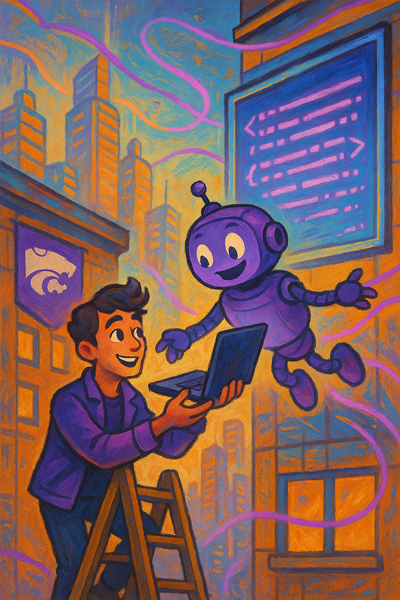
Winner: Aryan Singh Dalal
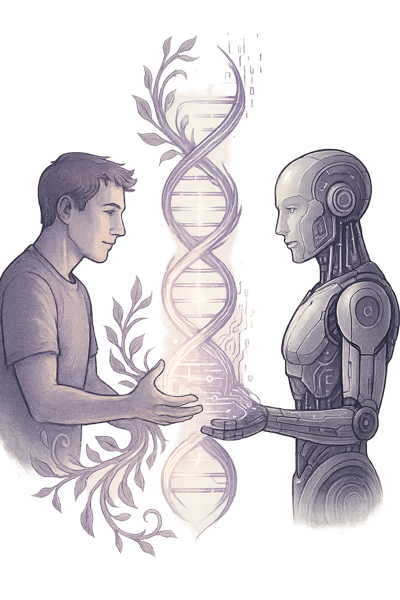
First runner up: Pravesh Niroula

Second runner up: Nirmal Gelal
Sponsors



Partners
This symposium is a partnership between K-State's Department of Modern Languages, K-State's Center for Artificial Intelligence and Data Science, K-State's Department of Computer Science, K-State Libraries, K-State's Department of Philosophy, K-State's College of Arts and Sciences, and the Manhattan Public Library.
Event organizers include Raelynne Hale, assistant professor in the Department of Modern Languages; Alice Anderson, instructional designer II at K-State Libraries; Jason Coleman, academic services librarian at K-State Libraries; Pascal Hitzler, director of the Center for Artificial Intelligence and Data Science; Carol Sevin, academic services librarian at K-State Libraries; and Eugene Vasserman, director of the Center for Cybersecurity and Trustworthy Systems.