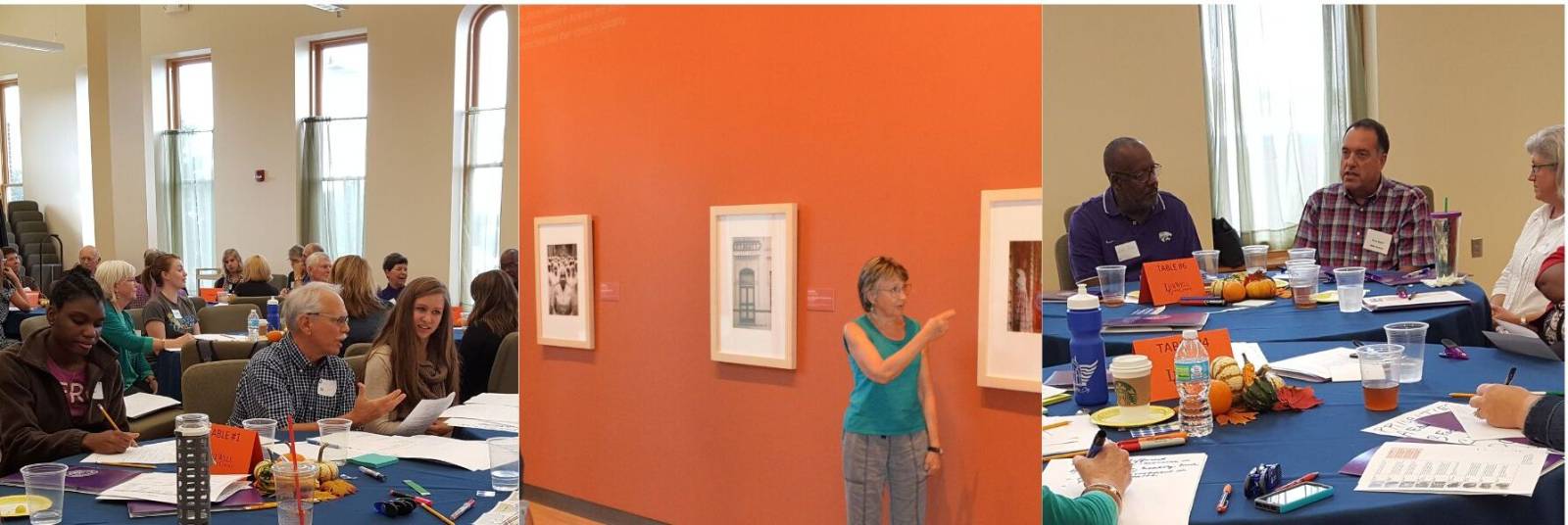

Today, political leaders and the public are faced with numerous controversial issues and difficult decisions. Now, more than ever before, there exists a need to develop an understanding and the skills necessary for effective deliberation on important issues. Unfortunately, our models of civic and political discussion tend to be rancorous and highly divisive. "Crossfire," "The O'Reilly Factor," and the dramatic sound bite on our ever present news cycle have become our most recognized forms of political discourse. Our public talk is now often an exercise in anger, characterized by high-decibel and low-nuance speech, personal attack, and ideological sloganeering rather than an exercise in understanding, issue exploration, and deliberation. Current strategies of political talk seem intolerant of divergent opinions, thereby restricting citizen reflection, communication, and respect that is so vital for democratic decision-making.
The Institute for Civic Discourse and Democracy (ICDD) was formed in response to the problems of incivility, intolerance, citizen alienation, and community fragmentation apparent in public deliberation and decision-making. ICDD works to enhance democratization locally, nationally, and internationally through improved communication processes, facilitation and evaluation practices, development of a certified facilitator training program, and interdisciplinary research on models of civic discourse.
ICDD is a non-partisan agency bringing together a diverse group of scholars and practitioners to address the relationship between democracy and civic discourse. ICDD's faculty includes communication specialists, engineers, geographers, political scientists, extension specialists, database managers, professional facilitators and evaluators, and authorities in conflict management. These individuals bring a variety of technical expertise, theoretical orientation, and process skills to promote civic engagement and deliberative democracy; improve the quality of political communication; and increase our understanding of the relationship between communication and democratic decision-making. Through this breadth of scholarly and practical experience, ICDD has the capacity to assist citizen deliberation on a wide-variety of public issues and in diverse public forums.
Institute for Civic Discourse and Democracy
202 Ahearn Field House
Kansas State University
Manhattan, KS 66506