The color collector
Sherry Haar’s textile art infuses natural burial materials with prairie vibrance

herry Haar has seen the connection between the natural world and the world of design since childhood. Where most simply admired the pretty flowers in her grandmother’s garden, Haar’s blossoming artistic imagination saw blooms of pink, burgundy and white as gowns and angel wings. As she played with her hollyhock “dolls,” the convergence of nature and art danced before her eyes.
Throughout her life, she has seen the beauty in nature and incorporated it in her art, collecting colors and patterns of places and crafting meaningful pieces with them.
Now, Haar is an award-winning professor in Kansas State University’s School of Consumer Sciences who uses plants and grasses to create her own natural dyes, coloring pieces she’s designed to showcase sustainable practices for one of the most natural things human beings experience — death.
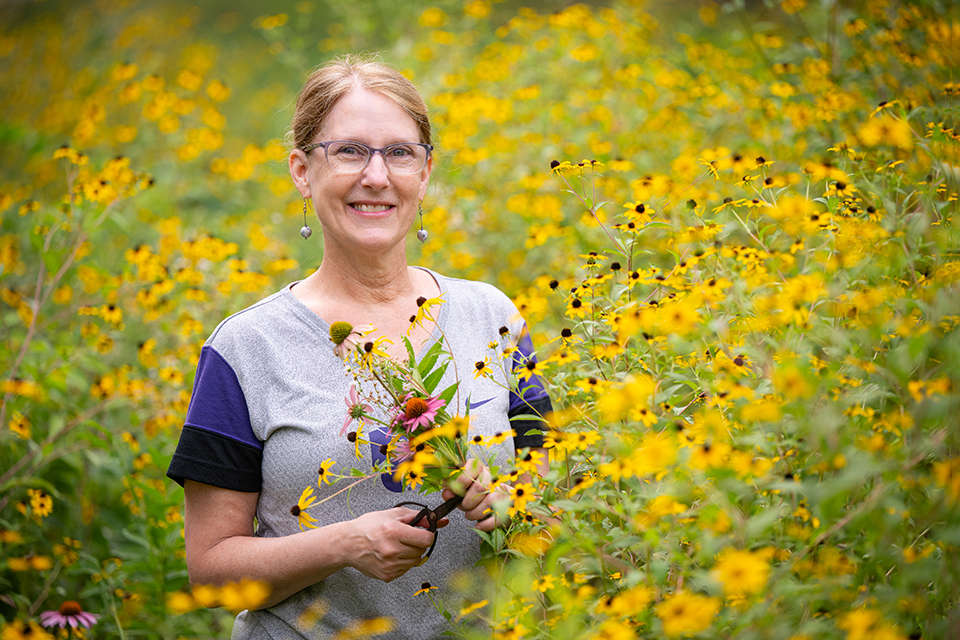
Creating natural dyes from a campus meadow
Haar’s natural dye work begins among the flora, growing and gathering the materials from which the dyes will be created.
Dye materials can grow in most unmowed areas. A half-acre meadow of native prairie just north of the Marianna Kistler Beach Museum of Art has been one of Haar’s favorite spots for the last 10 years. There, she can collect daisy fleabane, brown- and black-eyed Susans and her favorite, plains coreopsis.
From May to October, Haar plants, harvests and gathers materials, and caring for natural resources is always a priority.
“I practice and teach responsible harvesting, such as taking sparingly from abundant plants, spreading my gathering across sites, trimming just above a growth stem, leaving root systems intact, respecting and not disturbing pollinating insects, and leaving no trace,” Haar said. “If I know that I will need a lot of a certain plant, I will cultivate it in my garden.”
She also gathers from windfall materials, like an Osage orange tree that had been struck by lightning. Its wood chips yielded one of Haar’s favorite color collections: a striking, intense golden yellow.
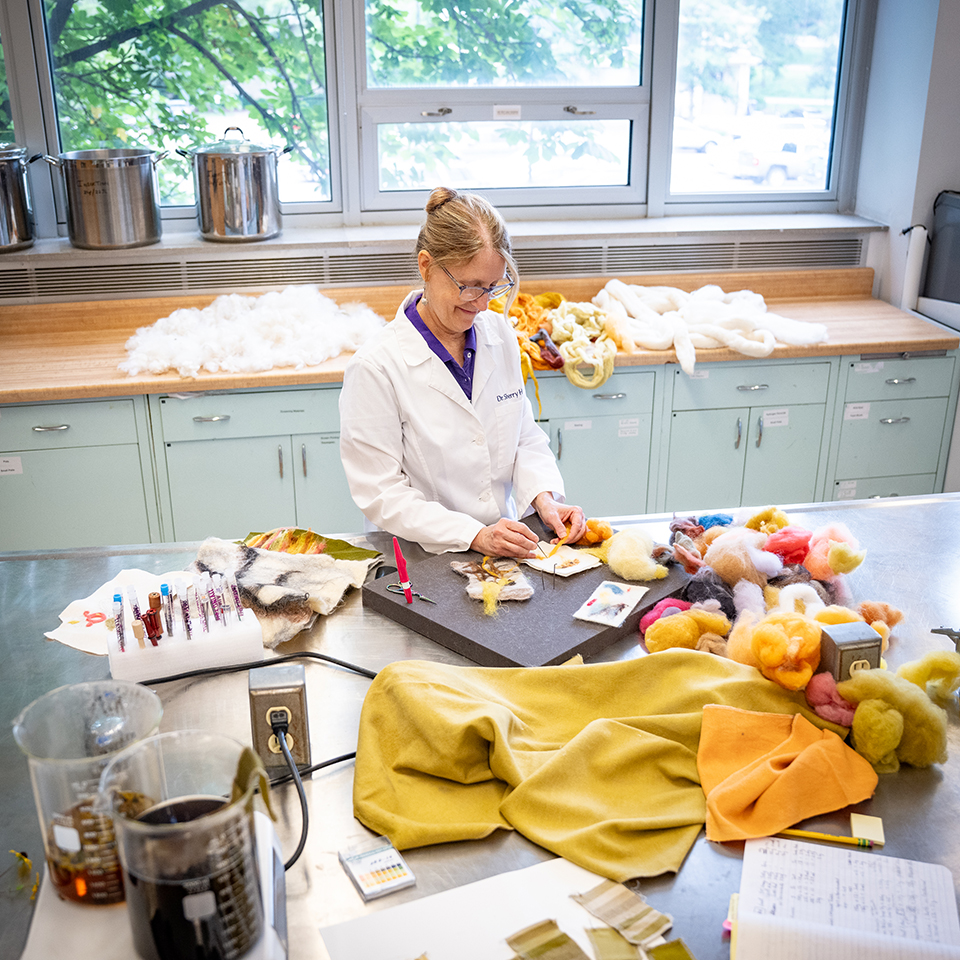
Once she has collected the dyestuffs, the natural dye creation begins.
There are many places where this process can take place, from the natural dye lab in Justin Hall to just outside of Haar’s home.
“I love the flexibility of where to work with natural dyes," she said. "In the natural dye lab, I use electrical heat, large stock pots and beakers. At home, I use solar heat and a range of containers, like jars, bags and recycled containers, on my driveway. When I need quick or more control of the heat, I use a solar oven.”
Different materials yield different colors, textures and smells. Mint is the most pleasing, weld smells like asparagus, indigo is musty and marigold is a bit pungent, according to Haar.
From dye to dust
Made from natural prairie plants, these dyes are destined to return to the Earth as part of Haar’s vision for circular design.
Haar uses her natural dye and design expertise to create biodegradable textile art pieces — burial cloaks, quilts and coffin covers — to spark conversations about sustainable end-of-life fashion and green burials, which are also called natural burials.
“Clothing and textiles are integral to daily life, yet the fashion industry is a major contributor to overconsumption, waste and pollution,” Haar said. “While the circular economy seeks to address these issues by preserving product value and regenerating nature, the end-of-life phase of textiles and the human body — specifically in burial — is often overlooked.”
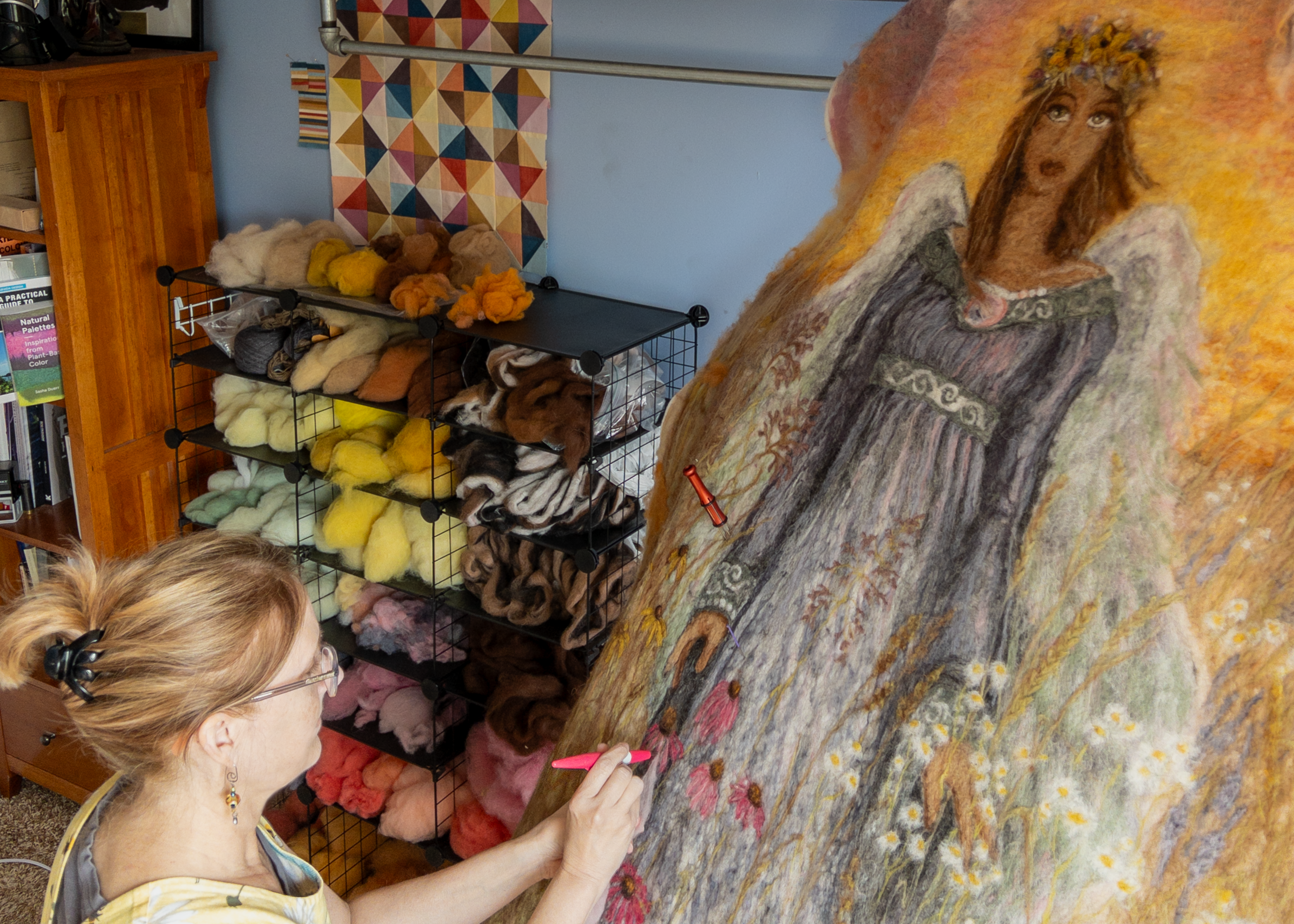
“The June Prairie Angel green burial coffin cover is one of my favorite pieces,” Haar said. “It has a strong connection to the circularity of place. The fiber is primarily alpaca from Kansas ranchers, and the color is from local dyestuffs. The needle felting imagery represents the prairie in June. Thus, the materials came from this place and are intended to return to this place, the tall grass prairie, through natural burial.”
Green burials allow for the care of the dead while preserving or restoring the burial environment. This care involves wrapping or clothing the body with biodegradable textiles that decompose and return nutrients to the soil.
Some of Haar’s pieces start with fiber from Kansas alpacas. She also uses other naturally decomposable materials like cotton, silk, hemp and wool — all colored with her naturally-sourced dyes.
“By using earth-friendly animal products and plant dyestuffs from Kansas, the textiles contribute to circularity in design when they decompose into the Earth,” Haar said. “The coloration from local plants allows the dye to be returned to its soil, thus supporting a soil-to-soil system.”
“As our university builds on its land-grant roots, naturally dyed green burial fiber art exemplifies how creative scholarship can honor the beauty and resourcefulness of the tall grass prairie while caring for its people.”
Leaving an impression
Haar’s green burial fiber art has made its mark on more than 50,000 people through various exhibitions, including one at the Beach Museum of Art that she curated in 2024.
Most visitors, she said, are not aware that natural burial is an option in the U.S., and many reflect on their relationships with dying, burial plans and death.
“The exhibition and programming prompted one visitor to change her end-of-life plans to now include a natural burial,” Haar said. “It was affirming to hear that my aim for green burial awareness and social change was happening.”
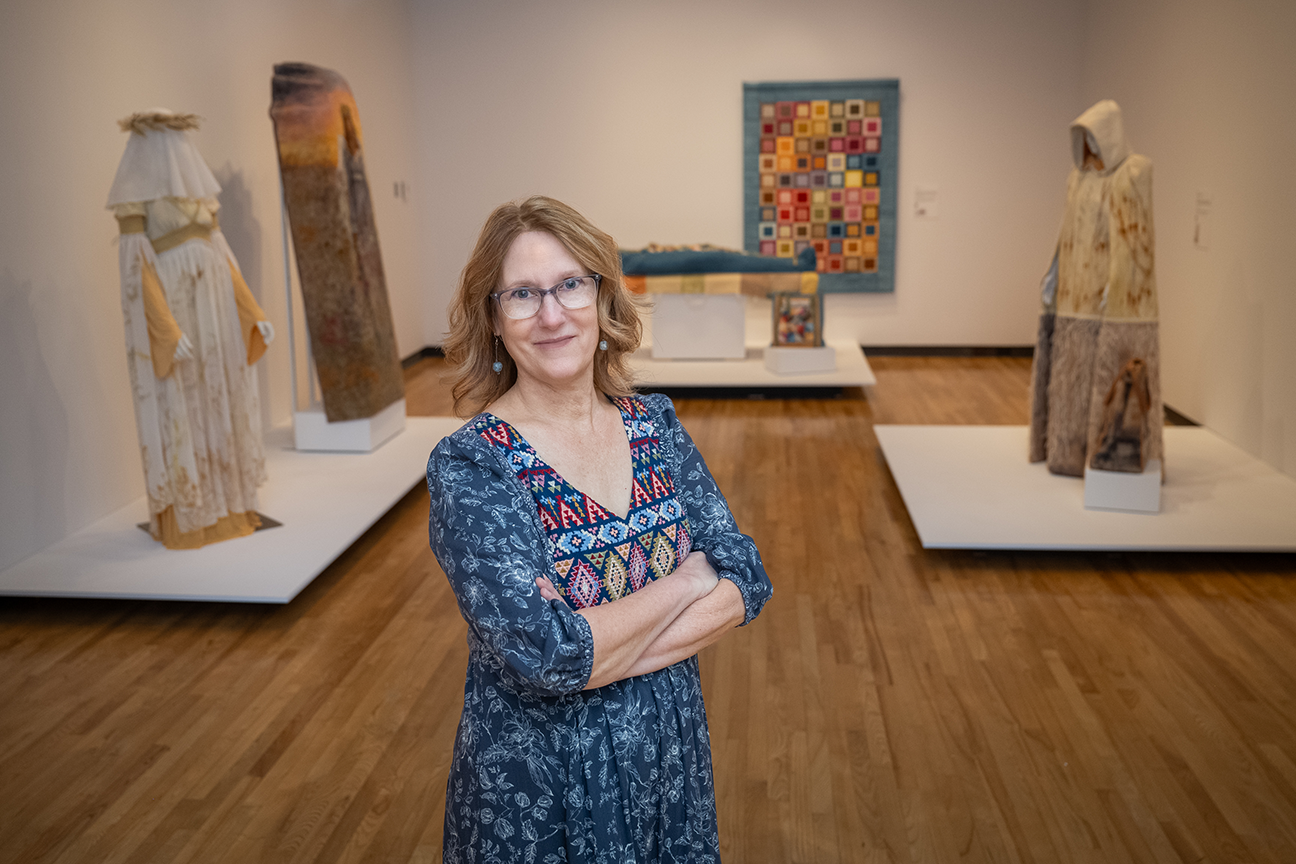
“Exhibition of green burial fiber art invites conversations around death preparedness, human and ecological impact, and ethical consumerism,” Haar said. “Such discussions foster societal well-being by normalizing sustainable end-of-life choices and promoting restoration of natural resources. Further, design research with local natural dyes and fiber contributes to the aims of a more sustainable future in water, soil, health and connectedness to place.”
Haar teaches courses in fashion design and production and leads research projects that explore plant dye colorfastness, the use of bio-mordants, disposal water quality and more.
She has also also included community members in her lessons and workshops on natural dye and design at her favorite campus meadow.
Natural dyeing is part of the student active learning project Local Fashion–Global Impact, which provides an opportunity for students to participate in the global supply chain and ethical design. Students develop, dye and market products from hand-loomed cotton by weavers in Guatemala.
Students and alumni have also been part of several industry and fair-trade collaborations, conducting research, small batch dyeing, and designing and prototyping textiles. Some of Haar’s students have been trained by and/or provided training to artisans in India and Guatemala.
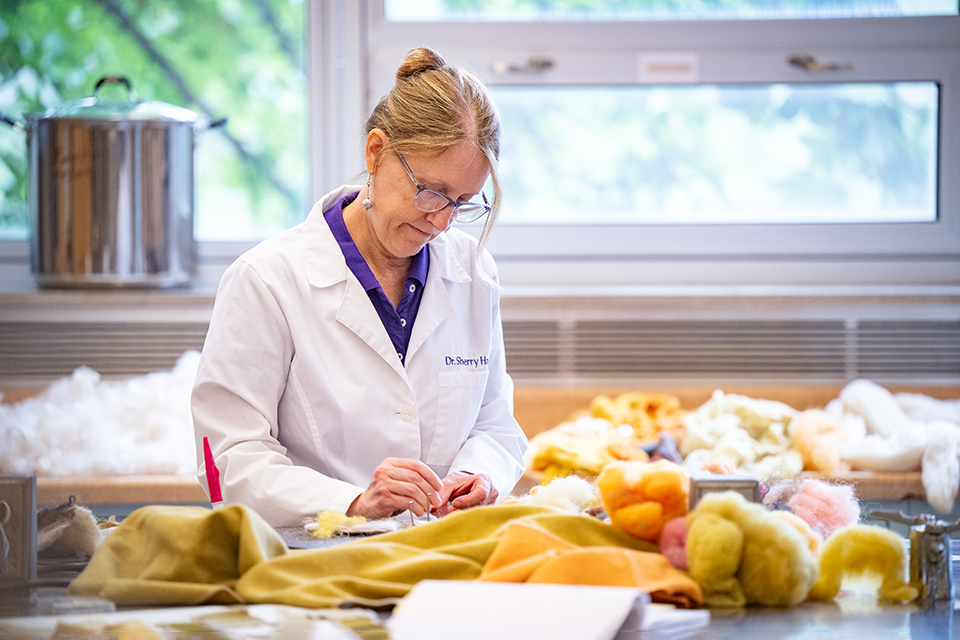
Haar’s work as a researcher, artist and teacher demonstrates how textiles can be more than decoration.
The medium’s tactile and aesthetic qualities invite viewers to see the beauty of nature mixed with the art of design, and through her artistry, Haar builds bridges between academic research and real-world sustainability that the public can easily engage with.
“As our university builds on its land-grant roots, naturally dyed green burial fiber art exemplifies how creative scholarship can honor the beauty and resourcefulness of the tall grass prairie while caring for its people,” Haar said. 
◊◊◊
UDP's musical performances transcend words and nations Undergraduate finds big ecological role from tiny creature Graduate landscape architect bolsters green roof resilience

Seek magazine
Seek is Kansas State University’s flagship research magazine and invites readers to “See” “K”-State’s research, scholarly and creative activities, and discoveries.