Wild Patterns Formed In Bermudagrass Lawns After Frost
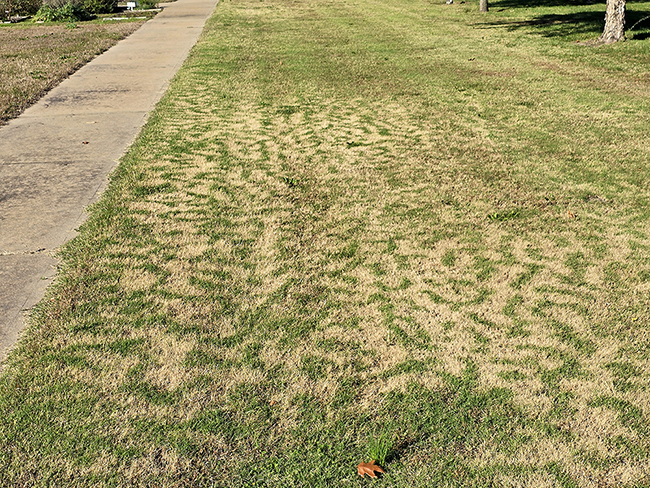 Gardeners across Kansas have been witnessing wild patterns in Bermudagrass lawns over the past few weeks. Squiggly lines, funky stripes, psychedelic patterns, blotches, and ambiguous shapes cover the lawn in a combination of green and brown turfgrass.
In looking at our NTEP Bermudagrass Trials at the John C. Pair Center this week, each bermudagrass test plot reminds me of a Rorschach test, where you look at random ink blobs on a paper and are asked “what do you see?”.
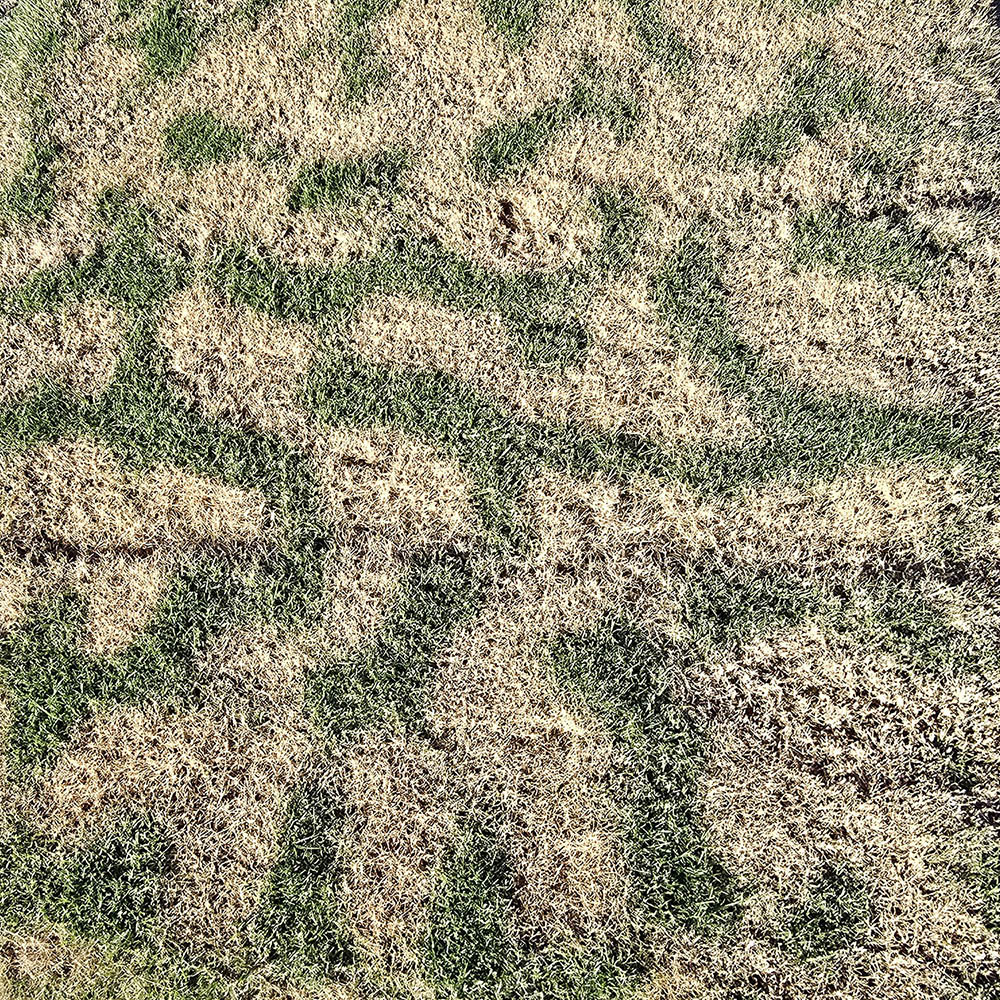
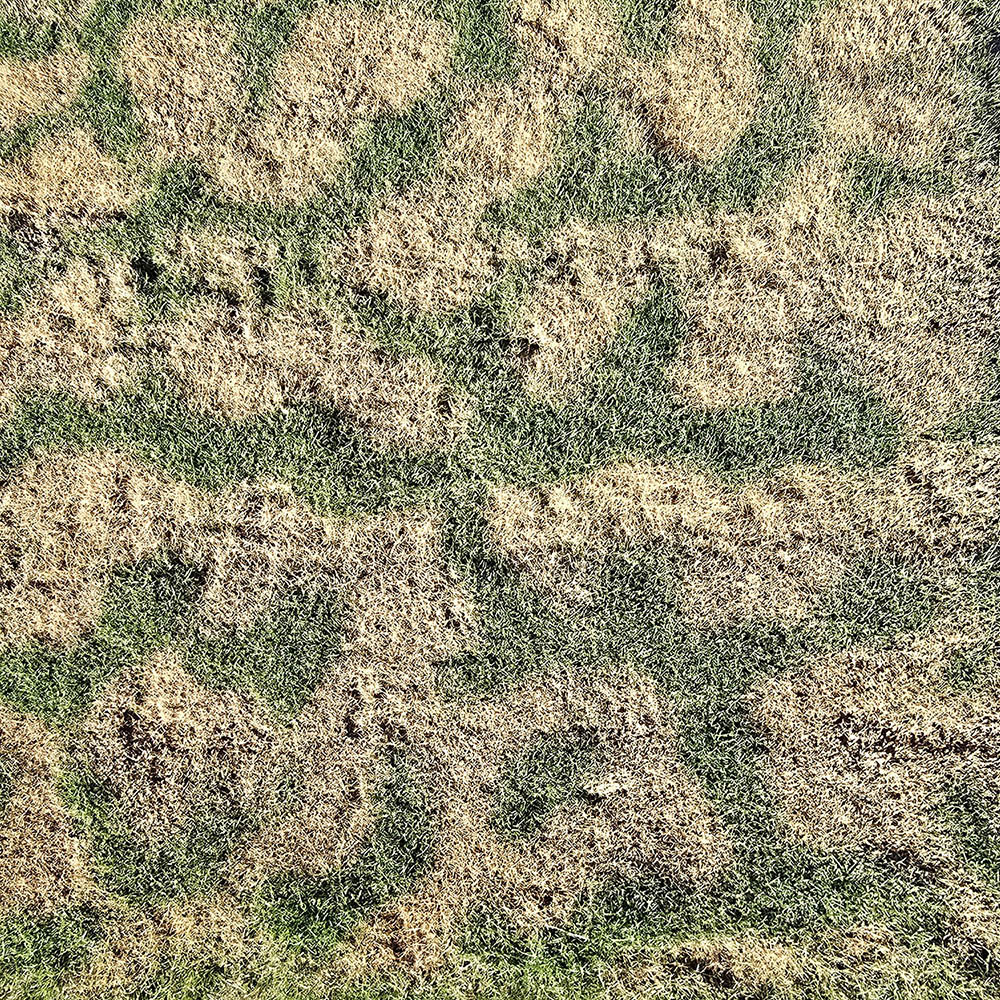
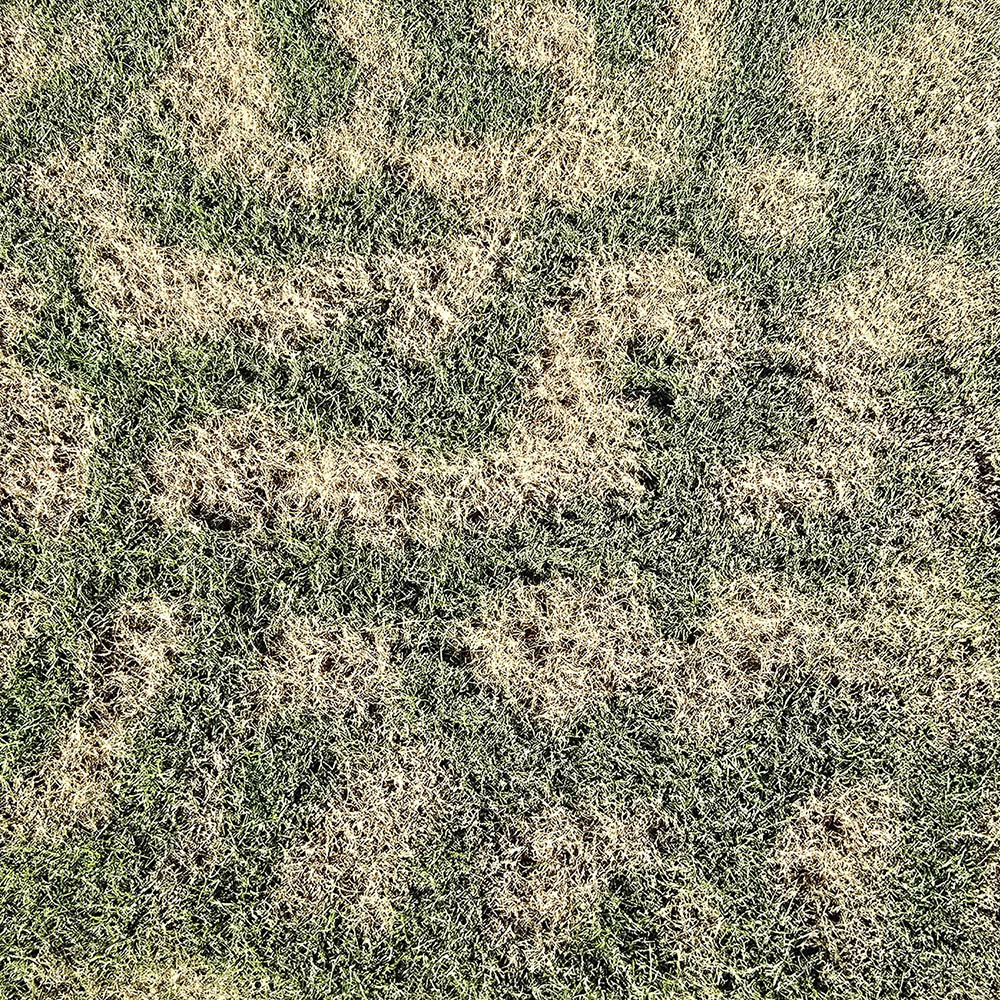
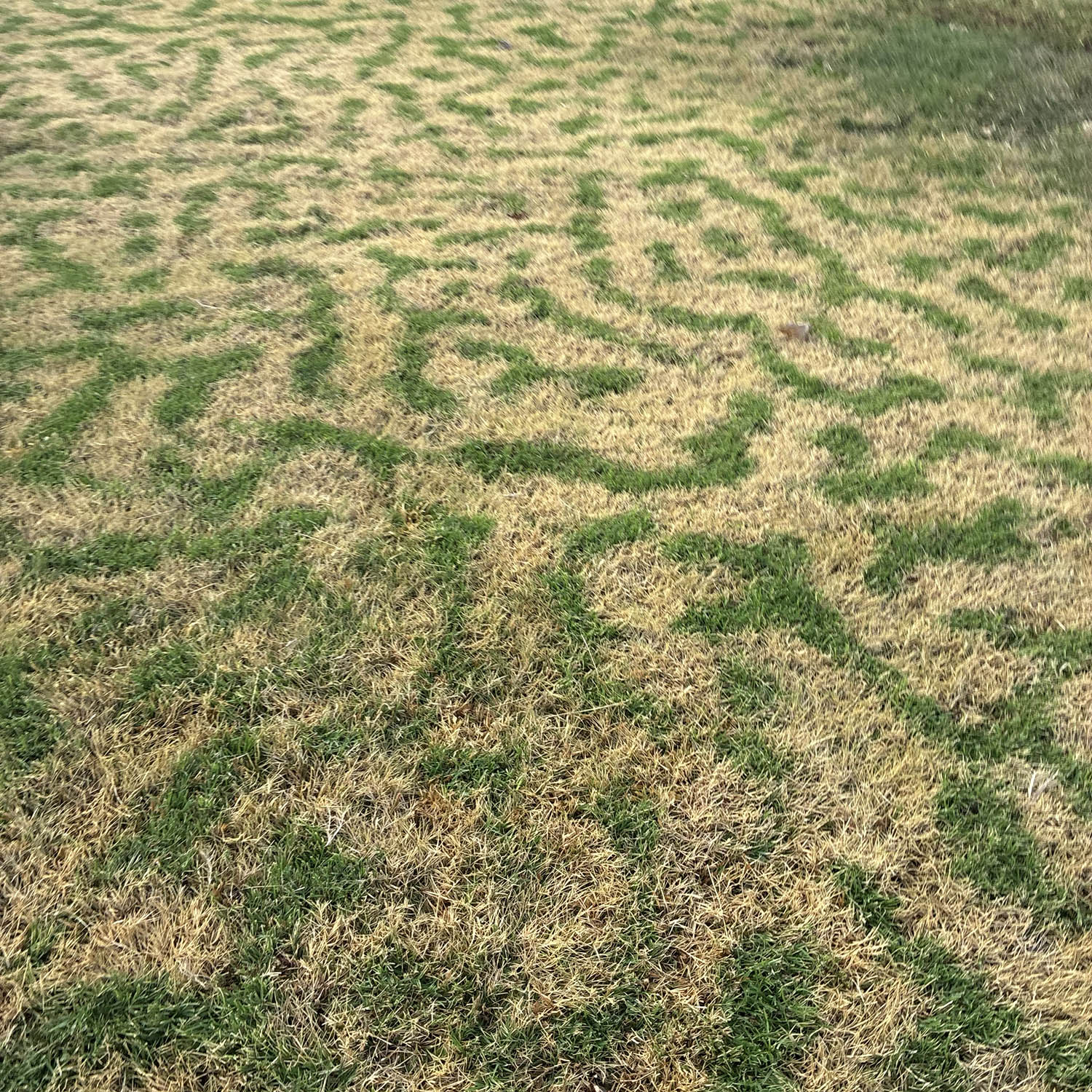
Well, when I look at these patterns I see frost damage. Even though these patterns are often described as leopard print, zebra stripes, or even camouflage designs, the patterns are created by cold injury to the turfgrass. In addition to these terms, this phenomenon also gets names such as tiger stripes, Jack Frost trails, or unsynchronized dormancy.
For much of Kansas this fall, the first frost or freeze occurred on October 16-17, 2026. A few days later, these peculiar patterns on bermudagrass started to emerge. These patterns emerge as the bermudagrass enters winter dormancy, but temperatures were not cold enough to send the lawn entirely into dormancy.
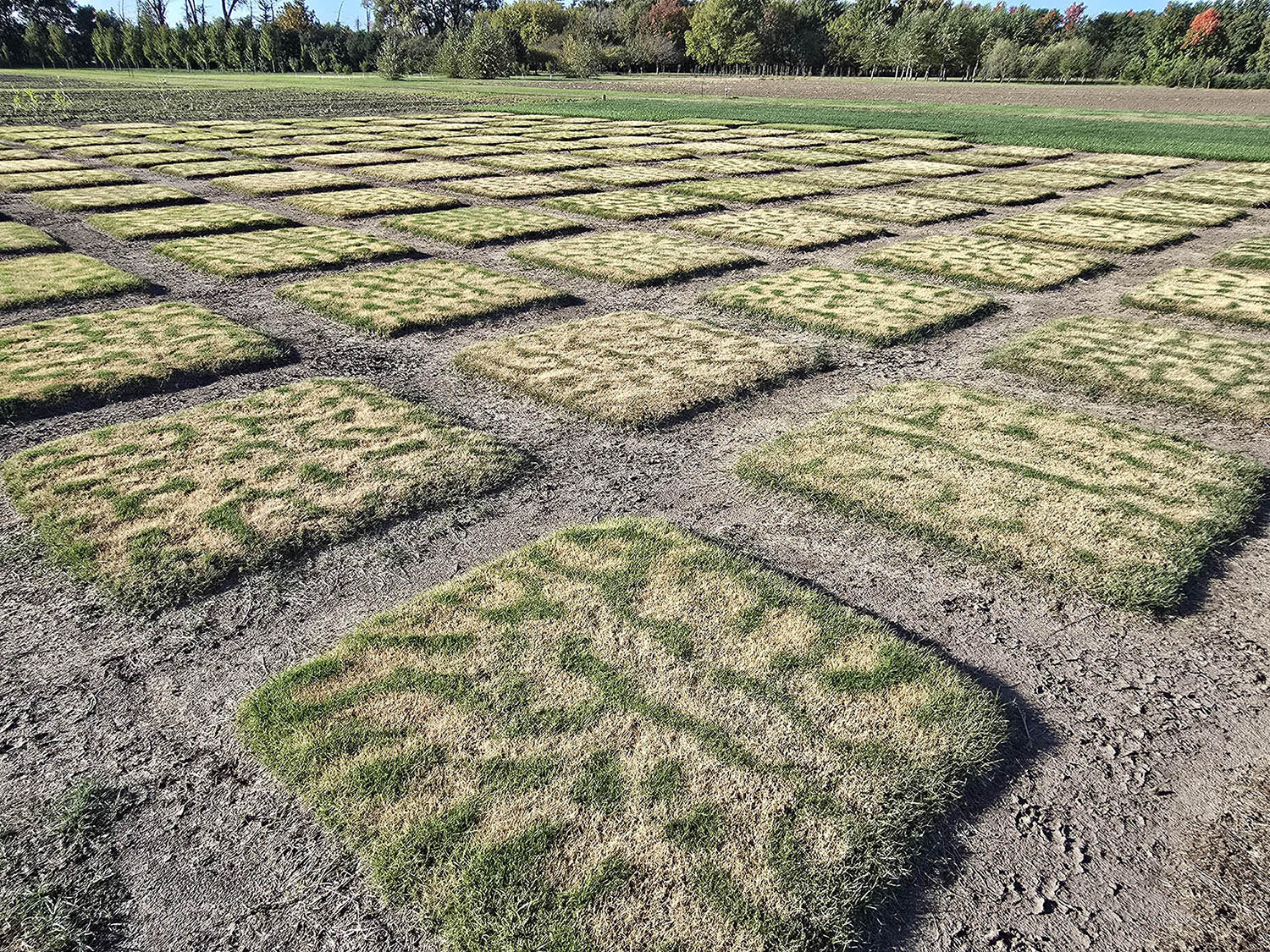 These unusual patterns visually display how hot and cool air moved at night near freezing. The areas of green turfgrass show areas in which the heat rose from the soil through the turfgrass (keeping the turfgrass alive and protected from cold temperatures). While the brown turfgrass show areas in which cold air descended toward the soil surface (killing the leaf tissue). Instead of mixing uniformly, pockets of air moved in opposite directions, like fans weaving in opposite directions through a stadium crowd after a game. While the physics of this phenomenon is more complicated than this, it exemplifies the movement of heat and what is known as the surface energy balance and the porous convection model.
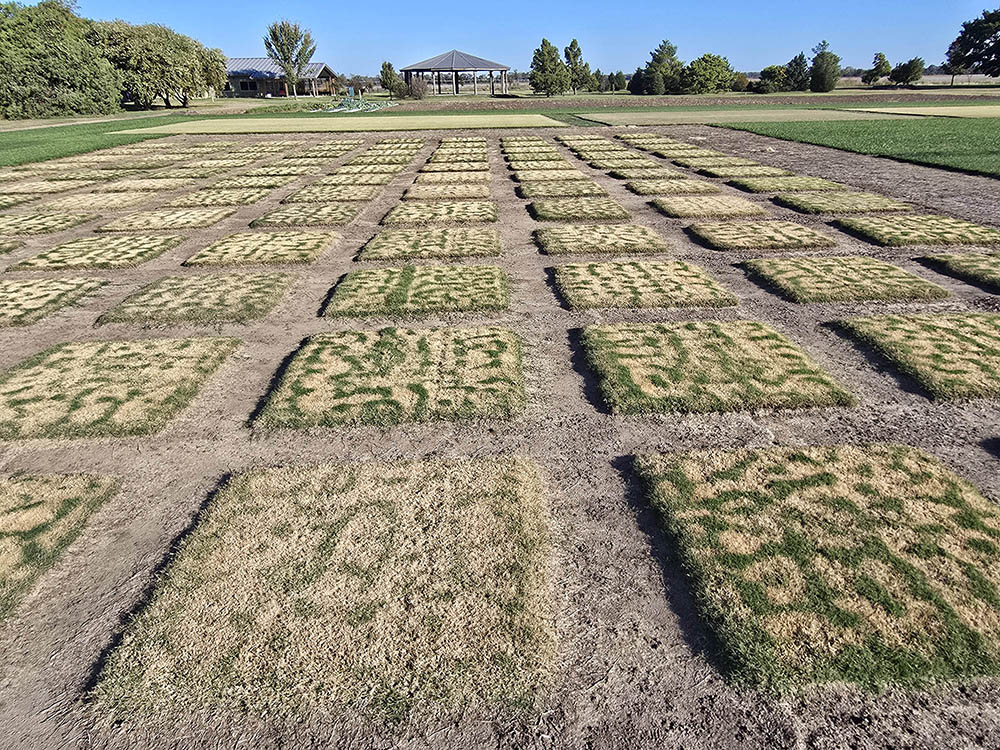
Differences in turfgrass height also influence how this pattern forms. This frost damage patternis more common in bermudagrass lawns mowed at a higher mowing height, around 1.5 inches tall or higher. Taller grass blades are more likely to be exposed to colder temperatures, causing the leaves to freeze and turn brown, while shorter grass may stay slightly warmer due to proximity to the soil.
Golf courses and areas with lower mowed turf often see less of this pattern due to warmground temperatures providing a temperature buffer from the chill damage. Athletic fields and areas with higher mowed turf often experience more of this pattern due to the greater distances from leaf blade to the soil surface, which allow greater temperature differences to develop within the canopy. The taller, denser and thicker the turfgrass canopy, the more likely this phenomenon is to occur.
While higher mowing heights may increase the occurrence of this phenomenon, additional research has found that there is no relationship between soil moisture and the occurrence of these patterns. Wet or dry soils do not influence this pattern development. The amount of moisture in the air, however, does factor into pattern development.
Ultimately, there is no cause for concern for these Bermudagrass lawns. As cooler temperatures return and additional freezes occur, the entire lawn will enter dormancy and turn uniformly brown.
Simply enjoy one of nature’s unique masterpieces and ask yourself, “what do I see?” in these patterns. Like chalk on a sidewalk before a rain, these patterns will soon disappear.
If you want to learn more, here are a few additional references for a deeper dive into the topic:
- Thompson, S. E., & Daniels, K. E. (2010). A porous convection model for grass patterns. The American Naturalist, 175(1), E10-E15. https://doi.org/10.1086/648603
- Miller, G. (2011, January). Tiger stripe field. SportsTurf, 54. https://sturf.lib.msu.edu/article/2011jan54.pdf