Collecting a Quality Soil Sample for Turfgrass
Soil testing is one of the most valuable tools available for making informed turfgrass management decisions. Rather than relying on guesswork, a soil test can provide information about soil pH and nutrient availability that can be used to guide fertilizer applications, renovation projects, and long-term management programs. Whether managing a home lawn, athletic field, golf course, or other turf area, soil testing can help identify potential issues before they impact turf performance.
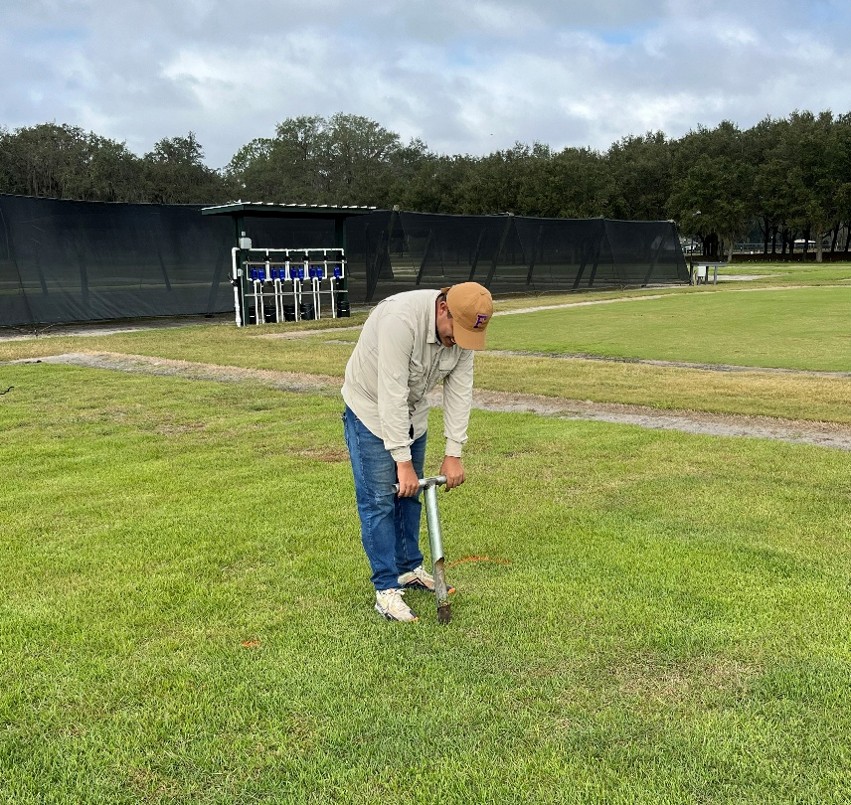
Figure 1. A soil probe can be used to collect multiple soil cores from a turf area. Combining 10 to 15 soil cores into a representative composite sample helps ensure the sample accurately reflects site conditions.
What Can a Soil Test Tell You?
A soil test provides information about several important soil properties, including soil pH, phosphorus (P), and potassium (K) levels. These results can help determine whether nutrient deficiencies exist and whether fertilizer applications are needed. Soil tests can also help identify pH issues that may influence nutrient availability and turfgrass performance. Depending on management objectives and the selected testing package, additional analyses may also be available. Because visual symptoms can sometimes resemble multiple problems, soil testing provides a more objective way to evaluate soil fertility and develop management recommendations.
Collecting a Representative Soil Sample
The quality of a soil test recommendation depends on the quality of the sample submitted. To obtain a representative sample, collect 10 to 15 soil cores from the area being tested and combine them into a single composite sample. Consistent sampling depth is important to ensure results accurately represent site conditions.
For most turfgrass situations, soil samples should be collected from the upper 4 to 6 inches of soil. If multiple management areas exist, such as portions of a lawn, athletic field, or golf course with differing soil conditions or management histories, those areas should be sampled separately rather than combined into a single sample.
Soil Sampling Tips for Turfgrass
When collecting samples from turfgrass areas, remove excess leaf tissue and thatch before submitting samples for analysis. Thatch and plant material can influence test results and should not be included as part of the soil sample.
If a specific problem area is being investigated, consider collecting separate samples from both the affected area and a nearby healthy area for comparison. This can help identify differences that may contribute to turf performance issues.
Common Soil Testing Mistakes
Several common mistakes can reduce the value of soil test results:
- Collecting too few soil cores
- Using inconsistent sampling depths
- Combining samples from areas with different soil types or management histories
- Including excessive thatch or plant material in the sample
Taking a few extra minutes during the sampling process can help ensure the results accurately represent site conditions. Routine soil testing can also help identify potential issues before they impact turf performance.
Submitting Samples
Once a representative sample has been collected, samples can be submitted to the K-State Soil Testing Lab for analysis. Be sure to complete all required submission forms and provide information about the turf area being sampled. This information helps ensure appropriate recommendations are provided.
After testing is complete, results can be used to guide fertilizer applications, identify pH concerns, and support future turf management decisions.
Additional Resources
A Guide to Turfgrass Nutrient Recommendations Based on K-State Soil Test Results (Kansas State University Research and Extension)
K-State Soil Testing Lab (K-State Research and Extension Soil Testing Lab)
Fall Soil Testing (K-State Turf and Landscape Newsletter)
Have a question about how this applies to your own yard or field? Your local K-State Extension office can offer guidance tailored to your soil, turf, and growing conditions. Find your county office at extension.k-state.edu/about/statewide-locations.