Preparing Athletic Fields for Fall Sports: Key Steps Before the Season Begins
As summer winds down and fall sports seasons approach, athletic field managers across Kansas are entering one of the most important periods of the year. Now is an excellent time to evaluate field conditions and address potential issues before the demands of the fall sports season fully arrive. Field conditions entering the fall season can influence turf quality, playability, and athlete safety throughout the coming months.
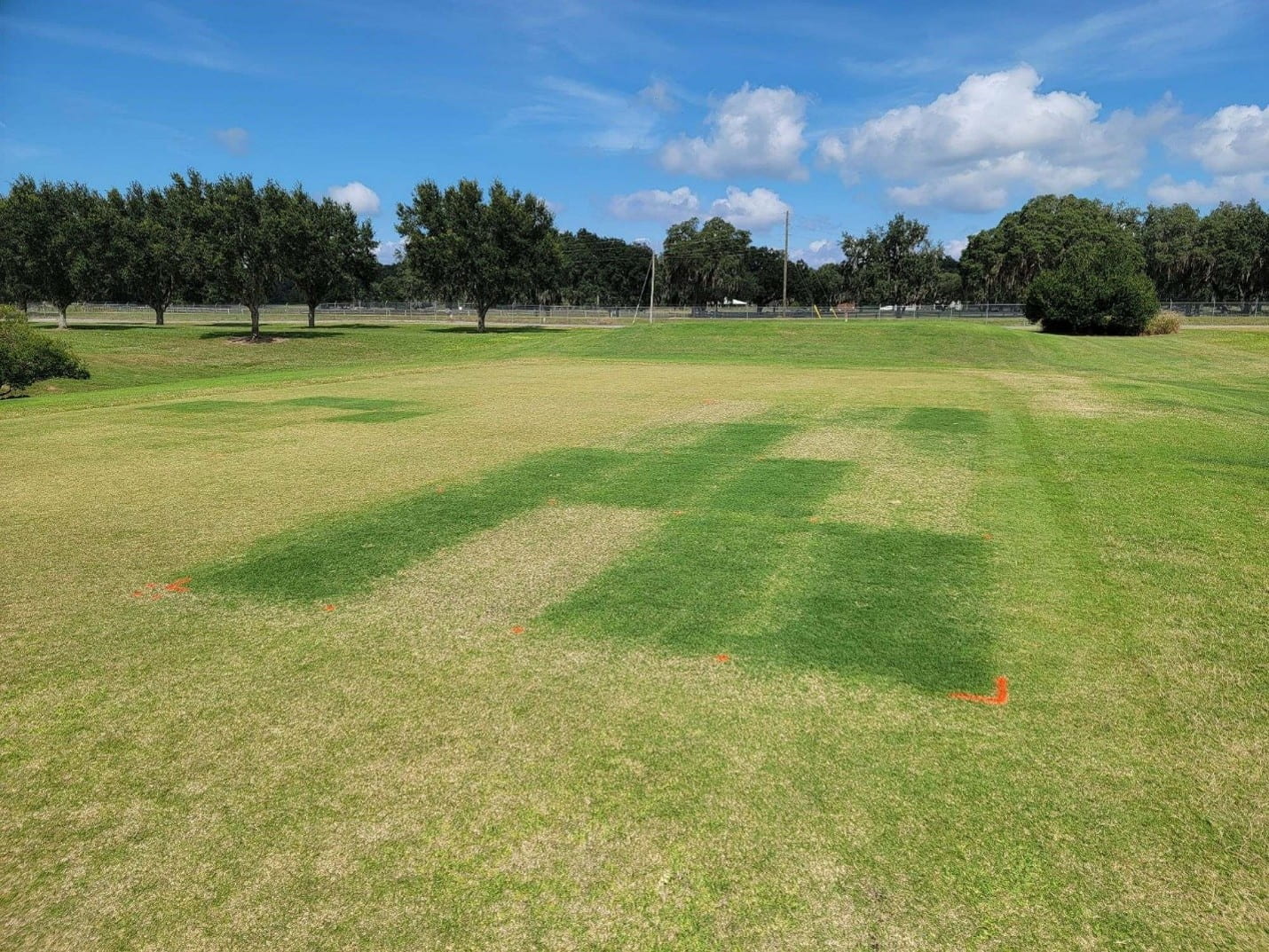
study. Evaluating turf cover before the fall sports season can help identify areas that may require
additional management attention.
Evaluate Turfgrass Density and Coverage
Managers should assess overall turfgrass density and identify areas that may require attention before the demands of the fall season fully arrive. High-traffic locations such as areas around goals, sidelines, team areas, player benches, field entrances, and other frequently trafficked portions of the field, including the area between the hash marks on football fields, often show signs of wear first. Thin turf in these locations is more susceptible to additional wear as practices and competitions increase, making this an ideal time to repair damaged areas and encourage recovery. Depending on field conditions, managers may consider practices such as overseeding, improving irrigation uniformity, adjusting fertility programs, or limiting traffic in heavily worn areas to promote turf recovery. Maintaining adequate turf cover contributes to safer, more resilient, and better-performing playing surfaces.
Inspect Irrigation Systems
Athletic fields entering the fall season should have irrigation systems operating properly and efficiently. Managers should inspect sprinkler heads, repair leaks, verify coverage patterns, and ensure controllers are functioning correctly. Adequate soil moisture supports recovery from summer stress, promotes turfgrass health, and improves traffic tolerance, while irrigation issues can lead to localized dry spots, inconsistent turf quality, and reduced field performance.
Address Soil Compaction
Compacted soils can restrict rooting, reduce water infiltration, and limit turfgrass recovery. Summer field use, maintenance equipment, and previous seasons of athletic traffic can all contribute to compaction problems. Prior to the fall season, managers should evaluate fields for signs of compaction and determine whether cultivation practices are appropriate. The timing and intensity of cultivation should be based on turfgrass species, field conditions, and anticipated field use, balancing the potential benefits of improved soil physical properties and rootzone aeration with the recovery time needed before periods of intensive field use.
Review Fertility Programs
Appropriate fertility programs play an important role in preparing fields for the demands of fall sports. For tall fescue fields, late-summer and fall fertility can promote density, recovery, and active growth as temperatures moderate. Bermudagrass fields can also benefit from maintaining healthy, actively growing turf prior to dormancy; however, nitrogen applications are generally not recommended after mid-August in Kansas. Regardless of turf species, managers should follow soil test recommendations whenever possible to ensure nutrients are applied efficiently and effectively.
Verify Field Safety Conditions
Athlete safety should remain a top priority when preparing athletic fields for fall use. Prior to the season, managers should inspect fields for surface irregularities, depressions and trip hazards, exposed irrigation components, drainage concerns, damaged goals or field equipment, and areas with poor turf cover. Identifying and correcting issues early can help improve athlete safety and maintain field quality throughout the fall season.
Develop a Traffic Management Plan
Traffic management becomes increasingly important as fall sports activities intensify. While traffic cannot be eliminated, it can often be distributed more effectively through practices such as:
• Rotating practice locations when feasible
• Limiting repetitive drills in the same area
• Managing sideline and spectator traffic
• Monitoring wear patterns throughout the season
• Prioritizing recovery efforts in heavily worn locations
Fields that enter the season with a proactive traffic management plan are often better able to withstand the cumulative effects of fall sports activities.
Final Thoughts
The weeks leading up to fall sports provide an important opportunity to evaluate athletic field conditions and address potential concerns before the demands of the season fully arrive. Taking time to prepare fields now can help maintain a safe, resilient, and playable surface throughout the challenges of fall competition.
Additional Resources
- Managing Fescue Football Fields (Kansas State University Research and Extension)
- Bermudagrass Football Fields (Kansas State University Research and Extension)
- Annual Athletic Field Maintenance Calendar for the Transition Zone (Sports Field Management Association)
Have questions about athletic field management, sports turf maintenance, or turfgrass performance? Contact A.J. Lindsey, Assistant Professor and Turfgrass Extension Specialist at Kansas State University.