Fall Fertility Considerations for Turfgrass in Kansas
As summer transitions into fall, many turf managers begin focusing on practices that can help turf recover from summer stress and maintain turf quality through the fall. Fertility programs are often part of that discussion, particularly for cool-season turfgrasses. When properly timed and guided by site conditions, fertilizer applications can support turf density, color, vigor, recovery, and overall performance.
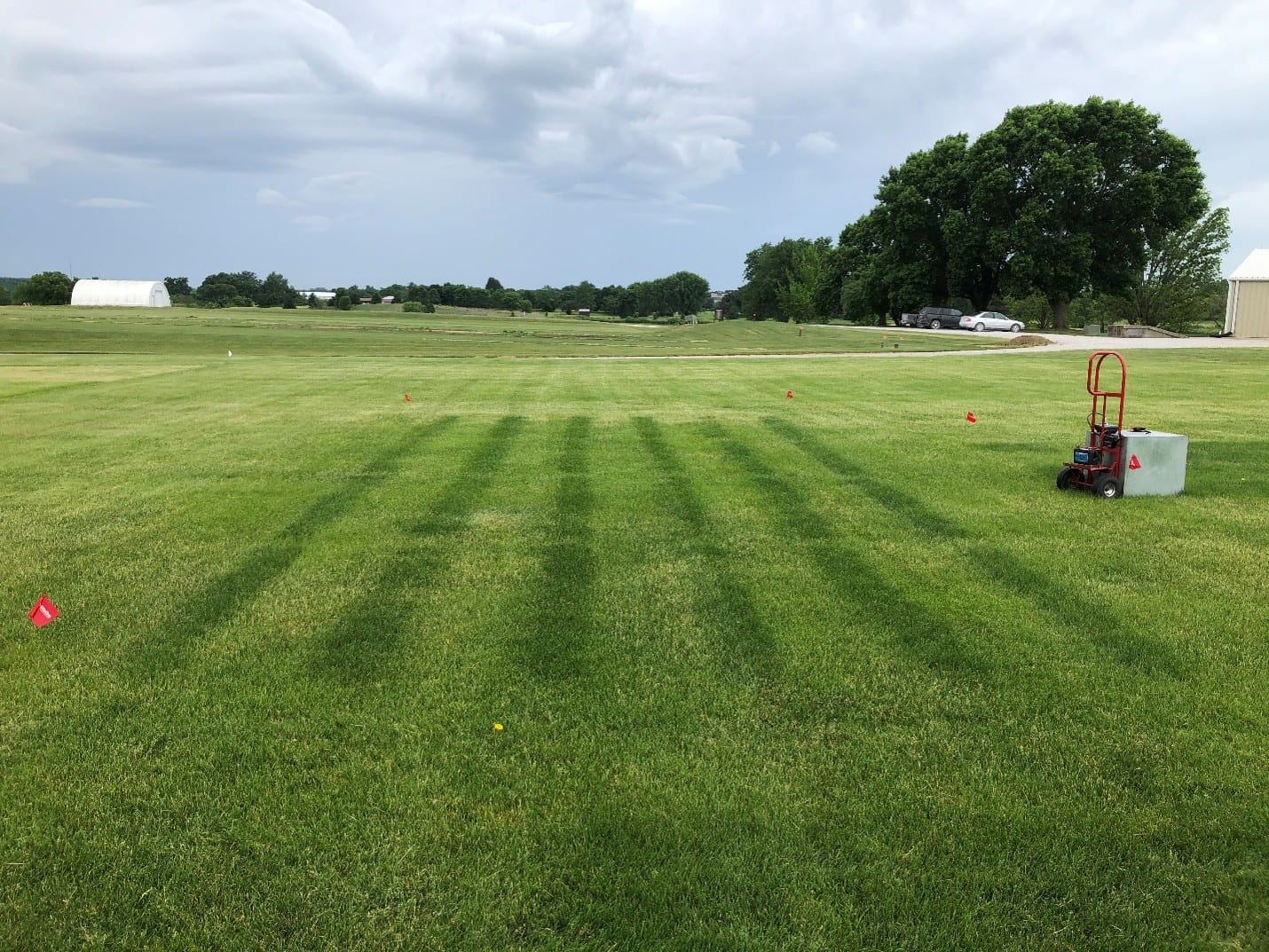
Darker green strips indicate areas that received fertilizer applications compared to untreated turf.
Start with a Soil Test
Successful fertility programs begin with an understanding of existing soil conditions. Taking a soil test can help identify nutrient deficiencies and soil pH issues that may affect turf performance. Soil testing is particularly valuable before establishing new turf areas, beginning major renovation projects, or developing a long-term fertility program.
For established turf, soil testing every three to five years can help monitor nutrient levels and identify potential issues before they impact turf quality. More frequent testing may be appropriate when attempting to correct nutrient deficiencies or modify soil pH. Additional information on submitting soil samples and interpreting soil test results is available through the K-State Research and Extension Soil Testing Lab.
Cool-Season Turfgrass Fertility Considerations
Cool-season turfgrasses such as tall fescue and Kentucky bluegrass are entering one of their most favorable periods for growth and recovery, making September an ideal time for fertilizer applications in Kansas. Nitrogen is typically the nutrient applied in the greatest quantity and is commonly used to improve turf density, enhance color, and support recovery from summer stress. Application timing and rates should be selected based on turf needs, management goals, and label recommendations. Phosphorus and potassium applications should generally be based on soil test recommendations rather than routine annual applications.
Newly Seeded and Overseeded Turf
Nutrient management is an important component of successful turfgrass establishment. Newly seeded and overseeded areas often benefit from fertilizer applications that support early seedling growth and development. Establishment areas should be monitored throughout the fall, as nutrient requirements may differ from those of mature turf stands. When making fertility decisions, consider factors such as soil test results, establishment success, turf density, and overall seedling vigor. Proper fertility, combined with adequate irrigation and good seed-to-soil contact, can help improve establishment and encourage the development of a healthy turf stand.
Warm-Season Turfgrass Approaching Dormancy
While cool-season turfgrasses are entering a period of active growth, warm-season turfgrasses such as bermudagrass, zoysiagrass, and buffalograss are preparing for dormancy. As growth slows heading into fall, fertility programs should focus on maintaining turf health without encouraging excessive late-season growth that could increase the risk of winter injury. Additional information on managing and reducing winter injury risk in warm-season turfgrasses is available through the K-State Turf and Landscape Newsletter Environmental Stress page.
Avoid Common Fertility Mistakes
Several common mistakes can reduce the effectiveness of fall fertility programs:
- Applying fertilizer without a soil test or understanding existing soil conditions.
- Applying nutrients that are not needed.
- Applying excessive amounts of nitrogen.
- Using the same fertility program for all turfgrass species and situations.
- Ignoring site-specific factors such as turf condition, irrigation availability, and traffic or use requirements.
- Failing to follow fertilizer label directions.
Final Thoughts
Fall fertility can be an important component of a successful turfgrass management program. Whether managing an established lawn, athletic field, golf course, or newly seeded area, fertilizer applications should be guided by site conditions, management goals, and soil test results whenever possible. Taking time to evaluate turf needs and develop an appropriate fertility program can help support turf performance through the fall and into the following growing season.
Looking for additional information on turfgrass fertility? Previous K-State Turf Blog articles including Time to Fertilize Cool-Season Turfgrass, It’s Finally September – That Means Football and Fescue, and Fall Fertilization and Turf Tips provide further discussion of seasonal fertility programs and management considerations.
Additional Resources
- A Guide to Turfgrass Nutrient Recommendations Based on K-State Soil Test Results (Kansas State University Research and Extension)
- Fertilizing Kansas Lawns (Kansas State University Research and Extension)
- Lawn Fertilizing Guide (Kansas State University Research and Extension)
Have a question about how this applies to your own yard or field?
Your local K-State Extension office can offer guidance tailored to your soil, turf, and growing conditions. Find your county office at extension.k-state.edu/about/statewide-locations.