Chinch Bug: Insect Pest of Turfgrass
Chinch bugs are insect pests of turfgrass, with the common chinch bug, Blissus leucopterus leucopterus, the main chinch bug in the Midwest. Chinch bug nymphs and adults feed on zoysiagrass, Bermudagrass, bentgrass, Kentucky bluegrass, perennial ryegrass, buffalograss, and fescue grasses. This article discusses the biology, damage, and management of chinch bugs.
Biology
The chinch bug life cycle includes an egg, nymphs, and an adult. The life cycle, from egg to adult, can be completed in approximately one month.
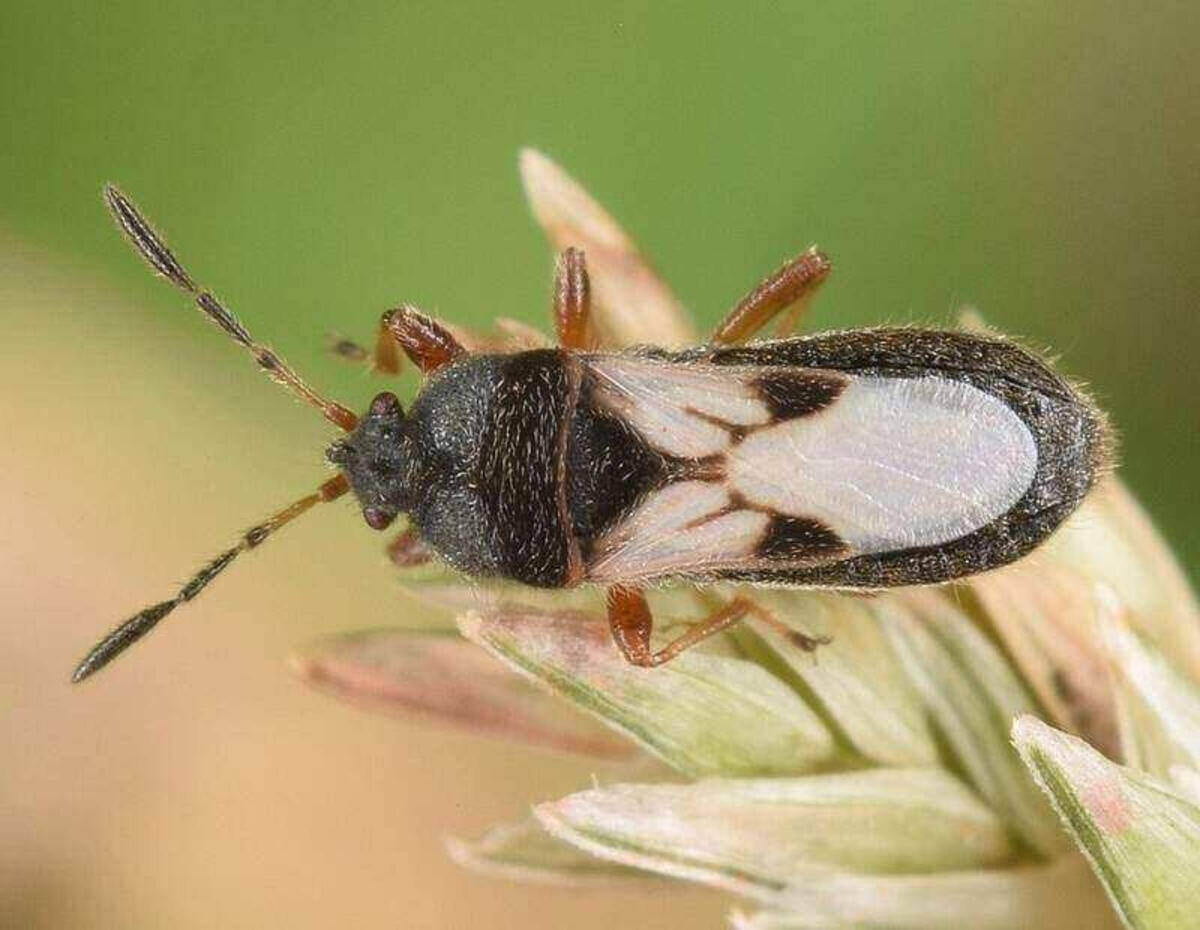
After mating, females lay up to 200 eggs over three to five weeks. Nymphs emerge (eclose) from eggs and feed on the leaves (blades) of turfgrass.
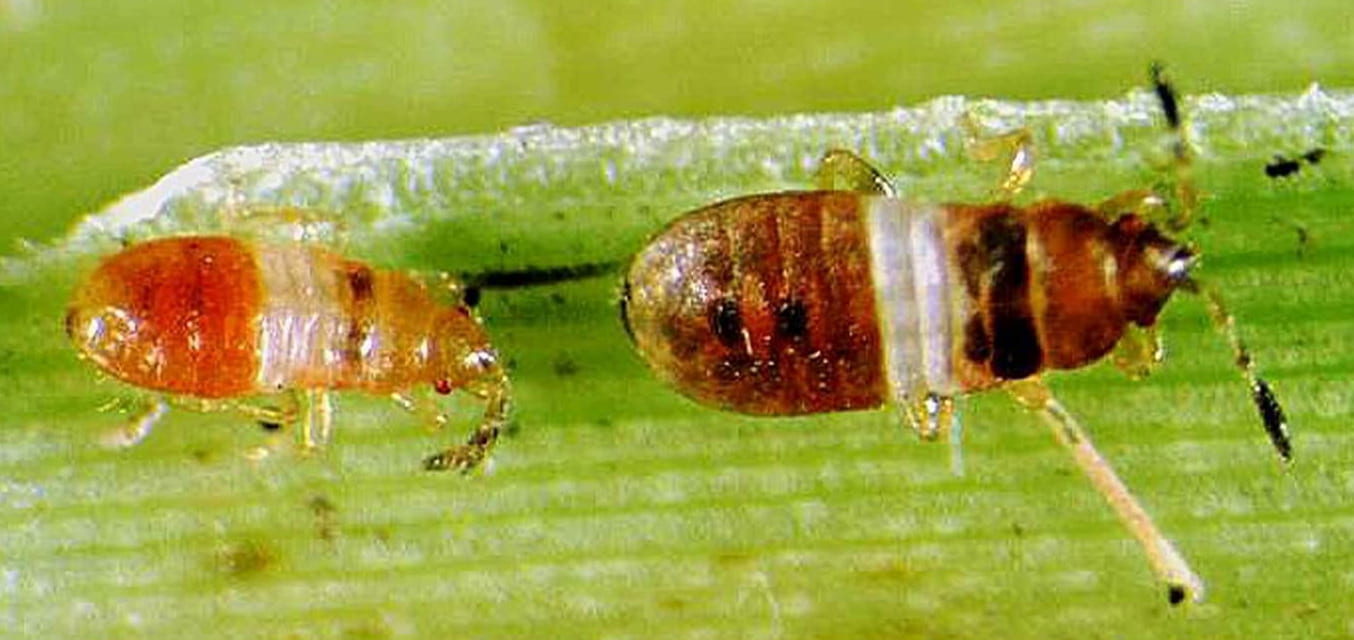
Older nymphs are black and gray with a white spot on the back. There are five nymphal instars (stages between each molt). After the final instar, chinch bug nymphs become adults, which may live for two to three weeks.
Chinch bugs reside in the thatch layer and areas of the turfgrass that receive full sunlight. Chinch bugs prefer hot and dry conditions because they are susceptible to infection by natural fungi under moist conditions. Chinch bugs overwinter as adults in thatch and debris. There are two generations per year in Kansas.
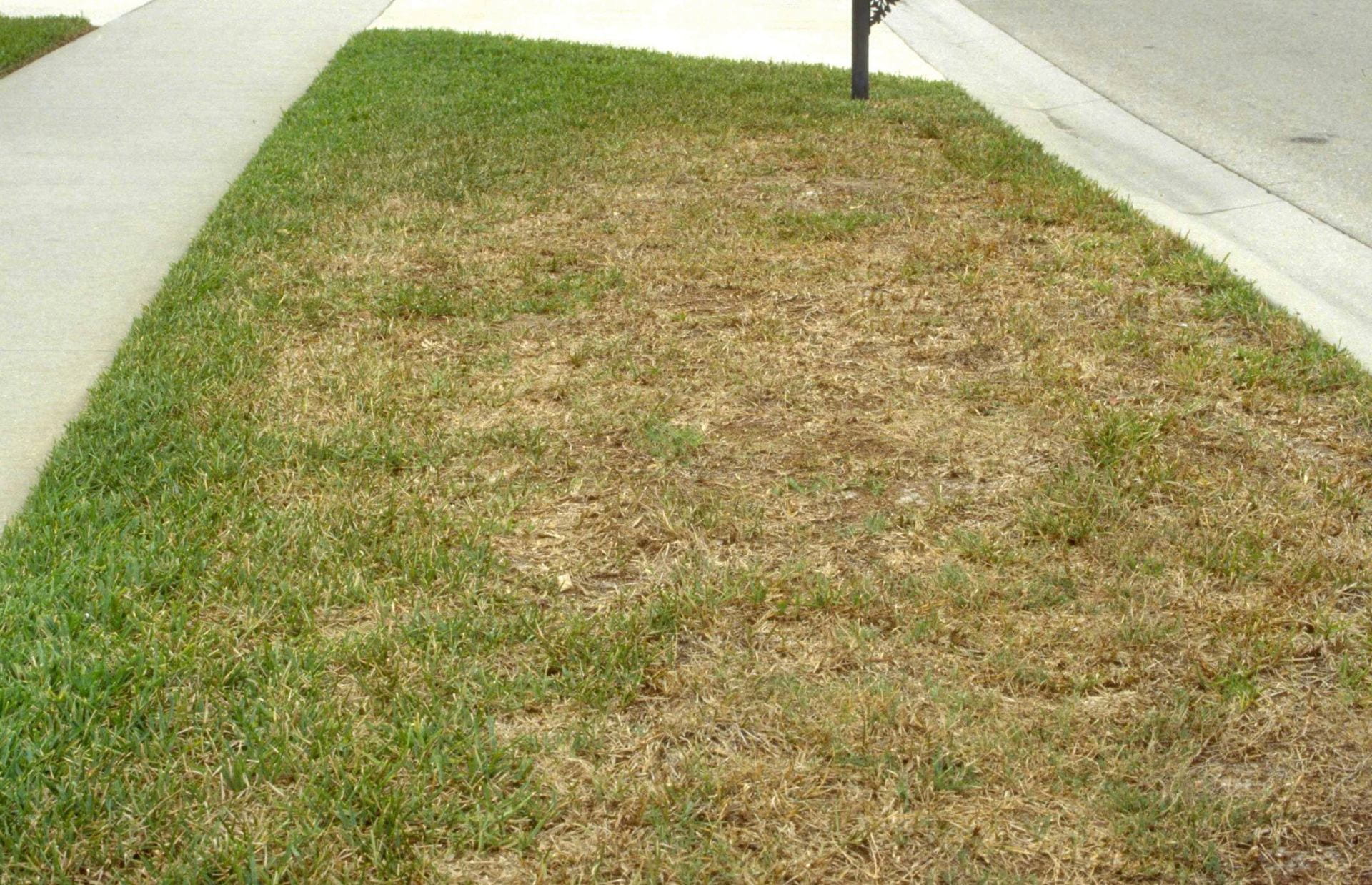
to sunlight, which may be misdiagnosed as drought stress or lack of water.
Damage
Chinch bug nymphs and adults have piercing-sucking mouthparts that are used to remove plant fluids from turfgrass leaves and stems. In addition, they can inject a toxic saliva into plant tissues. Nymphs and adults typically feed on the edge of the yellow or brown patches of turfgrass. Chinch bug adults resemble big eyed bugs, which are predators. Therefore, be sure to accurately determine that chinch bugs are what is causing damage to the turfgrass.
Management
Management of chinch bugs involves 1) regular irrigation of turfgrass, 2) dethatching rhizomatous turfgrasses, such as zoysiagrass and Bermudagrass, 3) regular monitoring, and 4) applying insecticides if needed. Provide enough water to minimize stress to turfgrass and dethatch every year or two years. Monitor for chinch bugs by taking a coffee can open at both ends, insert into the turfgrass at the edge of the damaged area, and fill the can with water. Chinch bug nymphs and adults will float on the water surface. Five to 10 chinch bugs per square foot may result in damage to turfgrass. However, damage can be minimized by providing proper cultural practices, such as watering, fertility, and dethatching.
Liquid or granular formulations of insecticides can be applied to the turfgrass to maintain chinch bug nymph and adult populations below damaging levels. Always read the label of an insecticide and follow directions accordingly. Timing, coverage, and application frequency can influence the effectiveness of insecticides in killing enough chinch bugs to prevent damage to the turfgrass. After application of an insecticide, irrigate with a 1/2 inch (12.7 milliliters) of water to move the insecticide into the thatch layer where chinch bugs are located. Furthermore, when applying liquid formulations of insecticides, ensure that the water pH is between 5.5 and 6.5 to avoid issues with alkaline hydrolysis, which can reduce the effectiveness of the application.