Pythium Foliar Blight Thrives in Wet, Lush Conditions
Last week I received a turf sample with Pythium foliar blight, which is sometimes called Pythium cottony blight. This disease thrives in wet, lush conditions.
Here are two key things to remember:
- Foliar Pythium is entirely different from Pythium root rot. They are completely distinct diseases.
- Pythium is NOT a true fungus. It is an entirely different kind of organism called an oomycete, or “water mold.” Oomycetes have very different cellular structures and biochemical processes compared to true fungi. That is why, with a few exceptions, fungicides for oomycetes such as Pythium are not effective against fungicides for true fungi, and vice versa. As one of my graduate school professors once said, “A whale is not a fish, and an oomycete is not a fungus.” That’s how different their biology is, even thought they look a lot alike.
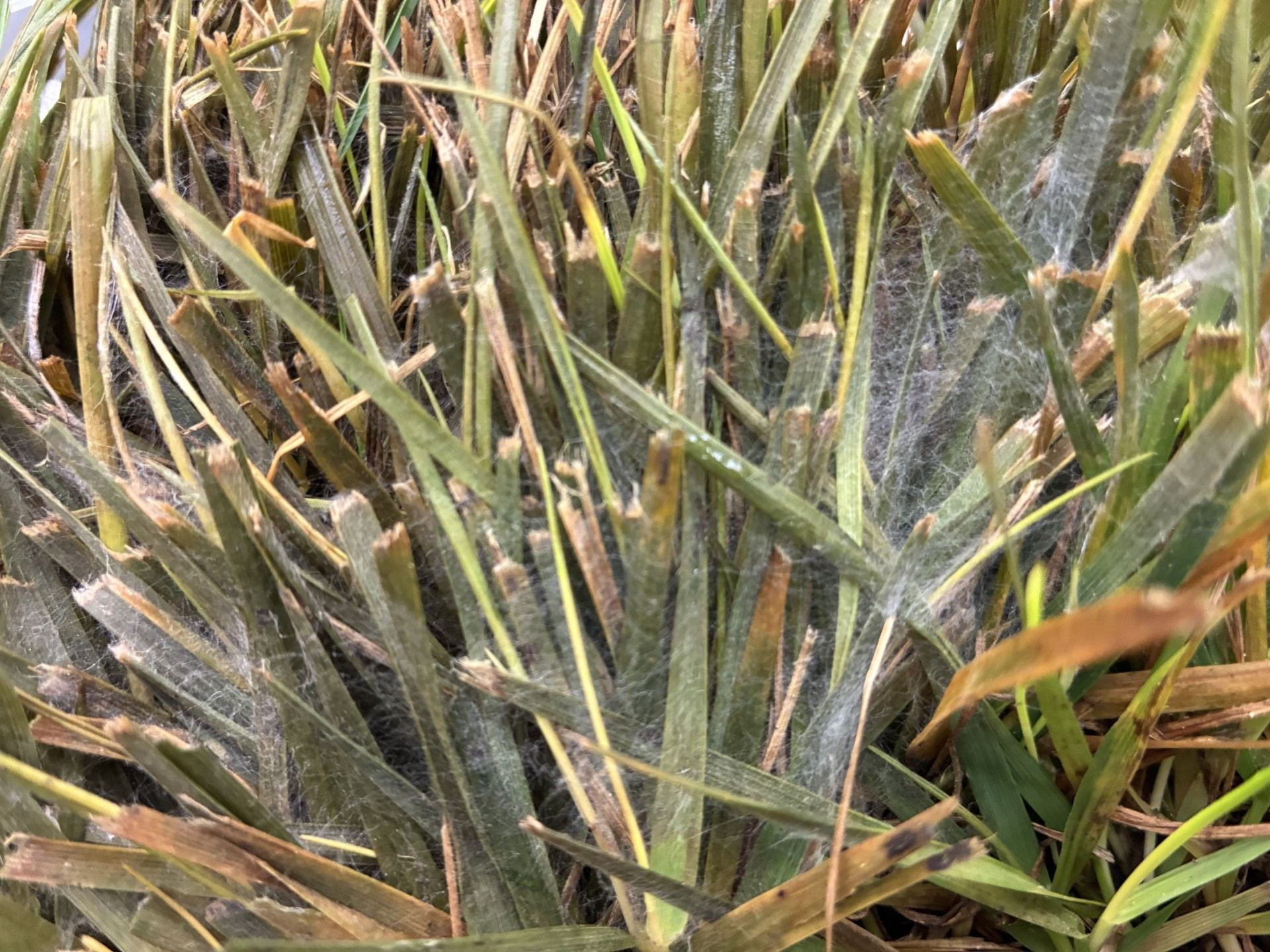
At any rate, Pythium develops abundant cottony mycelium as shown in figure 1. Now – other diseases can also develop fuzzy growth, including brown patch and dollar spot. In the lab they are easy to distinguish in the microscope. There is a lot more information and many more photos about Pythium foliar blight in these former posts below, so if you want to dig into details and see more images, microscope images to see the Pythium characteristics we look for in the lab, and more, you can check those out:
- Hot + humid + rain conditions for Pythium foliar blight
- Hot and sticky summer weather = brown patch and Pythium
For management information, including details about fungicides, Pythium foliar blight is covered in this excellent resource:
https://publications.mgcafe.uky.edu/files/PPA1.pdf. Pythium foliar blight is disease #17 in the guide, starting on page 28.