Noticing Lighter Green Plants Growing Faster Than Your Turfgrass? Two Common Suspects
By Ross Braun, Ph.D., Kansas State University
Are you noticing lighter green plants growing faster than your turfgrass on your properties? If so, you are not alone! Here in Manhattan and across the state, there are two very common suspects: crabgrass and yellow nutsedge. At the Rocky Ford Turfgrass Research Center, we consistently see how these two weeds stand out in a turf stand due to their lighter green color and aggressive growth rates. Let’s break down how to identify these intruders, prevent them from coming back, and effectively control them using postemergence chemical options.
Suspect #1: Crabgrass
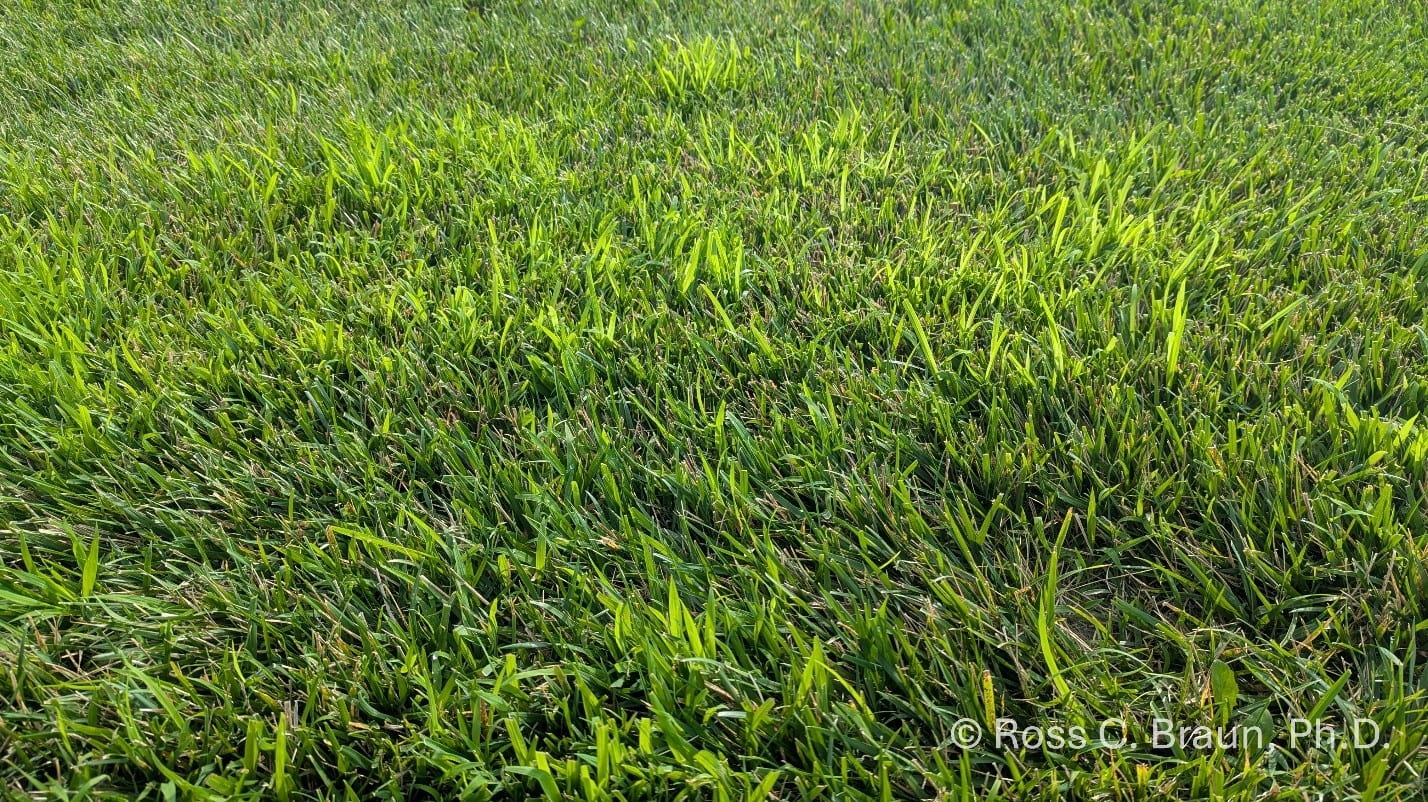
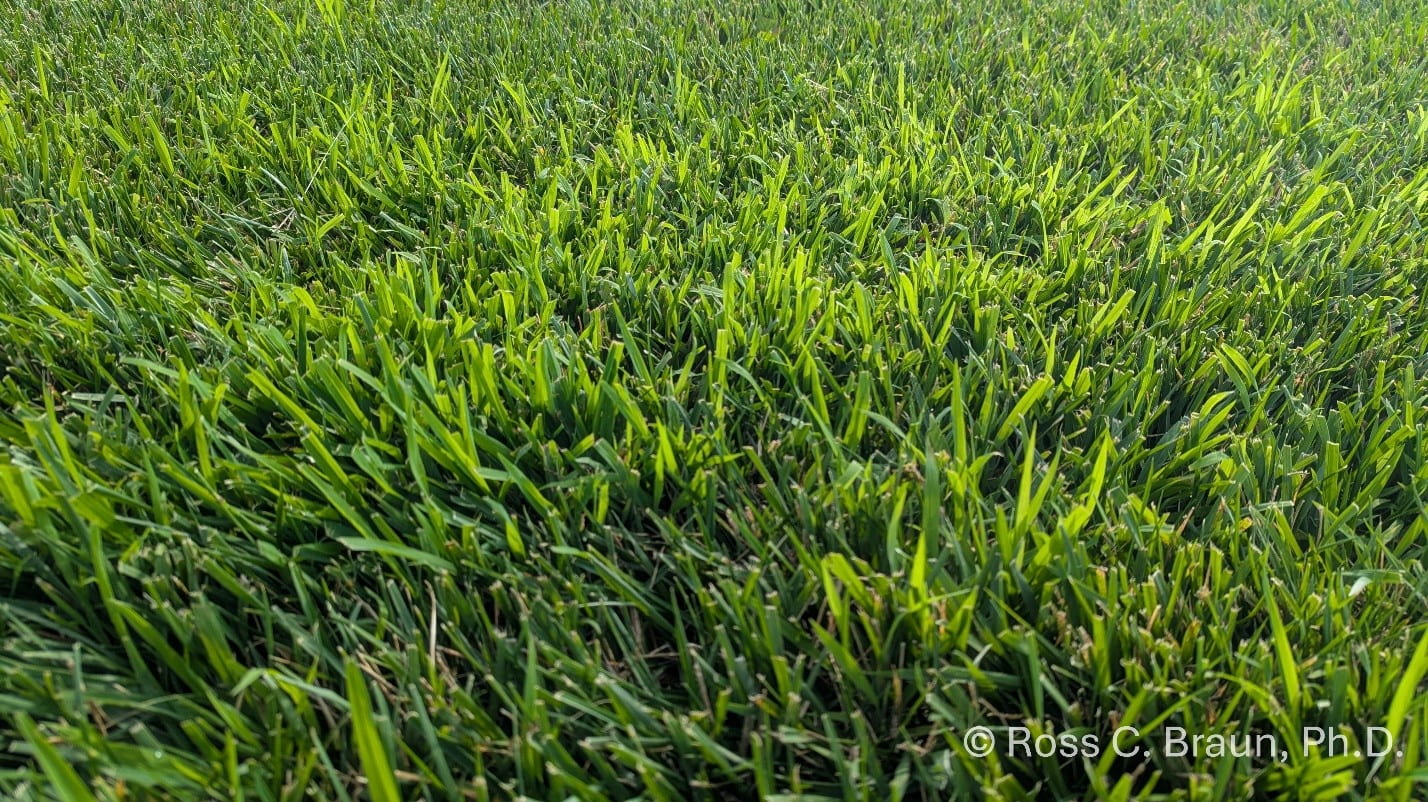
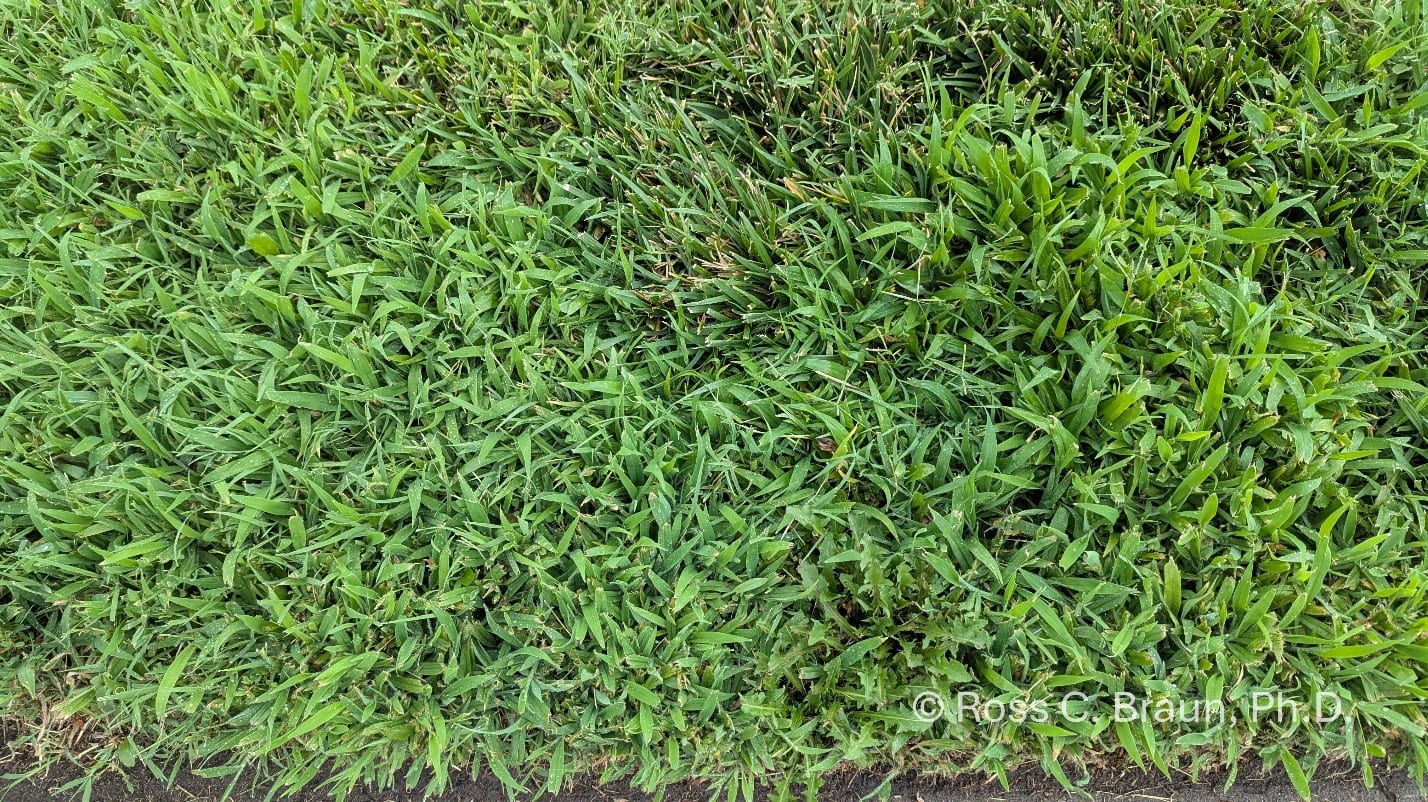
Crabgrass is a summer annual grass that is often considered the most problematic weed in lawns, parks, commercial properties, and many other turfgrass systems. Because of its prostrate growth habit, lighter (pale) green color, and often faster growth rates, it can be a major eyesore. For more help with identifying crabgrass and its various growth stages, be sure to check out our previous KSU Turf Blog posts on crabgrass ID.
Cultural Control Options: The best defense against crabgrass is maintaining a healthy, dense, and actively growing turf stand. These cultural control options will not remove the current crabgrass infestation, but they will set you up for future success (less crabgrass infestation).
- Mowing: Mow your turf at a higher height to shade the soil and reduce crabgrass weed seed germination. This actually works! Even going from a 2.5-inch mowing height up to a 3-inch mowing height makes a big difference! Also, your turfgrass will be healthier with a deeper root system.
- Fertilization: Reduce nitrogen fertilization during the hot summer months in your cool-season turf areas (tall fescue, Kentucky bluegrass, perennial ryegrass, creeping bentgrass). Instead, the majority of your nitrogen should be applied in the fall for cool-season turfgrasses. For warm-season turfgrasses (bermudagrass, zoysiagrass, and buffalograss), the best time to fertilize is the summer months (June-August).
- Irrigation: Irrigate to prevent turf stress.
- Establishment: Avoid spring seeding with cool-season turfgrass; instead, establish or overseed in early fall for cool-season turfgrasses. There is far less weed pressure in the fall (Sept-Oct).
Postemergence Chemical Control & Timing: The best application window for preemergence herbicides is between March through mid-April, so it’s too late now. Instead, you have several postemergence options. But do not wait; timing is critical, and it may take multiple applications! Weeds are much easier to control when they are young and actively growing. Once crabgrass begins to tiller, it becomes significantly harder to control and may require multiple applications. So start now instead of waiting until later in the summer.
- Dithiopyr: Provides effective postemergence control, but only on crabgrass plants that have up to one tiller.
- Quinclorac: Can be used on most cool- and warm-season grasses. It is most effective when crabgrass is at the one-tiller stage or smaller, or when it has matured to more than four tillers.
- Fenoxaprop: Very effective for postemergence control on annual grasses up to the five-tiller stage.
- Topramezone & Mesotrione: Both are effective but typically require two applications. Use higher rates on crabgrass that has more than one tiller.
With any of these postemergence herbicide options, be sure to read and follow the label directions. The label is the law. You will need to identify your desired turfgrass and ensure the active ingredient is safe to apply to it. Avoid applications when air temperatures are >85°F or other temperatures are stated on the label, as applying herbicides at these temperatures significantly increases the risk of turf injury.
Suspect #2: Yellow Nutsedge
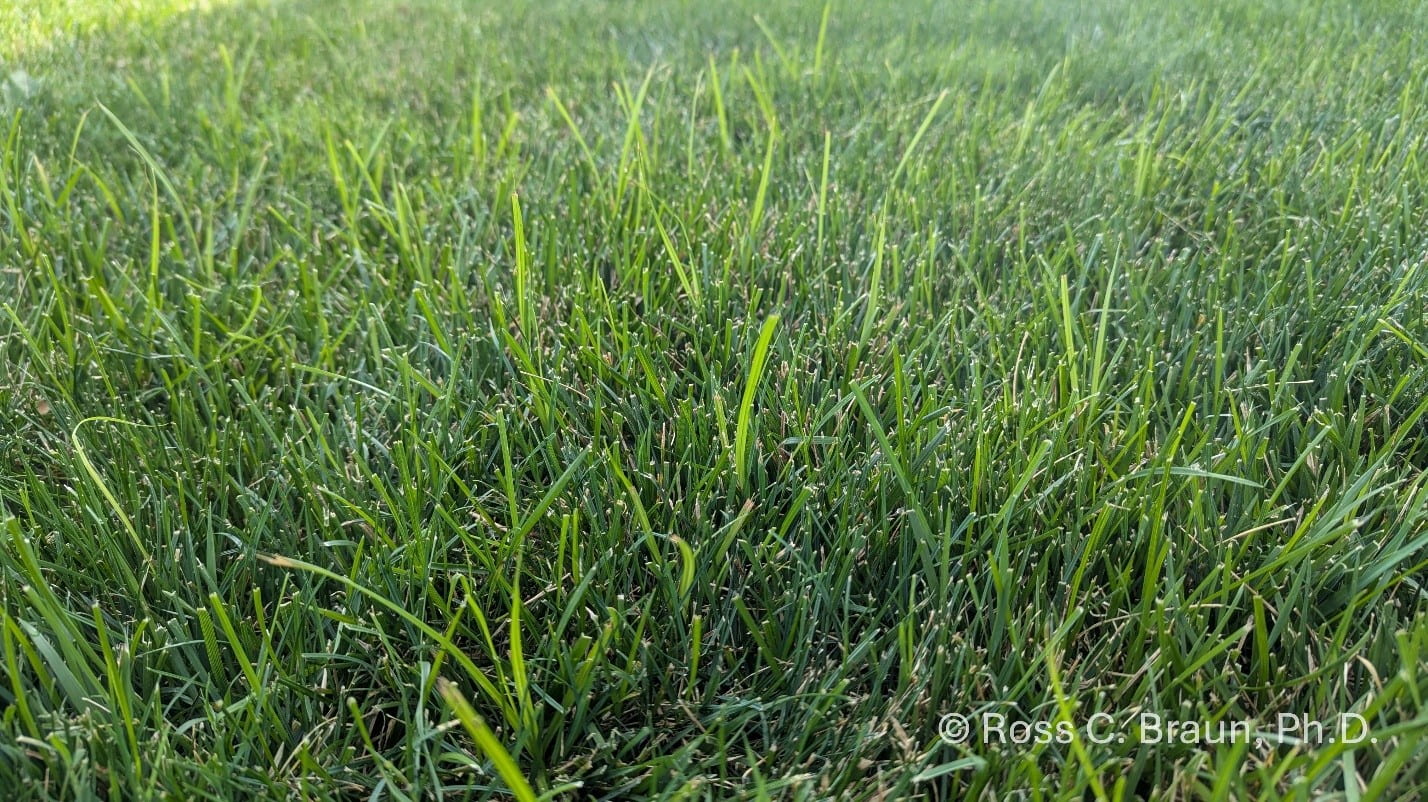
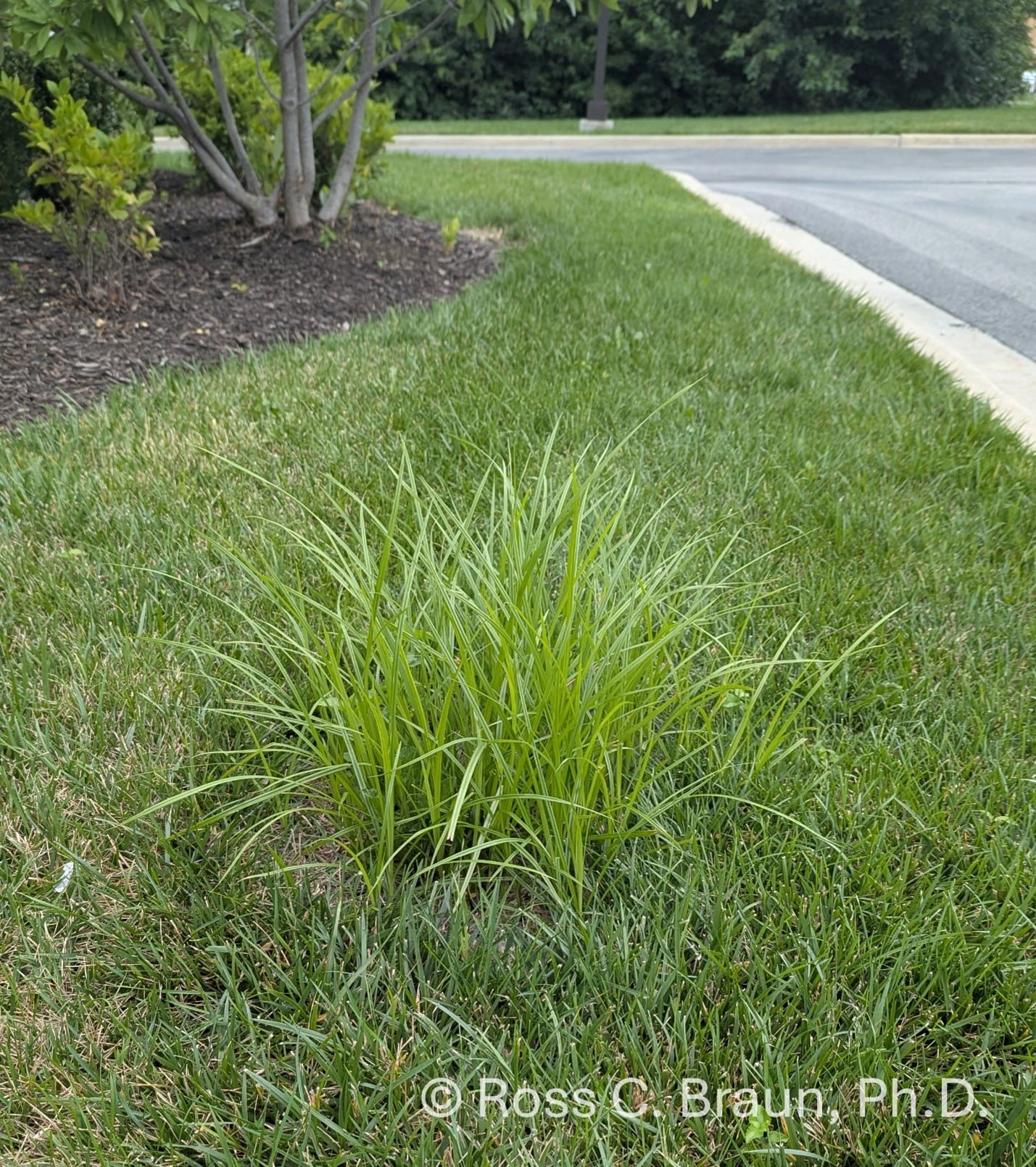
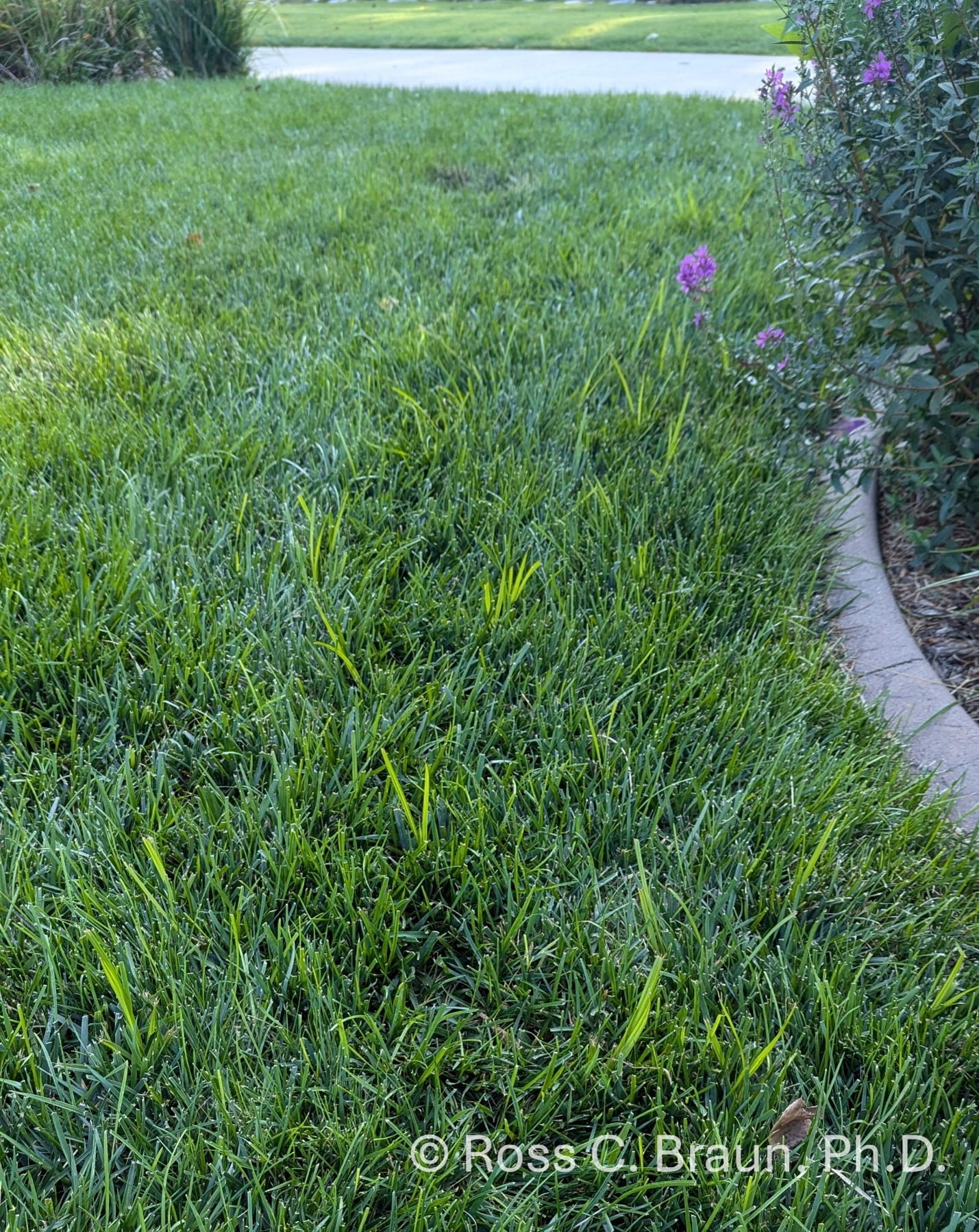
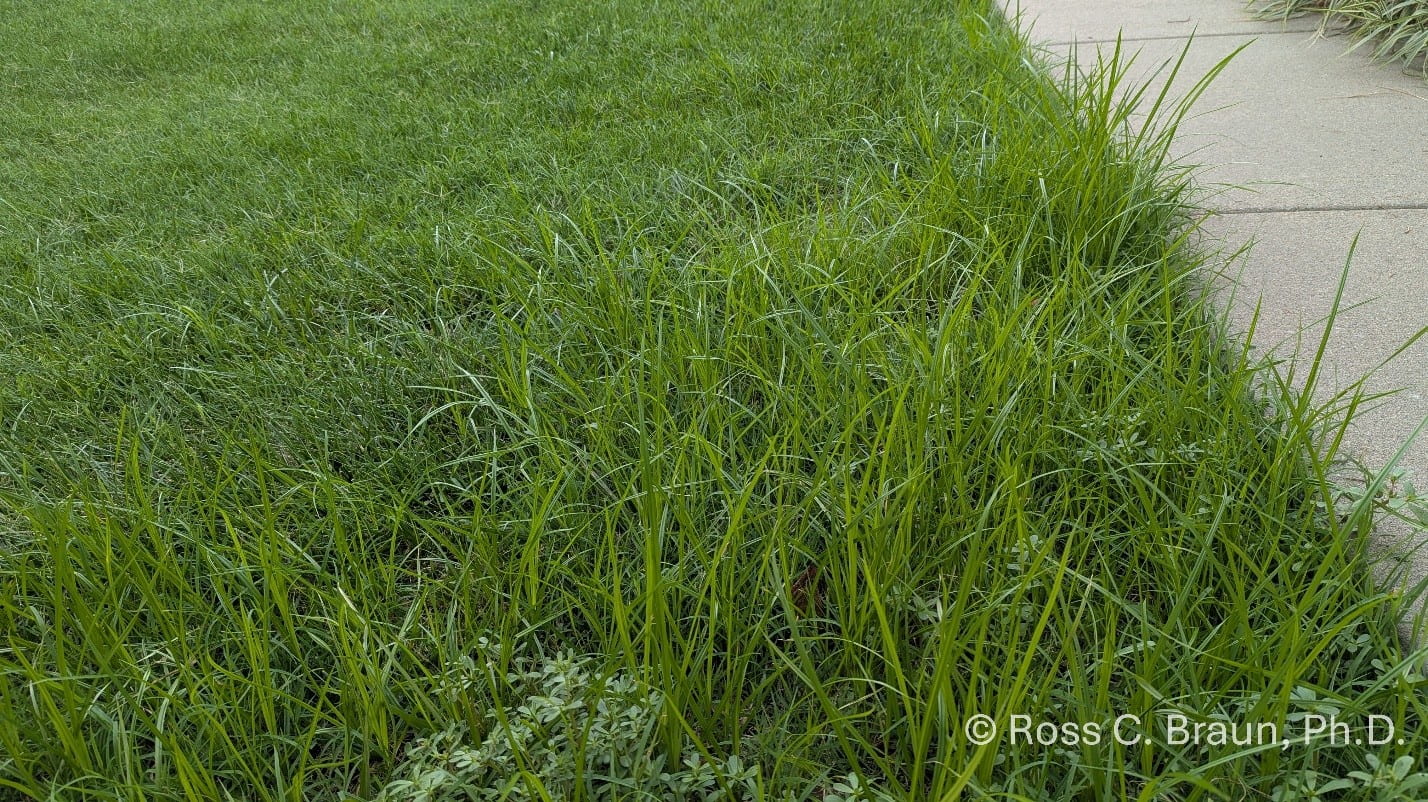
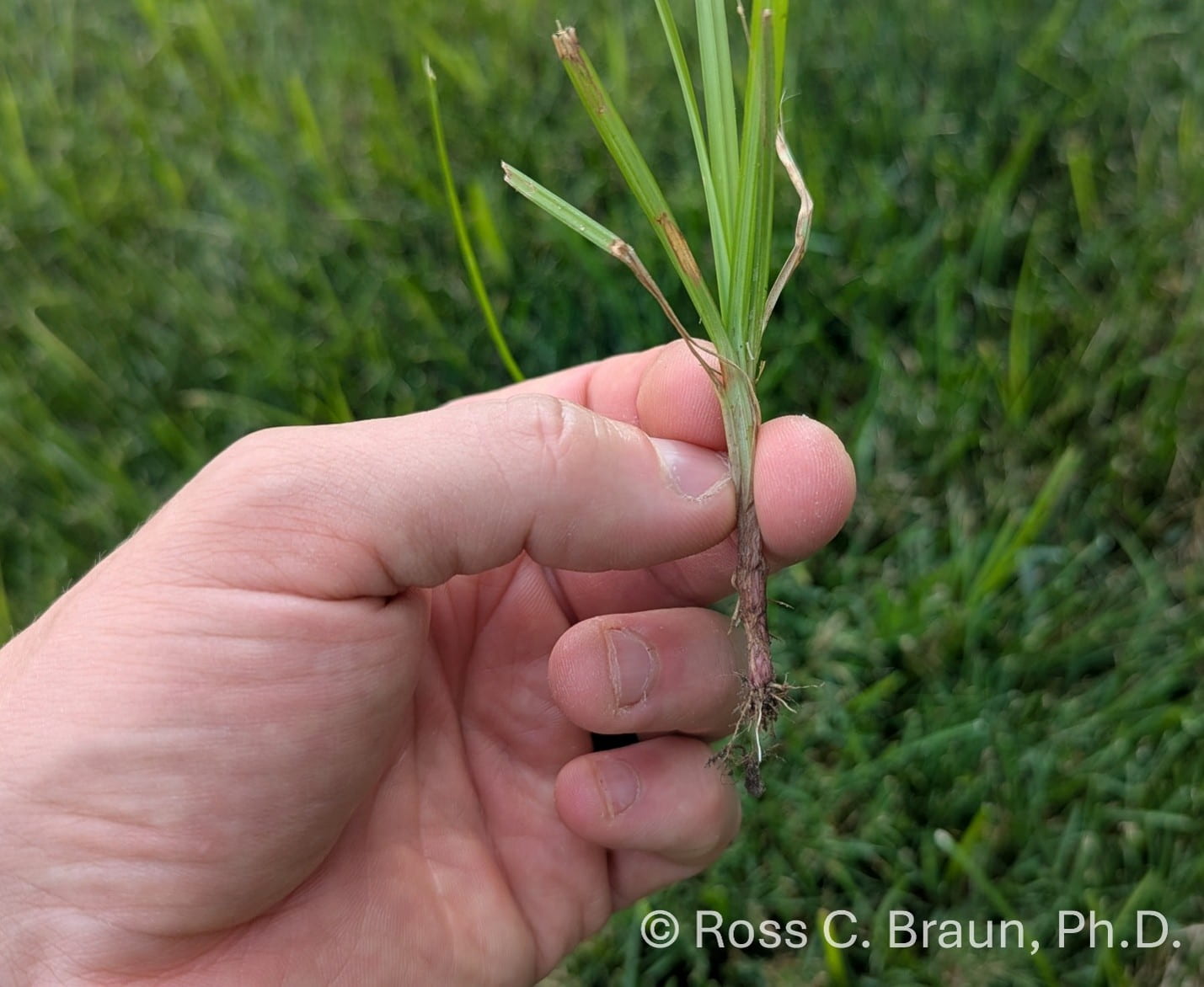
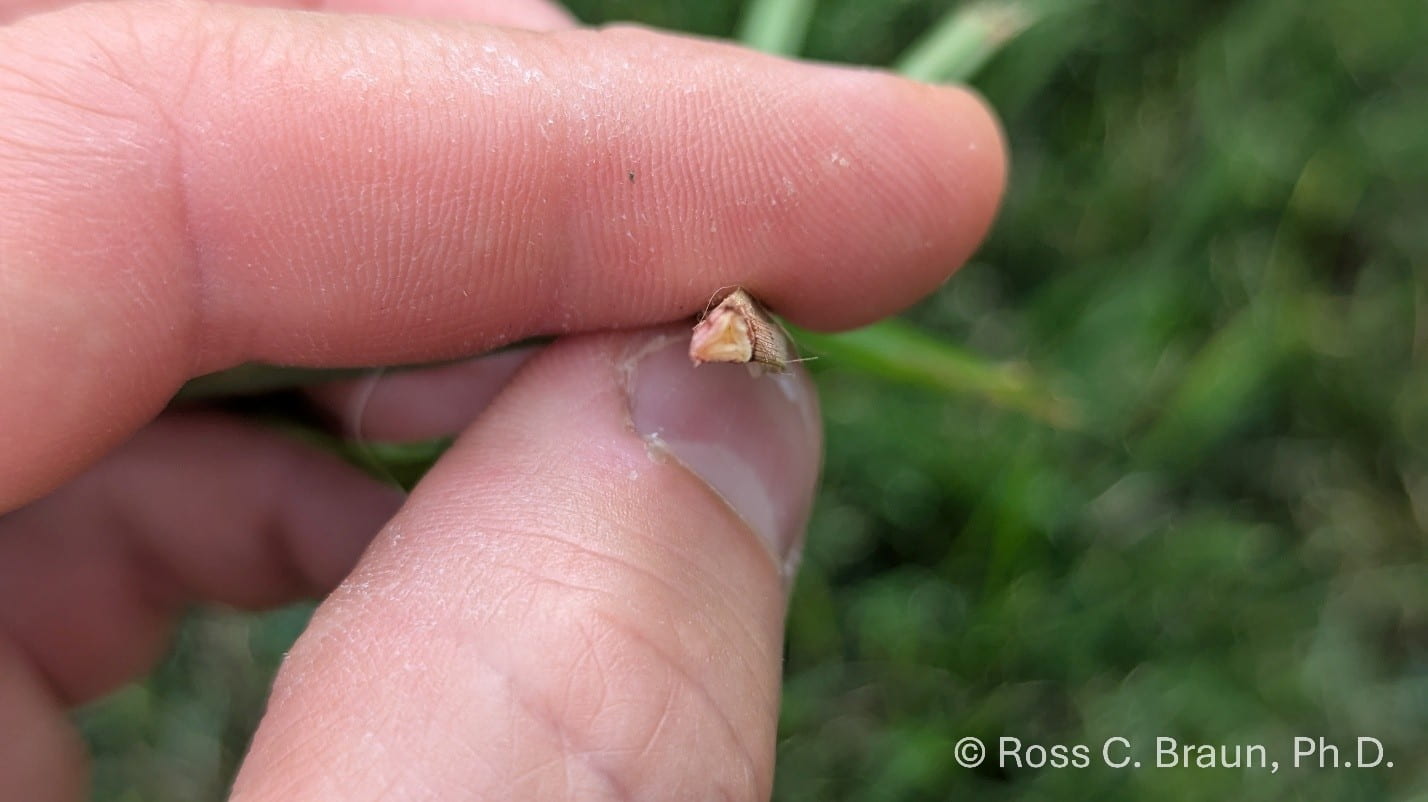
Yellow nutsedge is a perennial sedge that thrives in wet habitats, but it can also grow in well-drained soils once established. It is easily identified by its three-ranked, shiny, yellow-green leaves and distinctive triangular stem. You can review more identification tips in our past KSU Turf Blog posts on yellow nutsedge.
Cultural Control Options: Yellow nutsedge thrives in wet environments and is often an indicator of excess moisture. Again, these cultural control options won’t eliminate your current yellow nutsedge infestation, but they are essential for setting your turf up for future success and reducing future infestations.
- Improve Drainage: Focus on reducing soil moisture by improving areas with poor drainage. Possibly reduce irrigation frequency and space out irrigation schedules to promote deep turfgrass roots and reduce opportunities for shallow-rooted nutsedge to develop.
- Irrigation: Avoid over-irrigation. See above.
- Turf Density: Keep your turf thick and dense, and utilize fall nitrogen fertilization (Sept-Nov) for cool-season turfgrasses and summer fertilization only for warm-season turfgrasses.
Postemergence Chemical Control & Timing: Because yellow nutsedge is a cold-tolerant perennial that reproduces via underground tubers, it is incredibly persistent. Active tuber production occurs in mid- to late-summer.
- Postemergence Timin is Key: Make your first herbicide application in late-spring or early-summer (Late-May to June) before the plant starts forming tubers.
- Persistence and Repeat Applications are Necessary: Sedge control is a multi-application and multi-year program to effectively reduce the population. Expect to scout and make repeat applications in mid-summer (July) to effectively reduce the tuber density in the soil over time. If the pesticide label allows for a 3rd application within a growing season, then a 3rd application in August is often recommended.
Postemergence Herbicides for Nutsedge
Active Ingredients Safe for Most Cool-Season and Warm-Season Turfgrasses
- Halosulfuron: Systemic herbicide effective on yellow, purple, and annual sedges.
- Bentazon: Contact herbicide effective on yellow and annual sedges.
- Imazosulfuron: Effective on yellow, purple, and annual sedges, as well as kyllinga.
- Sulfentrazone: Effective on yellow and annual sedges.
- Mesotrione: Effective specifically for yellow nutsedge.
Safe for Warm-Season Turfgrasses Only
- Dimethenamid: Effective on yellow and annual sedges, and kyllinga.
- Sulfosulfuron: Effective on yellow, purple, and annual sedges, and kyllinga.
- Trifloxysulfuron: Effective on yellow, purple, and annual sedges, and kyllinga.
- Flazasulfuron: Effective on yellow, purple, and annual sedges, and kyllinga.
- Imazaquin: Effective on yellow, purple, and annual sedges, and kyllinga.
- Metolachlor: Effective on yellow and annual sedges.
- Thiencarbazone + foramsulfuron + halosulfuron: Effective for yellow nutsedge control.
With any of these postemergence herbicide options, be sure to read and follow the label directions. The label is the law. You will need to identify your desired turfgrass and ensure the active ingredient is safe to apply to it. Avoid applications when air temperatures are >85°F or other temperatures are stated on the label, as applying herbicides at these temperatures significantly increases the risk of turf injury.