Understanding Pesticide Labels: What is required versus what is recommended
Article by Frannie Miller, K-State Extension Pesticide Safety and IPM Coordinator
Pesticides can be misused when the label contains vague, unclear or contradictory labeling text that makes it difficult for the applicator to determine what is required. Applicators must be able to distinguish mandatory and advisory statements to ensure proper use and legal compliance.
Mandatory statements are legally enforceable instructions, which are required to prevent harm to people, property or the environment. These statements use words such as “must”, “do not”, and “avoid” and are found in the directions for use, and precautionary sections of the label. These statements address how the product must be used or handled.
Advisory statements provide guidance or recommended practices to improve safety or effectiveness but are not legally enforceable. These statements typically use wording such as “should”, “it is recommended”, or “may”. They often contain information on product characteristics, best management practices or tips to reduce risk that should be followed whenever possible.
As a commercial applicator, it is important to make sure you have a clear understanding of the difference between these statements and be able to identify examples on labels you are using. For example, let’s use the Daconil Ultrex label to identify some examples.
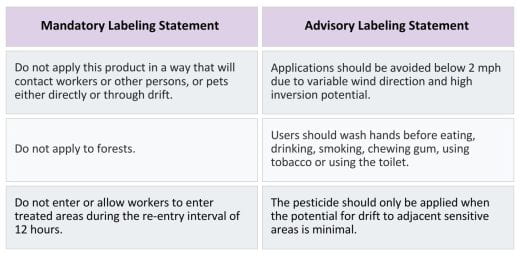
Reminder that advisory statements are best management practices that should be followed for applicator safety, but these statements are not enforceable due to the way they are worded on the label. To be enforceable, label requirements must be stated in positive, direct terms such as “must”, “do”, or “do not”.