Spring Sprung Early? Adjusting Your Turf and Landscape Management for an Unusually Strange Winter-to-Spring Transition.
By Ross Braun, Ph.D., Kansas State University
Most days in February were above average, with many in the 60s. March started off cooler than usual, but it has been a rollercoaster of temperatures since. We’ve gone from temperatures in the teens and snowfall at the start of the week to above 90 °F in less than 4 days. What is going on? For the most part, it seems that spring has arrived ahead of schedule across Kansas this year. While the early warm-up feels great, it may not be ideal for our lawn and landscaping plans and could shift the timeline for our spring management practices.
First: Some Observations and Thoughts on the Recent Cold Snap in Mid-March
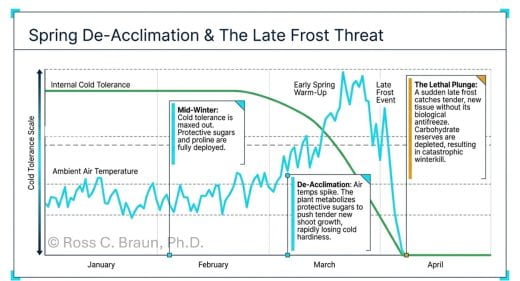
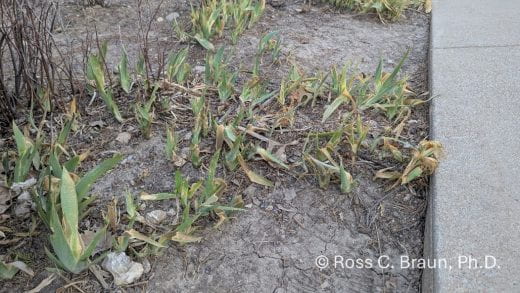
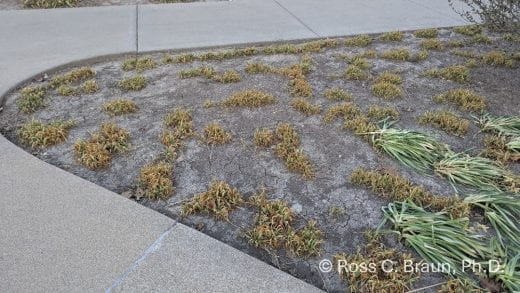
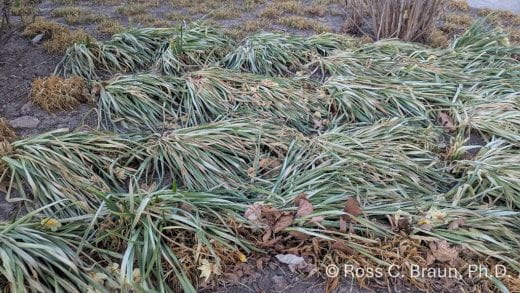
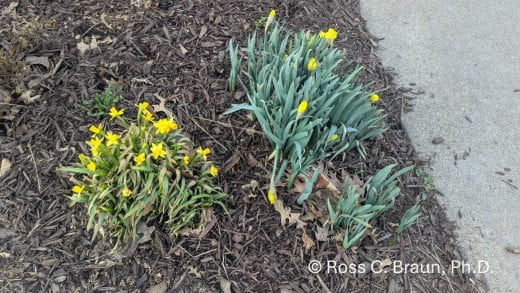
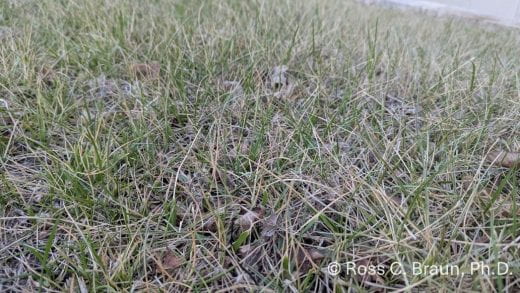
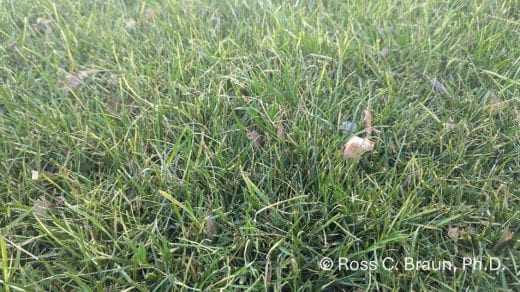
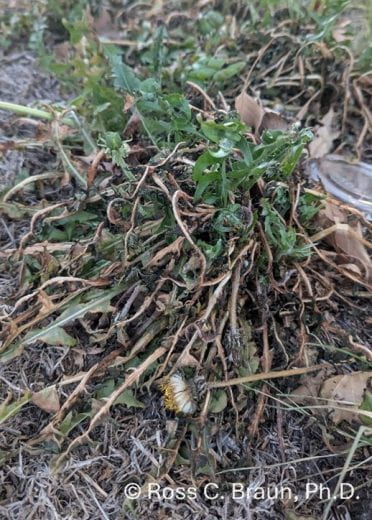
Plants undergo a process during fall through winter called cold acclimation (i.e., hardening) that regulates internal cell water content (dehydration), solutes, and cell membrane strength, preparing them for low freezing temperatures. This process prepares the plants for the low temperatures that often occur in January or February. But when temperatures start to warm up, plants begin to de-acclimate (de-harden), which is the loss of acclimated cold hardiness. So, when we go from warm spring temperatures to sudden freezing temperatures, there is a greater risk of low-temperature injury or death in plants because there wasn’t a gradual transition back to colder temperatures that would allow them to adjust. As a result, the freeze can cause hydrated plant cells to rupture, leading to the freeze damage you see in the pictures below. We often see more “winterkill” in grasses and other plants during these suddenly freezing spring days after a warm-up (de-acclimation) than at winter temperatures. However, as with anything, it is often more complicated, involving multiple factors. For example, when temperatures are low, snow cover may or may not be present, and when it is, it acts as a protective insulating blanket.
Here are some recent photos from March 21, 2026, of various plants showing low temperature injury.
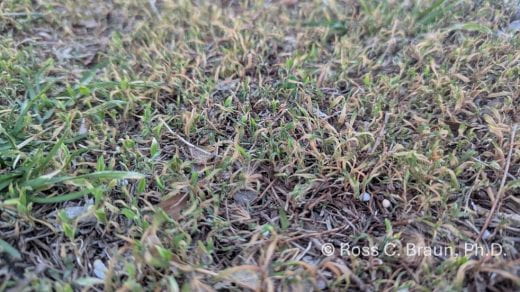
When Mother Nature turns up the thermostat early, calendar-based lawn care goes out the window. Here is what this early spring means for your preemergence herbicides, general lawn care, and irrigation strategies.
The Crabgrass Clock: Rethinking Preemergence Timing
The most critical adjustment you need to make right now involves your preemergence herbicide applications. Traditionally, many Kansas turf managers target late-March to mid-April for crabgrass preventers. However, crabgrass seed germination isn’t triggered by a date on the calendar; it’s driven by soil temperature.
Crabgrass begins to germinate when soil temperatures at a depth of 2 inches reach 55°F for several consecutive days. With our early warm spell, soil temperatures are climbing fast.
- What you should do: Monitor the Kansas Mesonet soil temperature map closely. If your local 5-day average soil temperature is approaching 50-55°F, it is time to get your preemergence down now, particularly in southern Kansas or in urban heat islands (like near sidewalks and driveways).
- Split Applications: Because we are applying earlier than normal, the protective chemical barrier will break down earlier in the summer. Consider a split application: apply half the recommended rate now, and the second half in 6 to 8 weeks to extend your control through late summer.
- For more information, see these past blog posts:
Assessing Winter Desiccation
Before you start aggressively treating your properties, take a walk around and assess how it survived the winter. As we have just experienced, Kansas winters are notorious for wild temperature swings and lack of moisture, leading to winter desiccation (drying out).
- Cool-Season Grasses (Tall Fescue, Kentucky Bluegrass): You may notice some brown, dry patches on exposed slopes or areas that didn’t get any snow cover. Lightly rake these areas to remove dead tissue and allow sunlight to reach the crowns.
- Warm-Season Grasses (Bermudagrass, Zoysiagrass, Buffalograss): These grasses are still dormant or just barely beginning to wake up. Don’t panic if they aren’t green yet. However, if you know certain areas were bone-dry over the winter, keep an eye on them over the next month to see if the crowns survived.
- Irrigation Likely Needed Now: I rarely recommend irrigation in March because we often get timely rainfall with the cooler temperatures, so the plants are okay. But with the warmer weather and minimal precipitation (i.e., most of Kansas has experienced 3 consecutive weeks without receiving 0.10” of precipitation), it is time to start thinking about giving the plants a drink to avoid lingering winter desiccation. These one or two irrigation applications should help get the plants through the next few weeks until we get spring rain in April.
Irrigation: Check the System Now:
- System Audit: Now is the perfect time to turn on your irrigation system and run an audit to know your precipitation rates and proper irrigation timing for each zone. Check for broken sprinkler heads, misaligned rotors spraying the street, and leaks that may have developed over the winter. Many lawn & landscape companies offer these services. I strongly recommend an irrigation audit to help conserve water.
- Watering Strategy: Apply the one or two irrigation applications I mentioned above to help prevent desiccation until spring rains arrive. Then, leave the irrigation controller turned off this spring. Let the spring rain do the work. If we enter a prolonged dry, windy spell, water deeply and infrequently this spring to encourage roots to grow deep into the soil profile, so they are ready for summer. Watering every day or every other day for short periods trains the roots to stay near the surface, which spells disaster when summer arrives.
General Lawn Care: Hold Your Horses on Fertilizer
It is incredibly tempting to throw down a heavy dose of fertilizer on that first 70-degree Saturday, but timing is everything.
- Warm-Season Turf: Do not fertilize bermudagrass, buffalograss, or zoysiagrass right now. Applying nitrogen too early forces the plant to push top growth before the root system is ready, depleting its energy reserves and making it more susceptible to late-spring freezes. Wait until mid-to-late May when the grass is fully green and actively growing.
- Cool-Season Turf: Tall fescue and Kentucky bluegrass are waking up quickly. While fall is the most important time to fertilize cool-season turf, a light application of nitrogen (0.5 to 1.0 lbs of N per 1,000 sq. ft.) can be applied now if the turf is thin or lacking color. Just be careful not to overdo it, as heavy spring nitrogen fertilizer promotes lush growth that is more susceptible to fungal diseases and stimulates excessive, unwanted top growth, increasing the need for mowing this spring.
- Mowing: Make sure your mower blades are sharpened. For cool-season lawns, you can drop the mower deck down a 0.5-inch notch for the first mow of the year to clean up winter debris, but immediately raise it back to 3 to 3.5 inches for the rest of the spring to promote deep rooting.
Stay flexible this spring! Keep an eye on the forecast, use the Kansas Mesonet to track your soil temps, and let the grass tell you what it needs.
For more updates and localized turfgrass recommendations, keep checking back here at the K-State Turf Blog.