Managing Moss and Algae: Cultural Solutions and Chemical Tools
By Ross Braun, Ph.D., Kansas State University
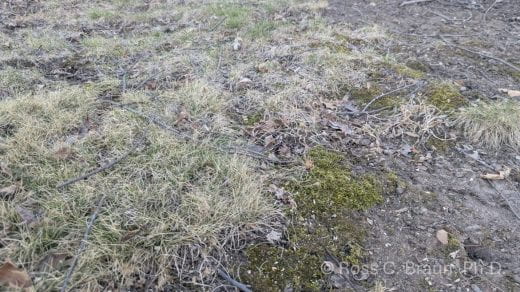
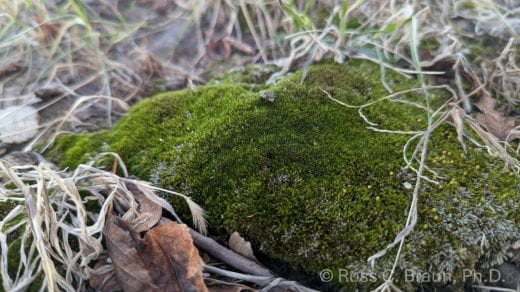
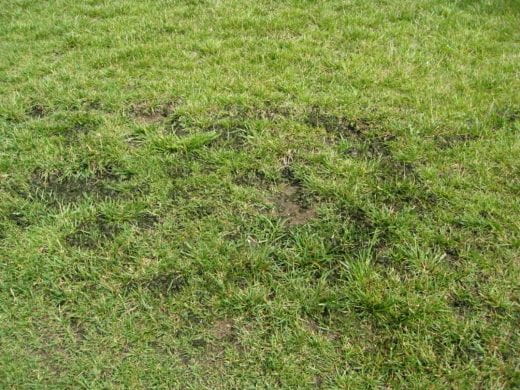
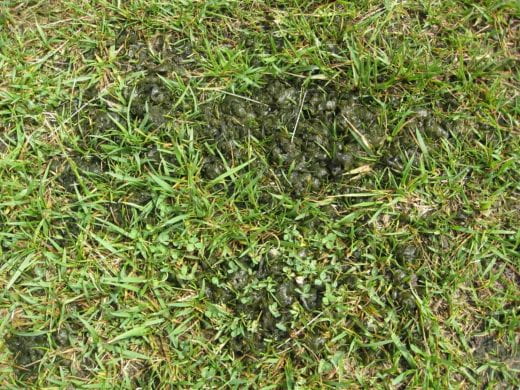
Dealing with moss or algae on your properties can be incredibly frustrating. These infestations generally occur under poor environmental conditions for turfgrass, such as poor drainage, compacted soil, lack of sunlight (i.e., shade), low nitrogen fertility, high phosphorus levels, poor air circulation, and prolonged wet conditions often found under shaded environments. Chemical controls like carfentrazone only offer temporary moss suppression, do not work on algae, and cannot provide complete control. The only permanent solution is to modify these unfavorable conditions, allowing a thick, healthy turf to outcompete the infestation. This requires a persistent, long-term approach using cultural practices. While cultural practices provide the only permanent fix, chemical controls can offer temporary burndown, giving the turf a fighting chance to recover.
Effective Cultural Strategies:
- Improve Soil and Drainage: Use a vertical mower (e.g., power rake, verticutter, vertical mower) or a hollow-tine core aerifier to loosen compacted soil. Be aggressive and make multiple passes over the infested area. These cultivation methods also help break up restrictive algae layers. Time this practice with reseeding (mentioned below). You can sometimes correct poor drainage by improving the soil’s surface grade or by installing subsurface drainage.
- Optimize Light and Airflow: Pruning tree limbs or removing plants increases air circulation and allows more sunlight to reach the turf. Additionally, raising the mowing height in shaded areas helps the grass absorb more sunlight and maintain better health, helping it compete with moss or algae.
- Adjust Nutrition: Cool-season grasses need 1.0 to 3.0 pounds of nitrogen per 1,000 square feet annually. September through November is the best time to fertilize cool-season turf to help it recover from summer stress and maintain dense, green, deeply rooted turf with optimal energy reserves for future growth. A little N fertilizer (0.5 to 1.0 pounds of nitrogen per 1,000 square feet) in mid-spring should also help the turf compete with moss or algae. Conduct a soil test to determine whether you need to apply additional nutrients (e.g., phosphorus, potassium), but avoid high phosphorus amounts.
Reseed Strategically: Aggressively hand-rake infested areas to remove debris. After clearing, overseed with shade-tolerant species such as Chewings fescue, hard fescue, tall fescue, strong creeping red fescue, or slender creeping red fescue. Do not use seed mixtures with Kentucky bluegrass or perennial ryegrass, as these species are less shade-tolerant and will eventually weaken and thin out under shade stress, making them unable to compete with moss or algae.
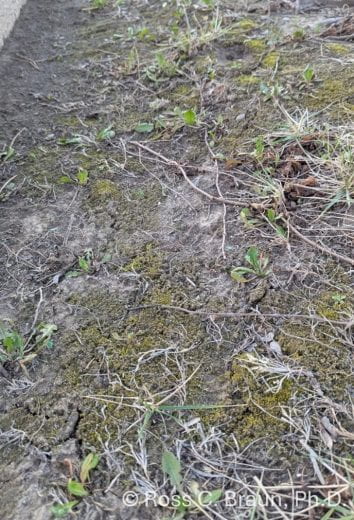
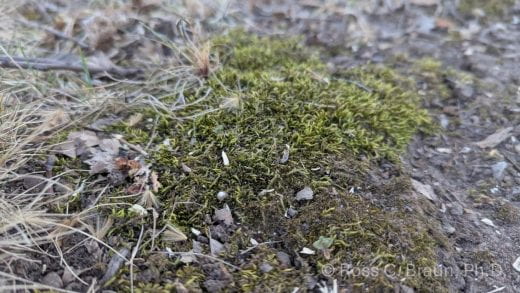
Chemical Management Options
When it comes to chemical controls for moss and algae, the results are generally temporary and highly inconsistent. Because chemical controls act only as a temporary band-aid, identifying and correcting the underlying environmental issues with cultural strategies is necessary for long-lasting results.
- Moss: The active ingredient carfentrazone-ethyl (e.g., QuickSilver, other trade names) is the primary reliable chemical option for suppression. It provides temporary burndown of moss but is ineffective against algae. Furthermore, it will not provide complete control on its own and needs to be combined with cultural practices. It will also require multiple repeat applications to keep the moss away.
- Algae: Effective active ingredients include chlorothalonil, fluazinam, fluxapyroxad, mancozeb, triticonazole, and hydrogen dioxide.
- Other temporary solutions: People have tried a wide range of solutions with inconsistent results, including dishwashing liquid soap, hydrated lime, iron sulfate, copper sulfate, potassium salts of fatty acids, and D-limonene. However, many of these will provide inconsistent results and at best temporary suppression.
- Important Cautions: Use caution with copper hydroxide, which risks causing phytotoxicity on cool-season grasses during high heat. Additionally, be aware that DMI fungicides can inadvertently enhance algal growth by reducing turf canopy density.
- Golf Course and Sports Field Managers: Go deeper on moss and proper carfentrazone application timings with these past blog posts and a USGA article.
Combining targeted chemical burndown with persistent cultural improvements listed above is the ultimate recipe for a clean, resilient turf.