Cold-Hardy Bermudagrass Varieties
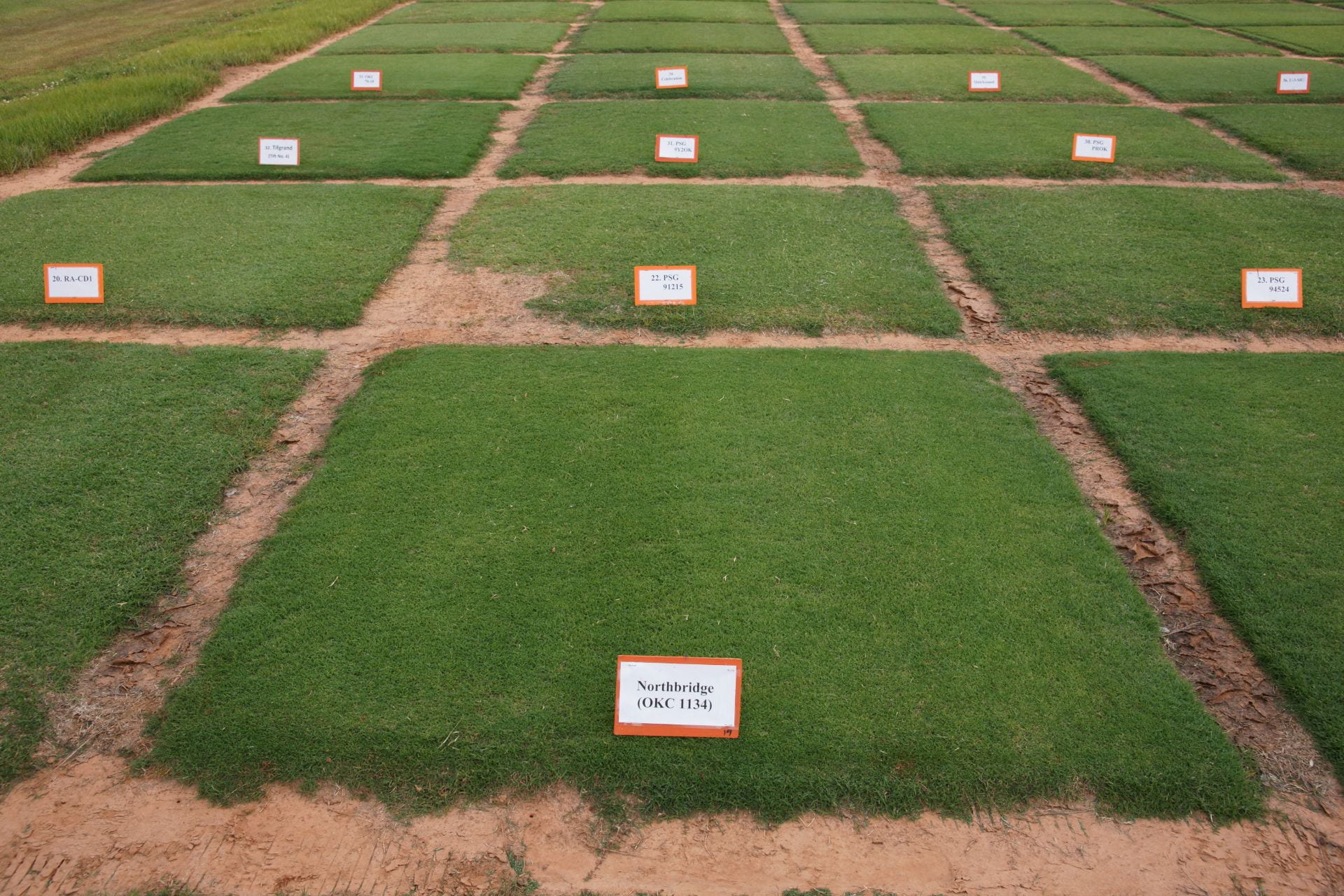
Numerous vegetative and seeded bermudagrass cultivars are used through much of the U.S., but it is important to select those that have better cold hardiness for use in the transition zone. In the transition zone, bermudagrass is commonly used on sports turf, golf courses, and home lawns. It is a faster-spreading warm-season grass compared to zoysiagrass and buffalograss.
Faculty at Oklahoma State University (OSU) have done breeding of cold-hardy bermudagrass for numerous years. Specifically, Dr. Charles Taliaferro started the bermudagrass breeding in the mid-1980s, and then retired in 2006. Over the past 19 years, Dr. Yanqi Wu has been doing bermudagrass breeding at OSU. Below is a list of cultivars that have been released from OSU:
- Midlawn and Midfield in 1993 (K-State cooperatively worked with OSU in release of these)
- Yukon in 2000 (seeded types)
- Riviera in 2001 (seeded types)
- Patriot in 2002
- Northbridge and Latitude 36 in 2011
- Tahoma 31 in 2017
- Experimental genotypes OKC3920 and OKC1876, pending 2025-2026
Northbridge bermudagrass above in the photo was provided by Dr. Mingying Xiang, Assistant Professor at OSU who got a Ph.D. in Horticulture at K-State. She has ongoing research related to bermudagrass cultivars. In addition to those highlighted above, seeded cultivars, Monaco and Rio have been developed in Oklahoma by Johnston Seed Company and are also cold-hardy varieties. Cultivars mentioned above that are highlighted in dark color are the ones that can currently be considered for planting in the transition zone; others are not widely available at this time.
Breeding and release of varieties from OSU has been impressive over 40+ years. Those with interest in bermudagrass can learn more about each of these varieties.