K-State launches new training program for academic advisors
Multi-year professional development program helps advisors better support student success
By Morgan Greene
Division of Academic Success and Student Affairs
Monday, July 20, 2026
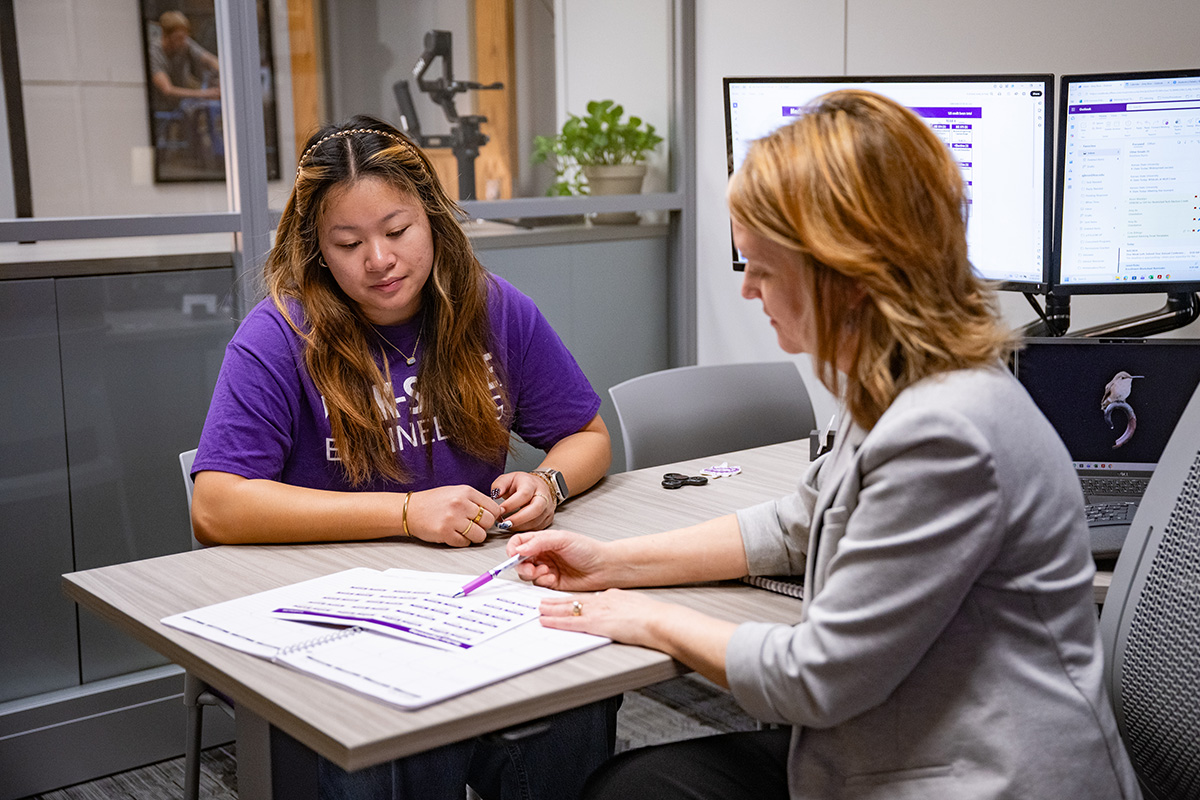
Academic advisors guide students through their college experience by helping them enroll in courses, navigate degree requirements and plan for post-graduation. They build trusting relationships with students, teach students skills for self-understanding and agency, and adapt their approach to each student.
In other words, academic advising goes far beyond checking academic boxes. It's about supporting each student holistically and individually.
Kansas State University has a college-centered advising model, in which each college has a team of professional academic advisors reporting centrally to the college. Under this model, colleges collaborate with the Division of Academic Success and Student Affairs so that all advisors have common training, use common technology and adhere to a coordinated advising system.
The result? A cohesive advising experience for all Wildcats, regardless of area of study.
"Academic advising is a deeply impactful part of a student’s college career," said Pamela Erickson, executive director of academic advising. "At its core, advising stems from the belief that all students have the potential to succeed. That means all students have an advisor who is part of their success team — someone who is here to help students make meaning of their time at university and stay in their corner through the ups and downs."
Delving deeper into core skills
To ensure consistency in advising experiences, leadership at K-State identified key items that advisors should know, do and value. Communicating those common threads starts on day one.
That's where the new K-State Academic Advisor Training program comes in.
Launched during the 2025-2026 academic year, this multi-year program begins as a required component of a new advisor's first year at K-State and continues as an optional professional development opportunity for all others.
"The KAAT program is designed to support advisors in the critical work they do," said Ashley Blake, advisor training administrator. "In ADV 101 and ADV 102, new advisors are equipped with the knowledge, skills, abilities and encouragement to do their work. They take part in case study discussions and peer mentoring to help them develop best practices that align with K-State’s advising expectations."
The program continues with several optional courses, designed for continuing advisors to delve deeper into the conceptual and relational components of NACADA’s core competencies, aligning with the university’s advising expectations.
During the program's inaugural year, 19 new and 13 continuing advisors participated.
Course conversations included informational topics such as academic policy and technology, as well as conceptual and relational topics such as student development theory and building rapport.
"It was an incredibly rewarding experience," said Beth Stuewe, director of online student success and advising and ADV 202 participant. "Connecting with advisors from across campus provided valuable opportunities to share ideas, learn how other approach common challenges, and strengthen relationships across our advising community. Service as a mentor also gave me a greater appreciation for the different ways advisors use shared systems and practices to support student success."
As the program continues into its second academic year, Blake hopes advisors continue to lean into the experience.
"Last year was energizing," said Blake. "The amount of knowledge and experience in our advising community is vast, but we don’t always have the opportunity to connect and learn from or alongside others across campus. That’s been a highlight for everyone so far! Leaning into professional development is a university expectation, and the KAAT program is one we hope all advisors will agree is worthwhile."
A core component of KAAT is a peer mentoring model, in which continuing advisors in ADV 202 are paired with new advisors from ADV 102.
"The mentoring experience was one of the most rewarding parts of the program," said Austin Drake, academic advisor in the College of Health and Human Sciences and ADV 102 participant. "As a new, professional advisor, I appreciated the opportunity to both learn from and share insights with colleagues across campus. Being paired with an experienced advisor also gave me the opportunity to receive thoughtful feedback on my advising practices and learn strategies to better support student success."
2026-2027 cohorts open for recruitment
New and seasoned academic advisors can now register for the 2026-2027 cohorts of the KAAT program. Asynchronous and workshop-style courses are available, each focusing on best practices, advising concepts and in-depth topics that advisors need to know.
"Our inaugural cohorts took away so much from the experience, and we’re excited to welcome the next group of advisors," said Erickson.
Online registration is available now. Interested participants should register by July 31. Questions can be directed to Ashley Blake.