The dough must go on
Technology Development Institute redesigns mixing equipment for grain and food science department
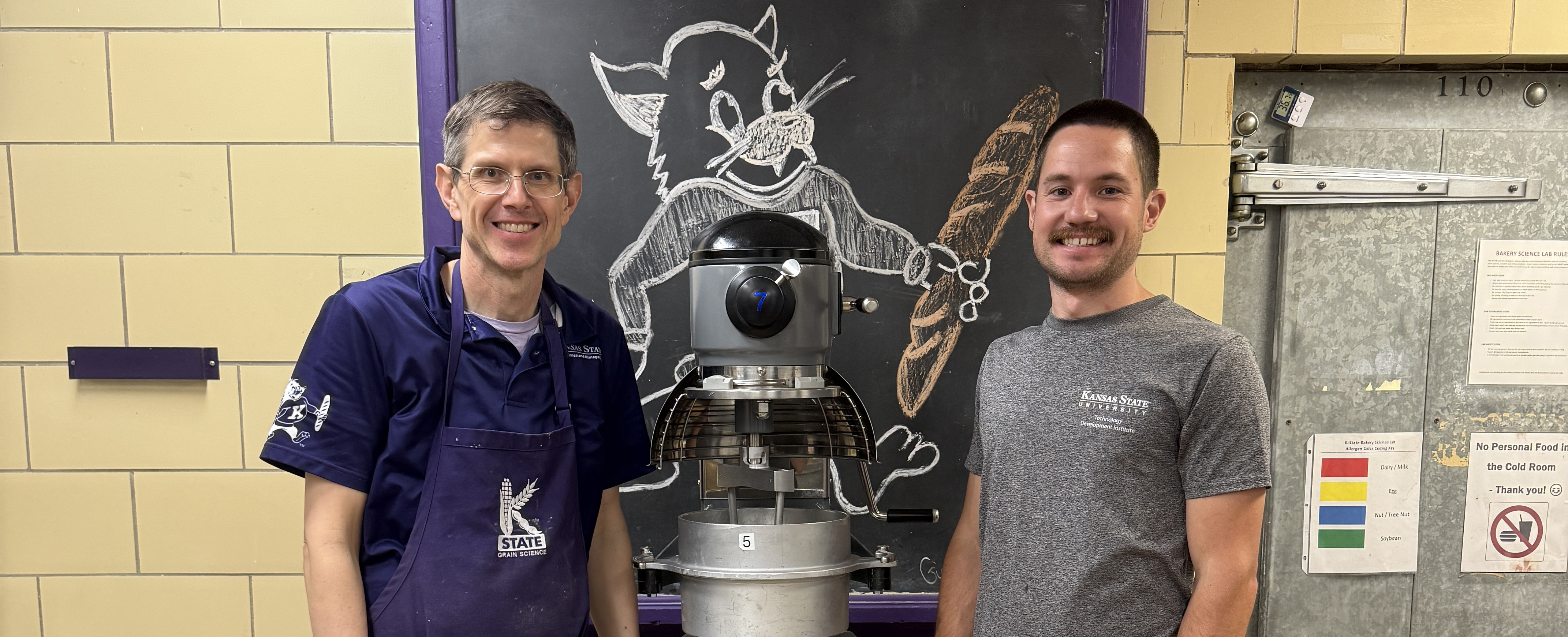

By Konner Gepner
Technology Development Institute
Friday, May 1, 2026
While most people might not recognize the name, bakery science students know just how important a McDuffy mixer is to their work. For bread and dough that requires more mechanical energy to mix than a standard mixer can provide, professional bakers and future bakers at Kansas State University turn to the McDuffy mixer.
When the Department of Grain and Food Science at K-State wanted to improve the mixing experience for students, the Technology Development Institute, or TDI, stepped up to help fellow Wildcats across campus.
Thanks to the collaboration, K-State students are now mixing with style and efficiency that allows them to focus less on maintaining the equipment and more on perfecting the techniques and skills they're developing for their futures.
When mixer assessment and redesign were needed, TDI answered the call
McDuffy mixers use a combination of a special bowl design with a central rod and a mixing attachment consisting of two rotating metal rods, all installed on a benchtop commercial mixer. Higher-protein flour made from hard wheat can be tough to mix — which is why the unique design of the McDuffy mixer is so valuable.
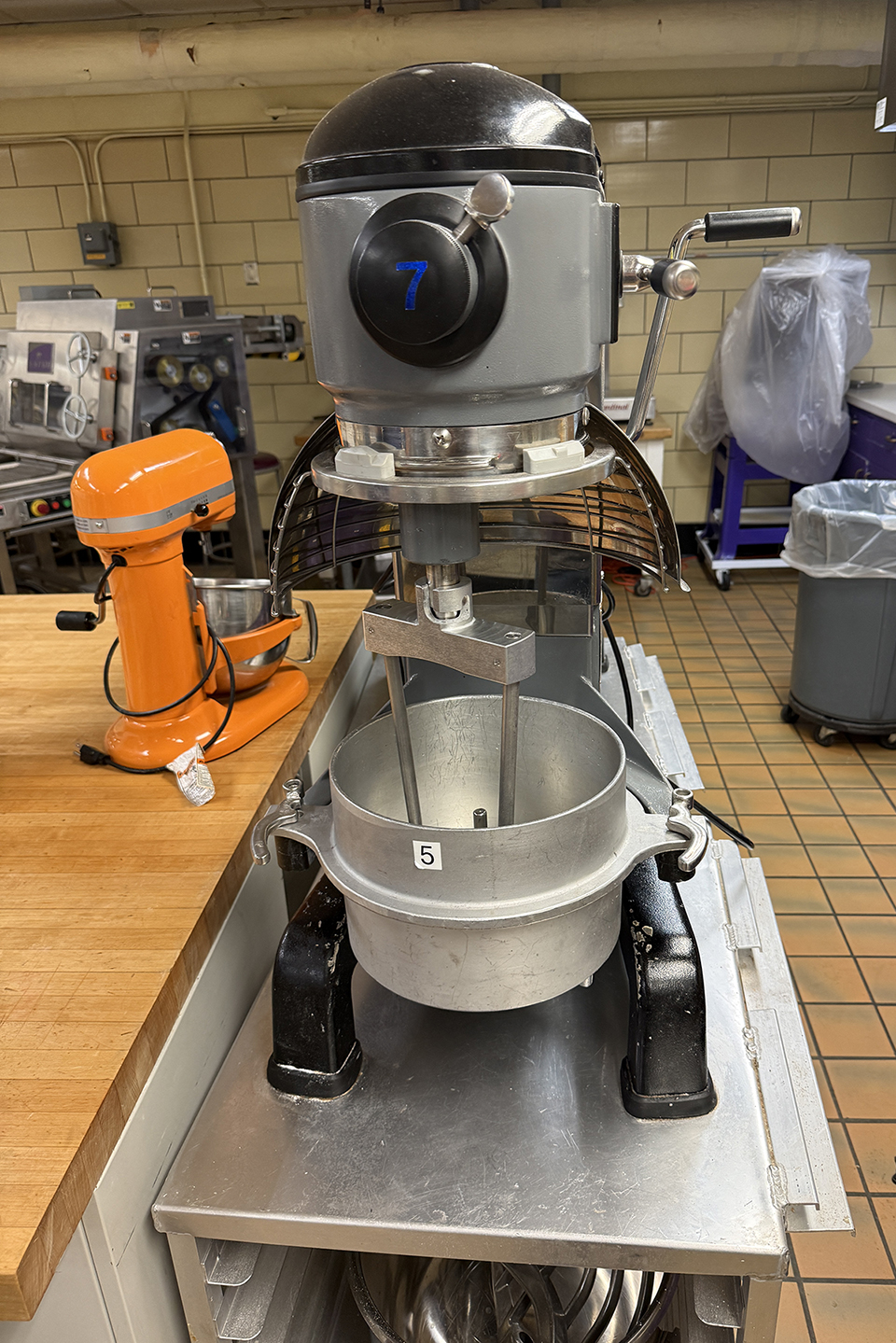
Aaron Clanton, instructor in K-State's Bakers National Education Foundation, knew that the attachment could be improved. It was difficult to attach, and it sometimes loosened on the mixer after a bit of use — causing it to scrape the bottom of the mixing bowl — which raised concerns about time costs, material losses and even safety.
Clanton took an original McDuffy mixer, including the attachment, to the TDI team. He asked the institute staff if they could help redesign the attachment to resolve the challenges he'd encountered, and they jumped at the opportunity to collaborate with a campus partner and improve the experience of K-State students in the grain and food science department.
First, the team focused on the attachment's connection to the mixer, aiming to improve installation speed and eliminate the risk of the device falling off during use. They also investigated adjustable rod-height options in the mixer for potential use with different mixing bowls.
TDI developed computer-aided drafting models to share conceptual designs with Clanton and his team, and after narrowing down the desired features and defining the parameters, the TDI team got to work on producing the new piece.
Collaborative design process leads to improved bakery product
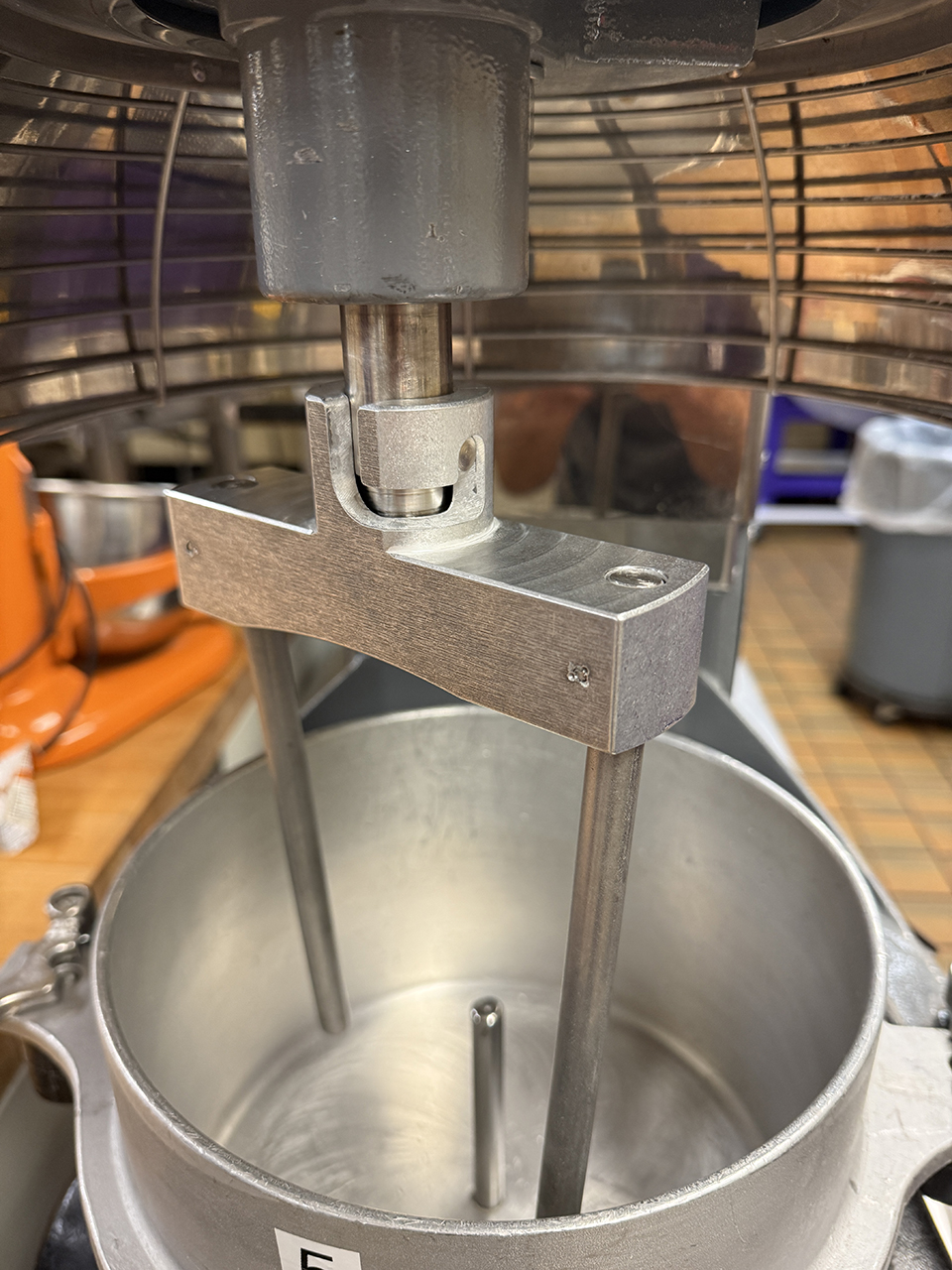
TDI created a 3D-printed prototype of the newly designed attachment and installed it on one of the grain and food science department's industrial mixing machines, checking the fit and ensuring the device met the requirements of the mixing equipment.
Their final design has a quick-couple attachment that can be installed in a few seconds and cannot disconnect from the machine under operating conditions.
"We had attempted to work with some vendors in the past to make this redesign, but due to the small market size for these devices, no one would take the time to help us resolve this issue," Clanton said. "TDI was able to help us identify the cause of the problem, propose solutions that would correct those issues and then actually fabricate enough units that we could upgrade all of the mixers in our training lab."
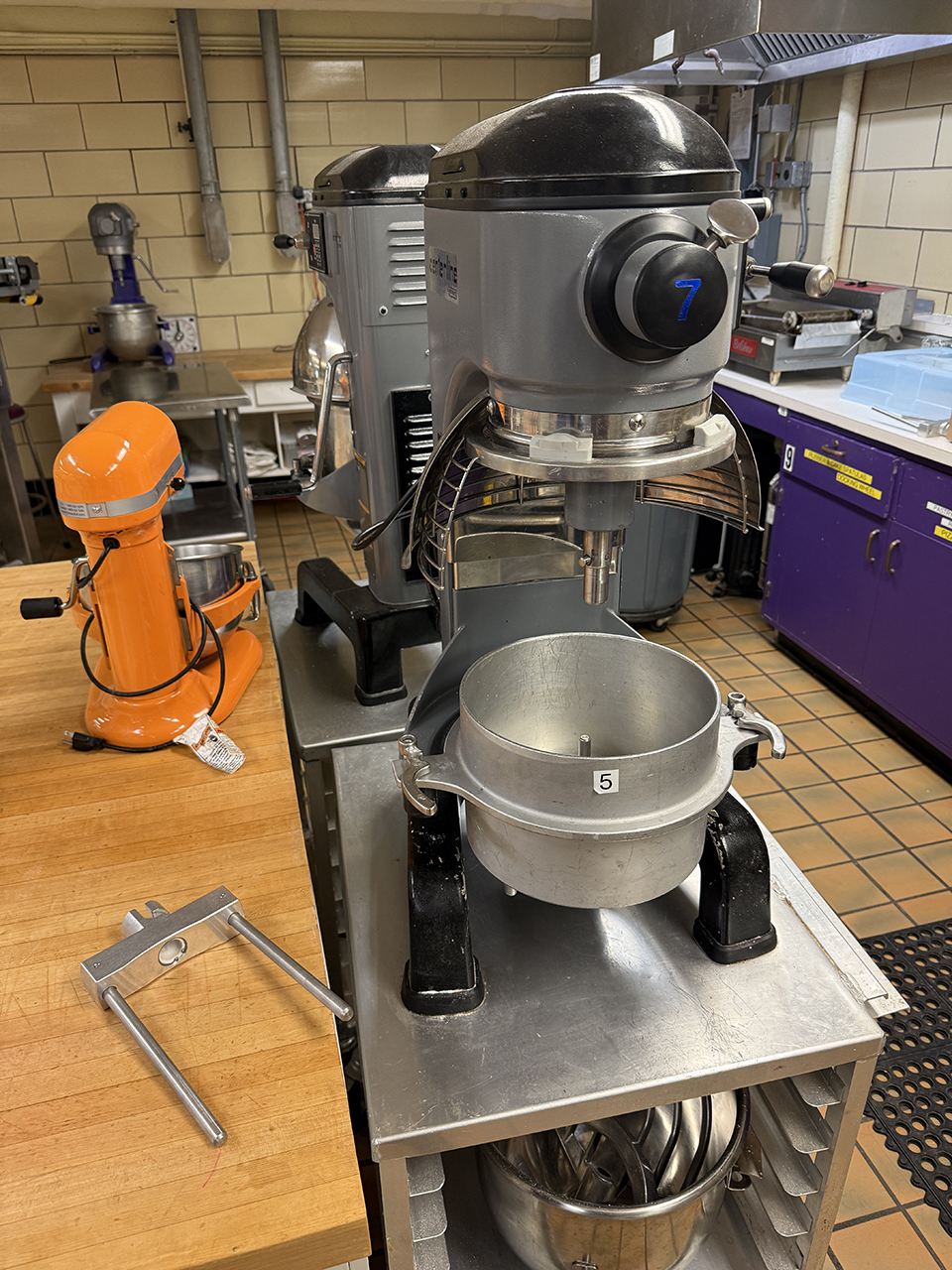
TDI has now produced an additional eight sets of mixers to replace all units in the teaching lab. They're also planning to make these available to other grain science teaching labs around the world to help them upgrade their existing mixing equipment.
K-State's Technology Development Institute in the Carl R. Ice College of Engineering received a grant from the Research and Entrepreneurship Federal Matching Grant Dollars Fund and is a recipient of a grant from the Patterson Family Foundation to support rural entrepreneurship. TDI provides a broad range of engineering and business development services to both private industry and university researchers to advance the commercial readiness of new products or technologies.