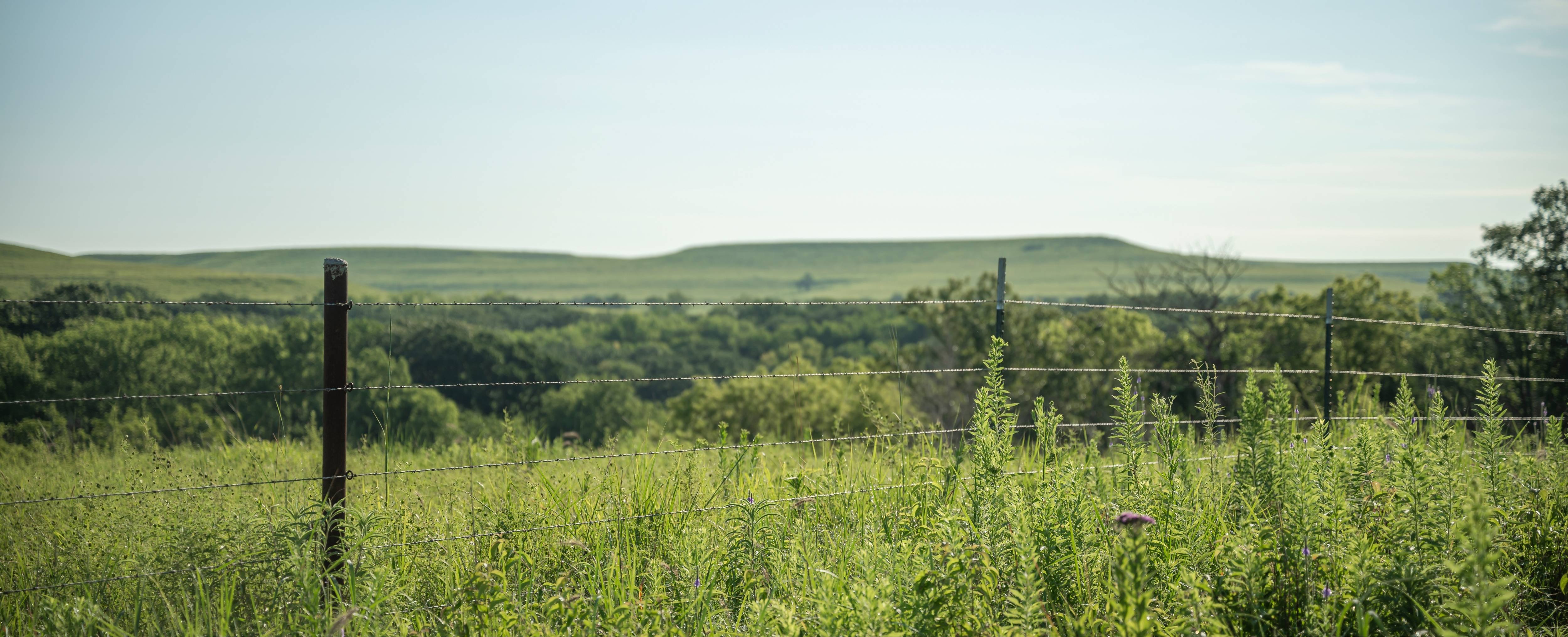
'A seat at the table'
Caroline Wingert connects rural veterinarian challenges to research-informed solutions

By Abbigail Marshall
News and Communications Services
Tuesday, May 12, 2026
In parts of Kansas, a single unanswered phone call can mean life or death for livestock — that's the reality for many rural veterinarians. That pressure-filled system is driving clinicians away, leaving farmers with fewer care options. Caroline Wingert's research is looking to change that.
As a graduate research assistant with the Beef Cattle Institute, or BCI, Wingert facilitated a study informing her co-authored research paper, "Factors Associated with Veterinarian Longevity in Rural Practice." Shining a light on the core challenges rural veterinarians face, Wingert translates patterns often dismissed as anecdotal into data-driven insights capable of informing systematic change — laying the foundation for stronger rural veterinary support and a successful career in agricultural advocacy.
Measuring what matters
 While still an undergraduate at K-State, Wingert was offered a research assistant position with BCI, tasked with assisting in creating and piloting the rural veterinarian success survey. That work began with hearing rural clinicians' concerns directly.
Wingert, along with her major professor, Todd Gunderson, clinical assistant professor of beef production medicine, traveled across the state to talk to respondents in their own communities, often driving seven hours or more into the heart of rural Western Kansas. Wingert had grown up in a rural community — but this, she said, was different.
"I don't think I realized what 'rural' really meant in some corners of Kansas. We had driven 30 miles past the grocery store before we pulled into a clinic. It’s a completely different way of life," Wingert said. "It really put into perspective the type of weight that can come from being the only hope for these producers' animals. If their phone rings with a life-or-death emergency and they don’t pick up, no one will."
Through her conversations with clinicians, Wingert learned about challenges that were not easily apparent in the data, from the nuanced pressures of being the sole caretaker of neighbors' livelihoods to the challenges of recruiting young veterinarians to the area. With each anecdote, her research grew stronger.
"I think many times people in rural communities feel like they are being overlooked," Wingert said. "To be able to make them feel heard and try to work toward a solution is special."
Having worked in her local clinic through high school and college breaks, Wingert brought firsthand insight into the pressures rural clinicians face, helping shape the team’s approach to data collection and the way success benchmarks were defined and measured. The research team ultimately defined success through three key areas: longevity, meaning veterinarians remained in the same practice for more than five years; mental well-being, including burnout versus satisfaction; and financial stability.
Under the guidance of Gunderson and other BCI faculty, she helped construct a 44-question survey examining 68 variables related to career outcomes among rural veterinarians. The research team launched the survey in July 2025 and received 836 responses before it closed.
After witnessing her passion for research, Wingert was invited to stay on the BCI team as a graduate research assistant, stepping into a leading role in analyzing the survey data she'd helped to gather.
"I knew I wanted to pursue agricultural policy work, so the opportunity to build both my research and advocacy skills with BCI was the perfect fit," said Wingert. "I took the role because I saw the struggle of veterinarians firsthand, and now I had the opportunity to not only determine why these struggles were happening but contribute to change."
Leading the conversation
Each mile on the road and hour spent in the data reinforced for Wingert that conversations surrounding clinician support needed to extend beyond rural communities and into broader discussions. Upon compiling the survey results, Wingert submitted her abstract to the Conference for Research Workers in Animal Diseases, or CRWAD, and was accepted to present at the national conference in Chicago earlier this year.
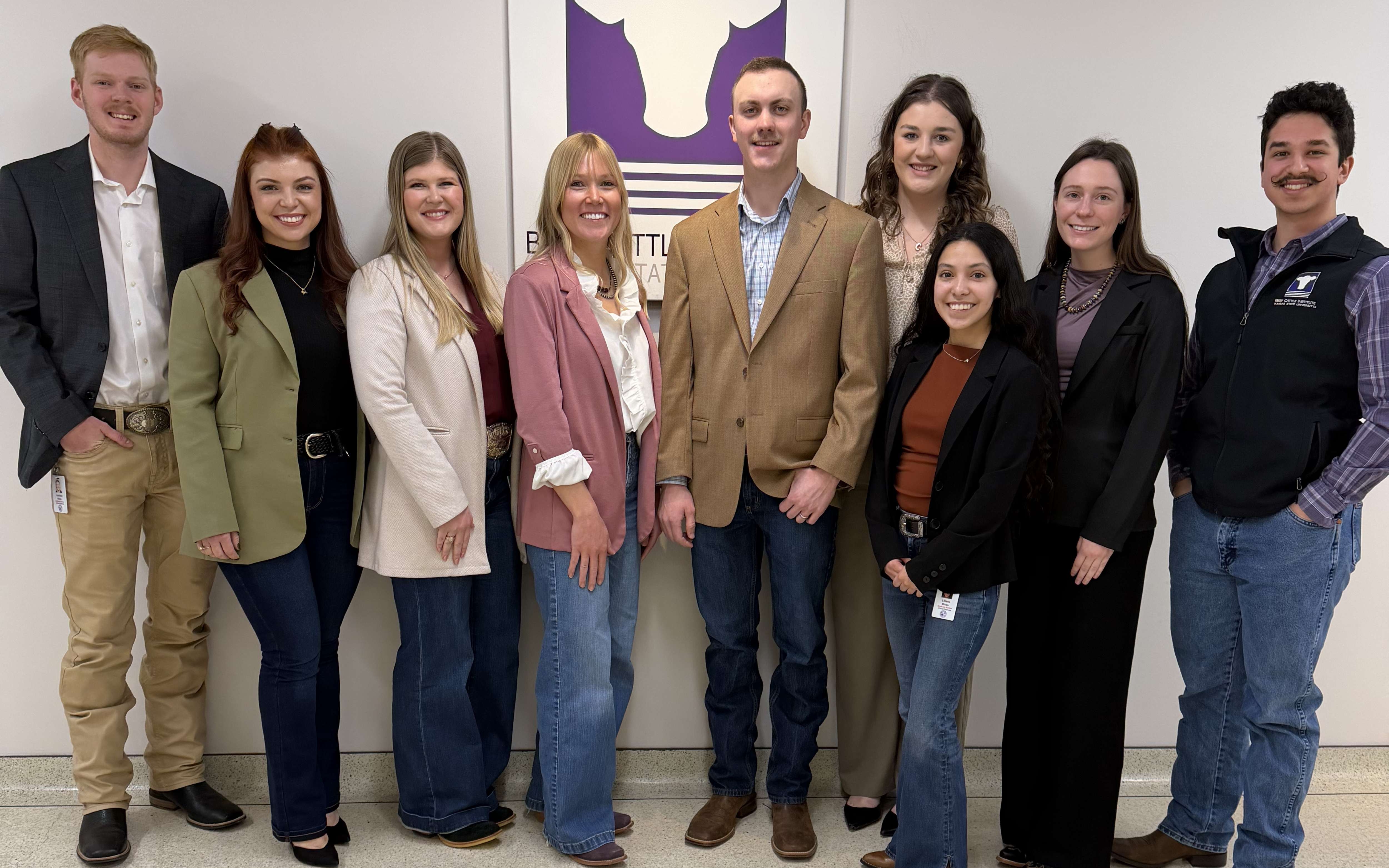
“We're not just supported monetarily and emotionally, but also as leaders.”
Wingert
As a member of the BCI graduate team, Wingert participated in practice presentations to prepare for the questions she'd receive at the conference and its networking events, helping her gain experience explaining complex decisions about data collection or outcomes.
"We're not just supported monetarily and emotionally, but also as leaders. Practicing opportunities like the ones I experienced through BCI are how your research gets better," Wingert said. "Understanding even the smallest gaps in your research and being able to explain your reasoning in a respectful manner is huge. And, sometimes, people bring up a new way of looking at the data that can be where the best answers are hidden."
As her confidence in presenting grew, so did her interest in how research informs larger agricultural and policy discussions. Given Wingert's interest in advocacy and networking, Brad White, director of the Beef Cattle Institute, recommended her for another learning experience — this time, at the legislative level.
Connecting the dots
After being nominated by White, Wingert was selected for a Farm Journal Foundation sponsorship and invited to participate in the National Association of State Departments of Agriculture, or NASDA, Next Generation Cohort program. Through the program, she joined 16 other students in Rogers, AR and engaged with leaders from state departments of agriculture across the country.
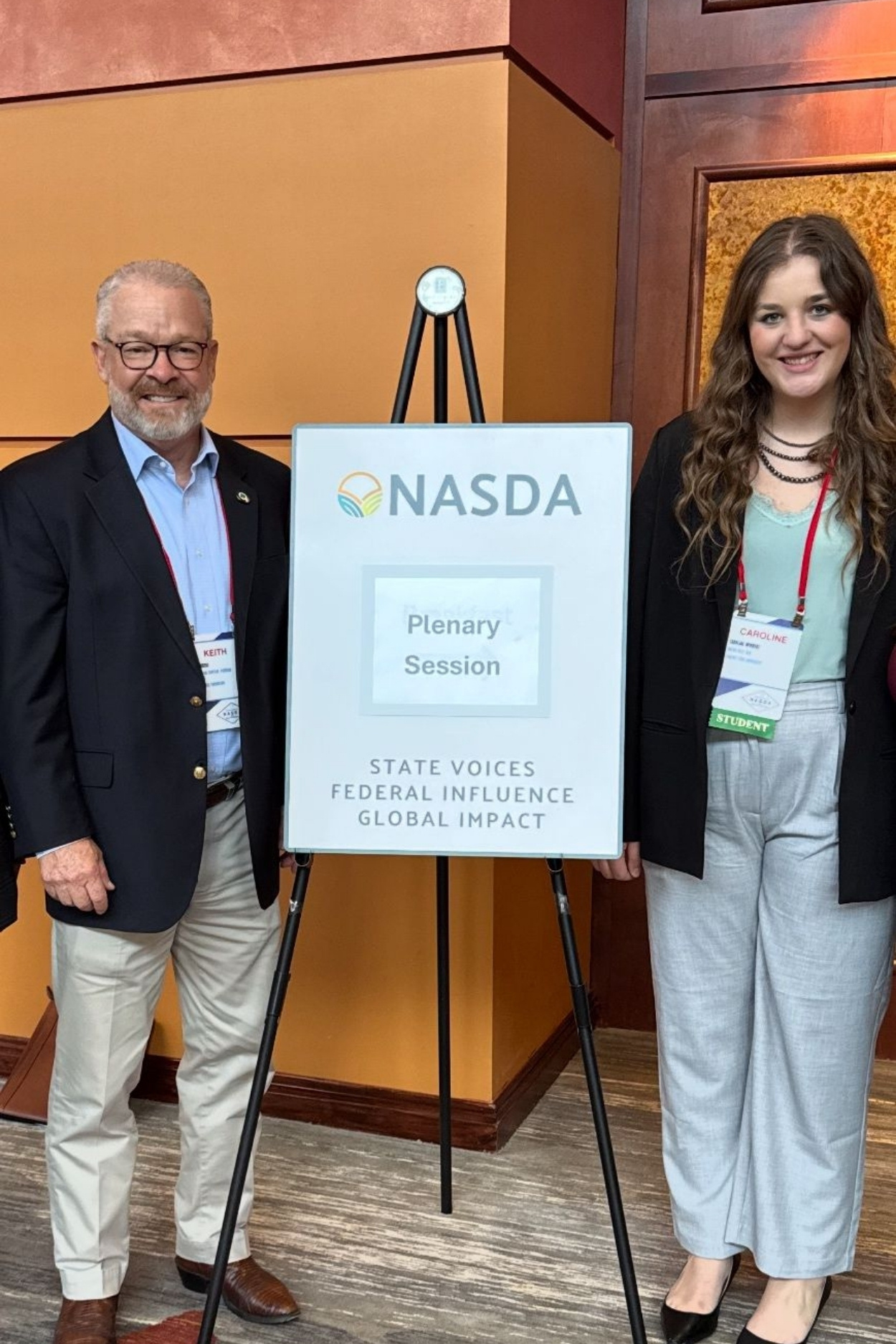
A major portion of the program was dedicated to attending NASDA's annual meeting, including listening to updates from each state. As each representative shared, Wingert saw how some challenges echoed those in rural Kansas, while others were entirely unfamiliar.
"Some of the coastal states were talking about aquaculture, and I'd never thought about how that's a primary industry for some states," Wingert said. "It was fascinating to learn about, and it really opened my eyes to what agriculture looks like across the country."
The exposure pushed her to consider how agricultural systems interact and sharpened her ability to intentionally connect her research and policy passions. Rather than viewing the two as separate, Wingert gained a clear understanding of how her work could inform conversations in which local realities extend beyond state lines and into system-wide change.
Launching into lifelong advocacy
As she approaches the second year of her assistantship with BCI and her master's program, Wingert plans to continue sharing her research on rural veterinary success, using the data she's collected to deepen understanding of how workforce challenges can be addressed through both policy and practice.
Building on the experiences and relationships she has developed with the NASDA Next Generation Cohort and BCI, she hopes to continue integrating research, advocacy and agricultural work into her career, translating findings into tangible support for rural communities.
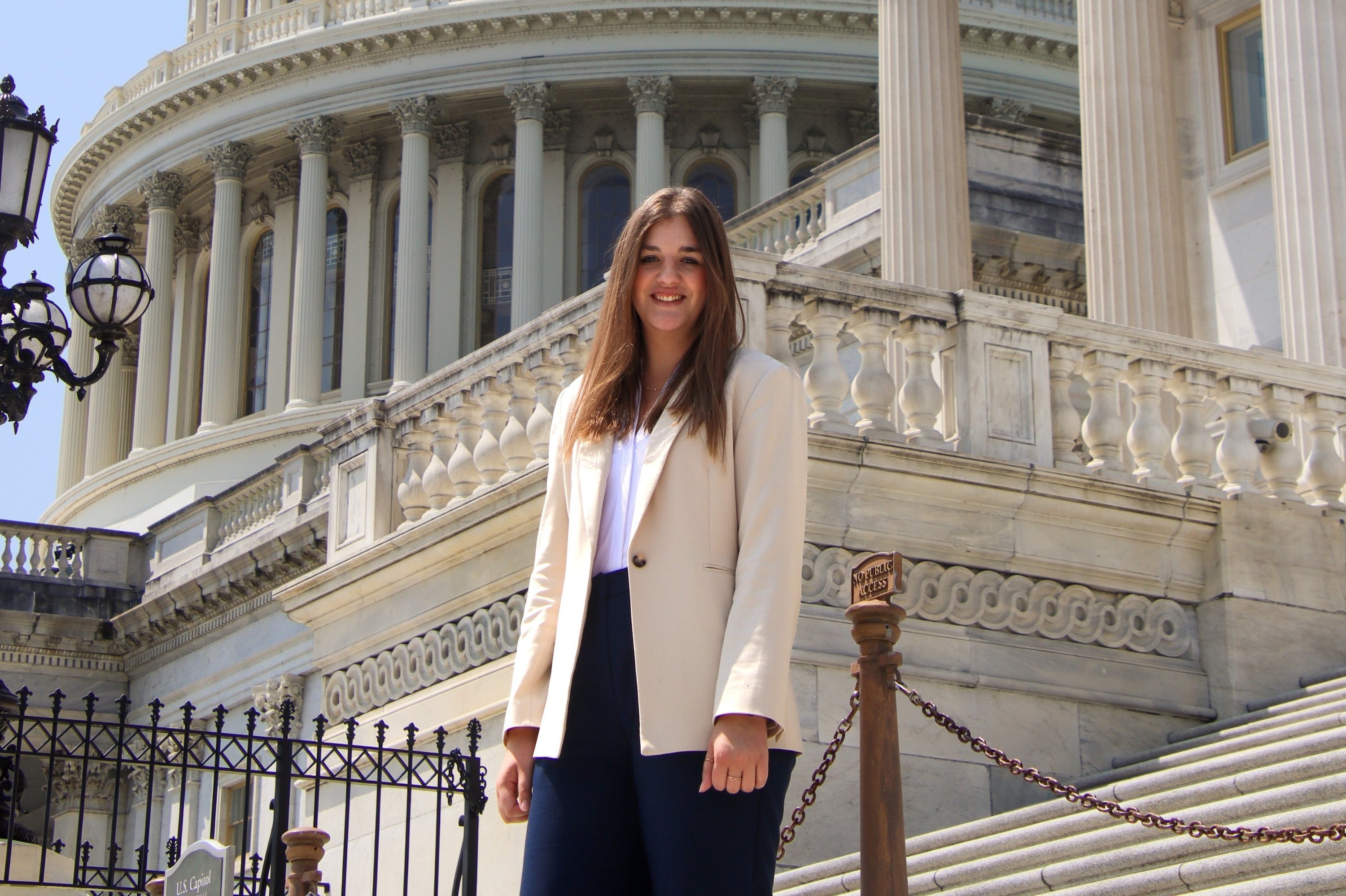
Still, no matter how far her work reaches, Wingert will always stay grounded in her experiences in her hometown clinic — ensuring she never forgets who her work is meant to serve.
"I feel so grateful to have been supported and trusted by my peers and mentors to do this research work. Learning experiences like this really matter," Wingert said. "Giving young people a seat at the table is incredibly important, because one day, we'll be the ones responsible for ensuring agriculture thrives."