Wildlife on air
Joe Gerken and Drew Ricketts share their knowledge of outdoor science and land management with their podcast

By Morgan Donaldson
Kansas State Agriculturist
Wednesday, April 22, 2026
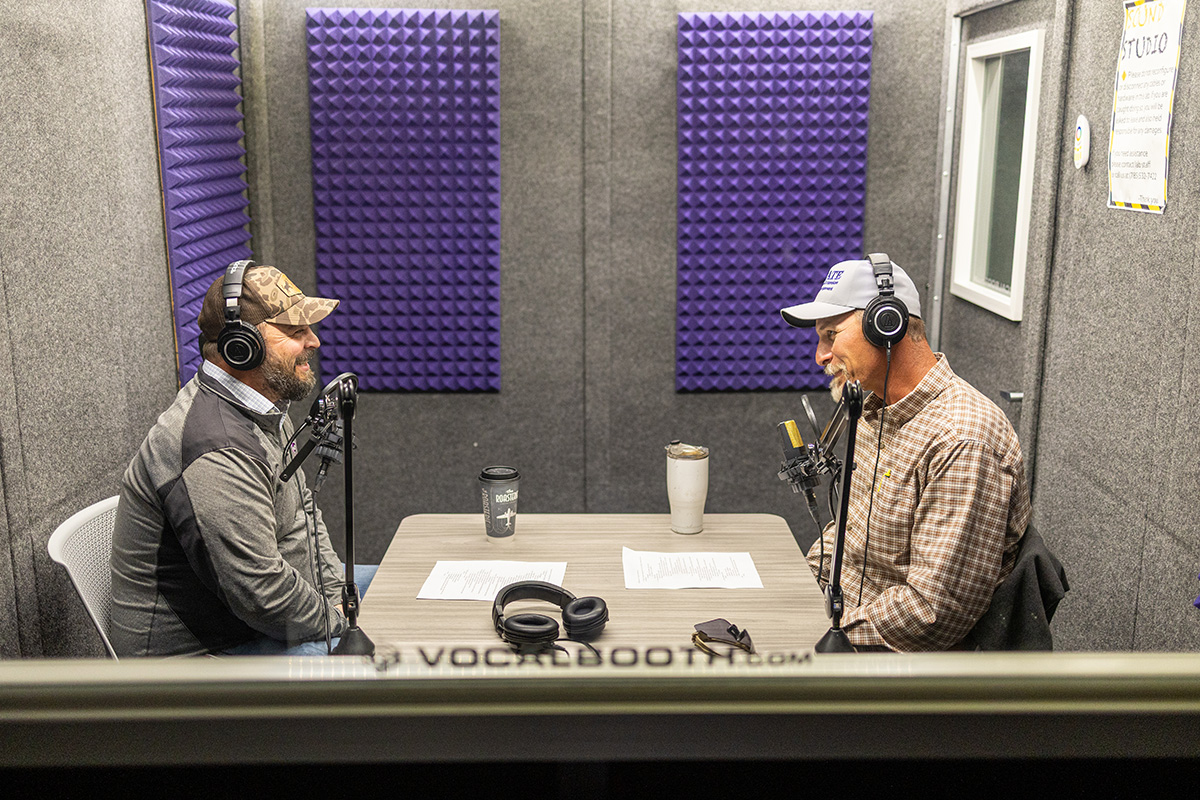
As they hit the record button in the echo of an office, Kansas State University's Joe Gerken and Drew Ricketts aren’t thinking about podcast charts or followers, but rather they are focused on sharing helpful information with their listeners. As faculty members in horticulture and natural resources, Gerken’s expertise is in fisheries and aquaculture, while Ricketts specializes in wildlife and outdoor enterprise management. And their podcast, Fins, Furs and Feathers, is a place for the two to discuss fish and wildlife management topics.
Airwaves to downloads
Before launching the Fins, Furs and Feathers podcast, Gerken and Ricketts took turns having regular segments on Ag Today, a K-State-produced radio program, where they provided five-minute segments about natural resources and land management. After recording those segments, the duo say they realized that time constraint significantly limited what they could share.
“Those short segments didn’t allow us to go in depth on anything. We wanted a format where we could have longer, more meaningful discussion,” Gerken says.
That observation led Gerken and Ricketts to launch their first episode of Fins, Furs and Feathers on Oct. 13, 2023.
“We didn’t know what we were doing, but we knew we had good stories to tell,” Ricketts says.
Today, Fins, Furs and Feather releases new episodes almost every other week with each running about 30 to 40 minutes, even though the two agree there are no time limits on their conversations. Episodes cover everything from invasive species management to predator control and pond care.
At the start of the podcast, the two did it all themselves: recording, editing and uploading.
“I’d done some video editing before. I figured podcast editing would be easy; it wasn’t,” Ricketts says.
Despite the challenges, they continue to record new episodes regularly, refining their process and improving the quality of episodes as they go.
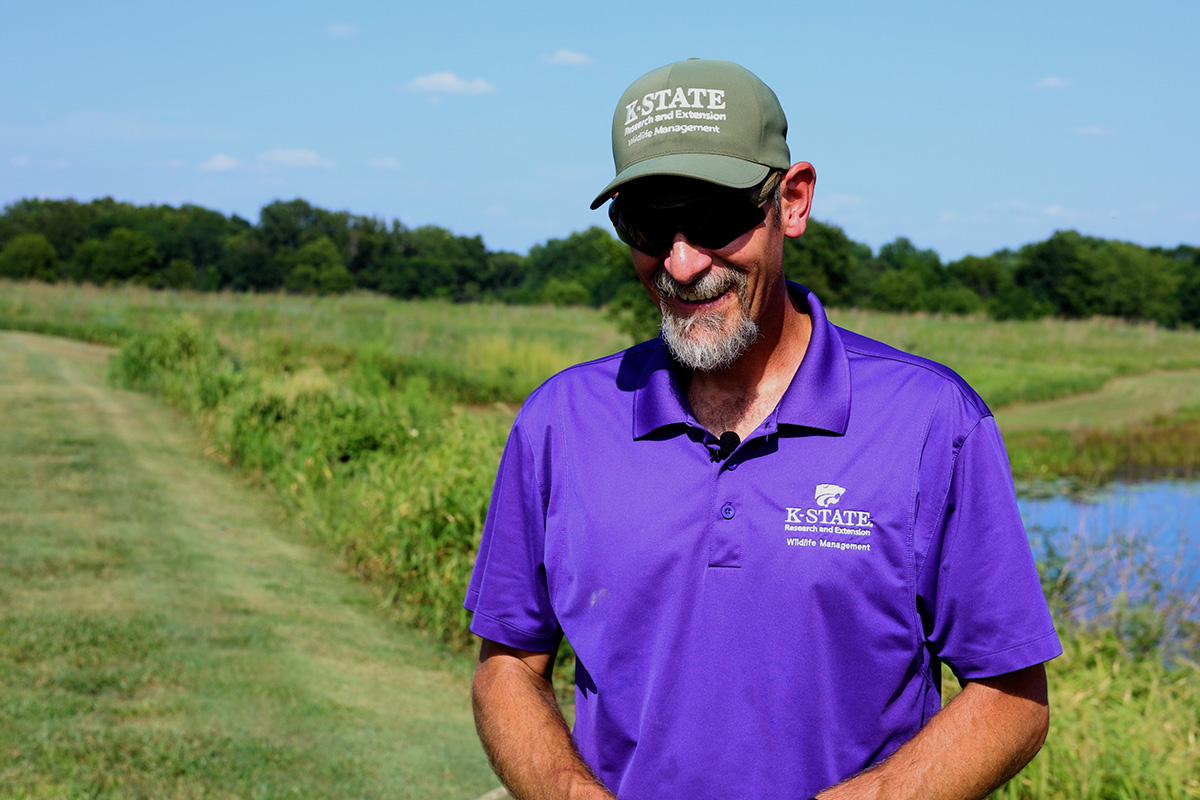
“We didn’t know what we were doing, but we knew we had good stories to tell.”
Drew Ricketts
The additions of video production specialist Danny Lindall and undergraduate student Ainsely Viets let Gerken and Ricketts focus on the information while not having to handle the behind-the-scenes work. With a bigger team, the podcast is also now on the KSRE Wildlife Management YouTube channel in video form.
“If we were still doing it on our own, we’d probably be down to one episode a month. Now we can stay consistent,” Ricketts says.
Conversations from the field
Unlike other podcasts, Gerken and Ricketts don’t have many guests on the show. They keep the conversation by pulling from their own professional experiences and research. Each episode features discussions drawn from their extension work, current research or real-world questions from producers and landowners.
Gerken and Ricketts have no set process for selecting episode topics, and sometimes even decide an hour before recording. Ideas come from multiple places, including their day-to-day life, research, interests and even things they see on social media.
“Sometimes I’ll see something trending online that’s only half true. That motivates me to explain the research behind it,” Gerken says.
While the podcast serves as an educational tool for the public, both hosts agree that it has been a learning process.
“It keeps me fresh and creative. When we plan episodes, I’ll do a quick search to make sure I’m up to date. It’s a great way to keep learning,” Ricketts says.
Gerken says the podcast has helped him become less of a perfectionist.
In the beginning, every pause or “um” would get cut but now they leave them in for a more conversational tone. The pair has also become more comfortable with sharing information they don’t consider themselves experts on.
Audience growth
Reaching a steady listener base took time. Early episodes were slow to gain traction; promotion relied heavily on word of mouth and through extension presentations. Eventually Fins, Furs and Feathers saw a steady growth in listeners. Today there are about 600 listeners per episode, coming from every state, Washington D.C., Canada and Great Britain, among other regions.
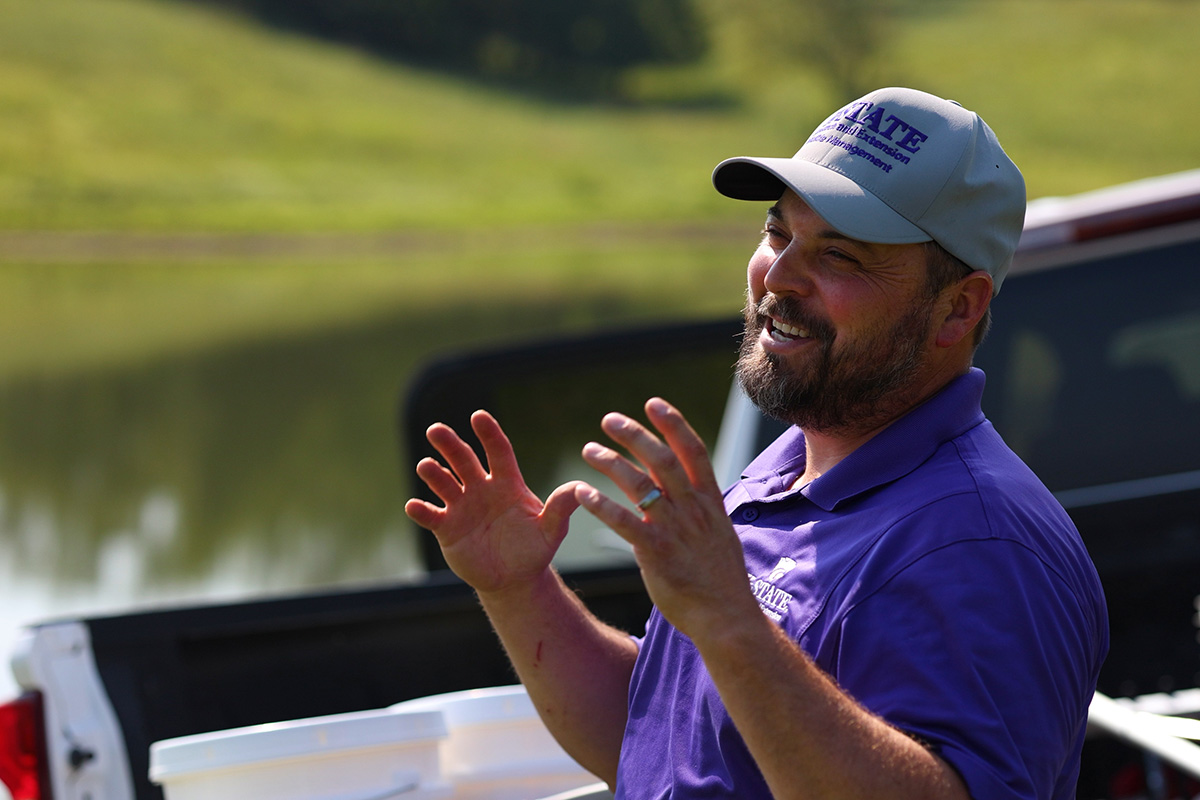
“We’re consistently producing something that reaches people.”
Joe Gerken
“You put in a lot of work and don’t always see results right away. It can be discouraging,” Ricketts says.
Over the life of the podcast, they have noticed highs and lows in the number of downloads and a growing listener base across the country.
“It’s rewarding to know we’re creating something that people find useful. The fact that it’s reaching beyond our local community shows there’s real interest in what we do,” Ricketts says.
Engagement continues to grow, the two encourage questions and suggestions for future episodes. Ricketts says seeing downloads increase has been motivating
“We’re consistently producing something that reaches people. It’s a great way to share research with the public,” Gerken says.
Looking to the future, Gerken and Ricketts plan on finding new ways to grow their audience and encouraging listener interaction. Their focus remains on providing useful, research-based information to anyone interested in wildlife, land or water management.
Gerken says, “It’s been rewarding to build something from the ground up with someone I enjoy collaborating with. Seeing people respond positively to it, makes the work worth it.”
Morgan Donaldson is a senior in agricultural and natural resources communications. This editorial originally appeared in the spring 2026 edition of The Agriculturist — the student-produced magazine of the College of Agriculture.