More than words
Building bridges that go beyond language

By Jania Don Juan-Ramos
Kansas State Agriculturist
Wednesday, April 8, 2026
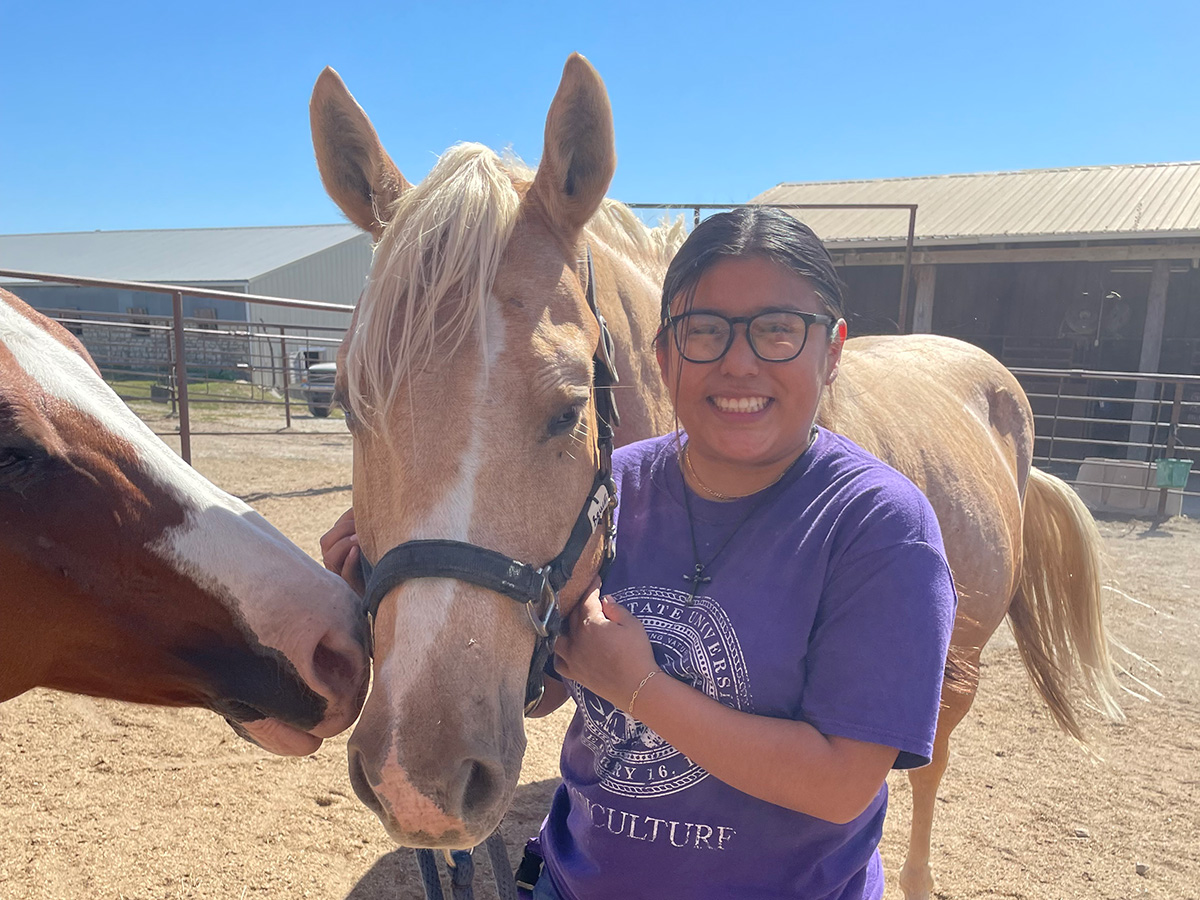
Imagine sitting in a room on campus where everyone around is speaking quickly in a foreign language. For Manreet Bhullar and Sara Lopez, both non-native English speakers, that is what they found when they first arrived at Kansas State University. While these two did have exposure to English before they arrived, they say it was still an adjustment to master the language and to find their community.
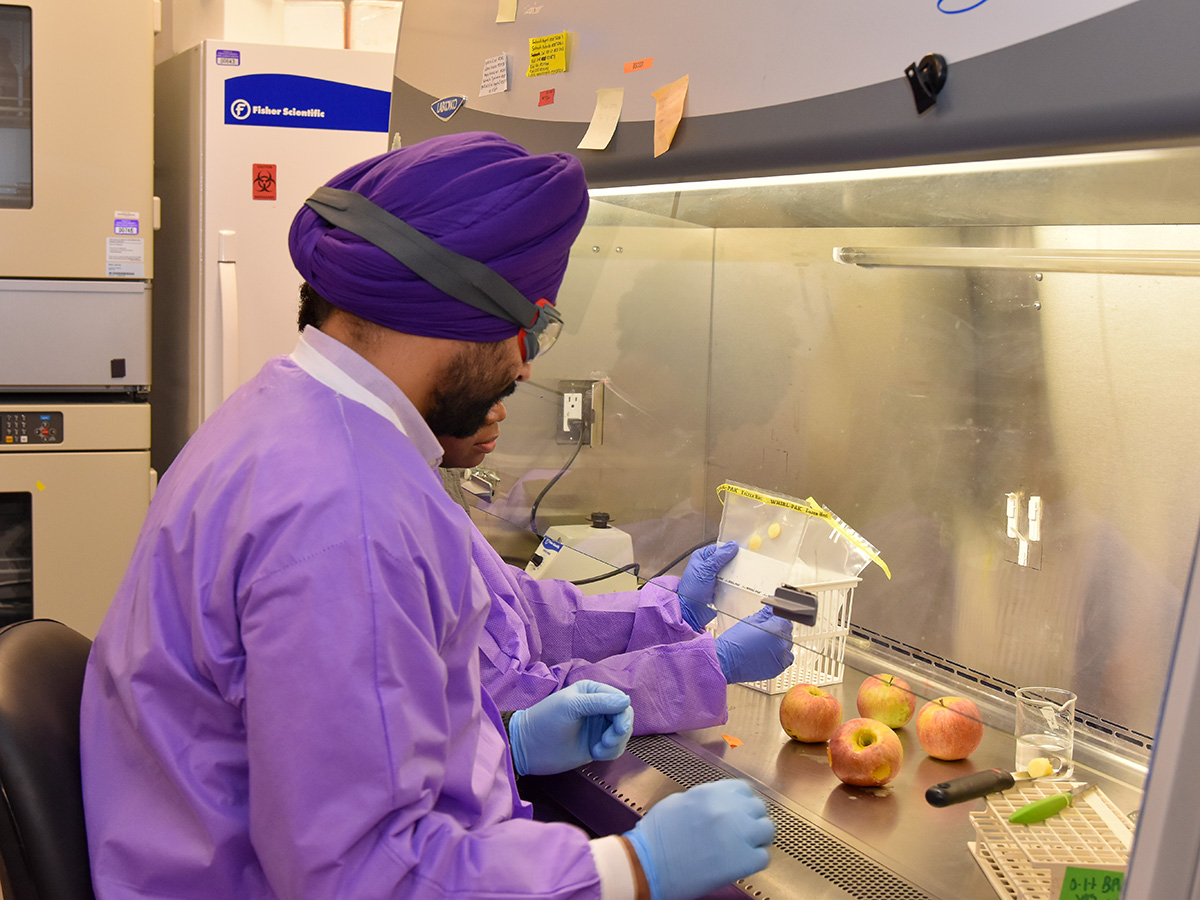
When Manreet Bhullar left his family’s farm fields in Gurdaspur, Punjab, he never imagined his path would lead to classrooms and labs at K-State or that years later, his journey would echo in the experiences of students like Sara Lopez.
Bhullar’s curiosity about food safety began in his youth, when he was surrounded by wheat and rice production. Even as a child, he noticed a missing piece in the conversation.
“In India, we grow and produce, but there's little focus on processing or safety,” he says.
He left India in January 2015 and moved to the U.S. for graduate school.
After completing a master’s in food science at Tennessee State University and a doctorate degree in food safety at Iowa State University, Bhullar joined K-State in January 2020 as an assistant professor in the Department of Horticulture and Natural Resources.
“When I moved here, I was surrounded by people who shared similar experiences and career goals,” he says. “Mentors and colleagues who understood the challenges of adapting to a new environment made all the difference.”
He says that he found his community through connections with fellow Punjabis and, unexpectedly, through cricket.
“Playing the game helped me find friends and a sense of belonging,” he says.
Learning the language
Though English was part of Bhullar’s early education, Punjabi was the language of his home and still is.
“I had exposure to English, but the education systems are different,” he says.
“In India, exams were strict, no open-book or take-home assignments. Here, students have more flexibility.”
He says those differences taught him to be patient with himself and extend that same patience to others.
“If someone struggles to express their thoughts, give them grace,” he says. “It’s not that they don’t know; it’s that they’re translating their thoughts as they go.”
For Bhullar, giving grace also means accepting imperfection and embracing growth.
“It’s okay to not be perfect at everything by default,” he says. “I remind myself that mistakes and setbacks are part of meaningful growth. Each experience contributes to who I am as a researcher and educator.”
Although Bhullar doesn’t teach traditional lecture courses, he considers mentoring in his lab a form of teaching.
“Understanding each student’s background is key to identifying what skills they need and what goals they have,” he says.
Breaking classroom barriers
That commitment to inclusion resonates with students like Sara Lopez, a second-year animal sciences and industry student from Grand Island, Nebraska, who also learned English as a second language.
Like Bhullar, Lopez remembers what it felt like to enter classrooms where her words carried the weight of translation.
“I started learning English at nine,” she says. “It was hectic. I was in English Second Language classes and learning alongside my parents.”
Now fluent in both English and Spanish, Lopez sees her bilingualism as an advantage.
She’s found belonging in student organizations like Minorities in Agriculture, Natural Resources and Related Sciences and the Hispanic American Leadership Organization, and through her job at the Dairy and Research Cattle Center.
Bhullar hopes students like Lopez feel encouraged to keep growing at their own pace.
“Language barriers do not reflect a student’s ability or intelligence,” he says. “Improvement comes with time.”
Different beginnings and shared purpose characterize both of their stories, showing how agriculture grows stronger when every language and background has space to belong.
Lopez says, “Being here, studying agriculture, it’s proof that I can do it and that others like me can too.”
Jania Don Juan-Ramos graduated in agricultural and natural resources communications in fall 2025. This story originally appeared in the spring 2026 edition of The Agriculturist — the student-produced magazine of the College of Agriculture