Formulating the feed
The program focused on teaching the science behind every scoop

By Anna Holthaus
Kansas State Agriculturist
Wednesday, April 29, 2026
A balanced diet matters for all animals, whether it’s a cow in the barn or a dog at home. And like people, animals need to consume well-balanced diets to thrive. For feed and pet food science students, the nutritional well-being of animals is their top priority.
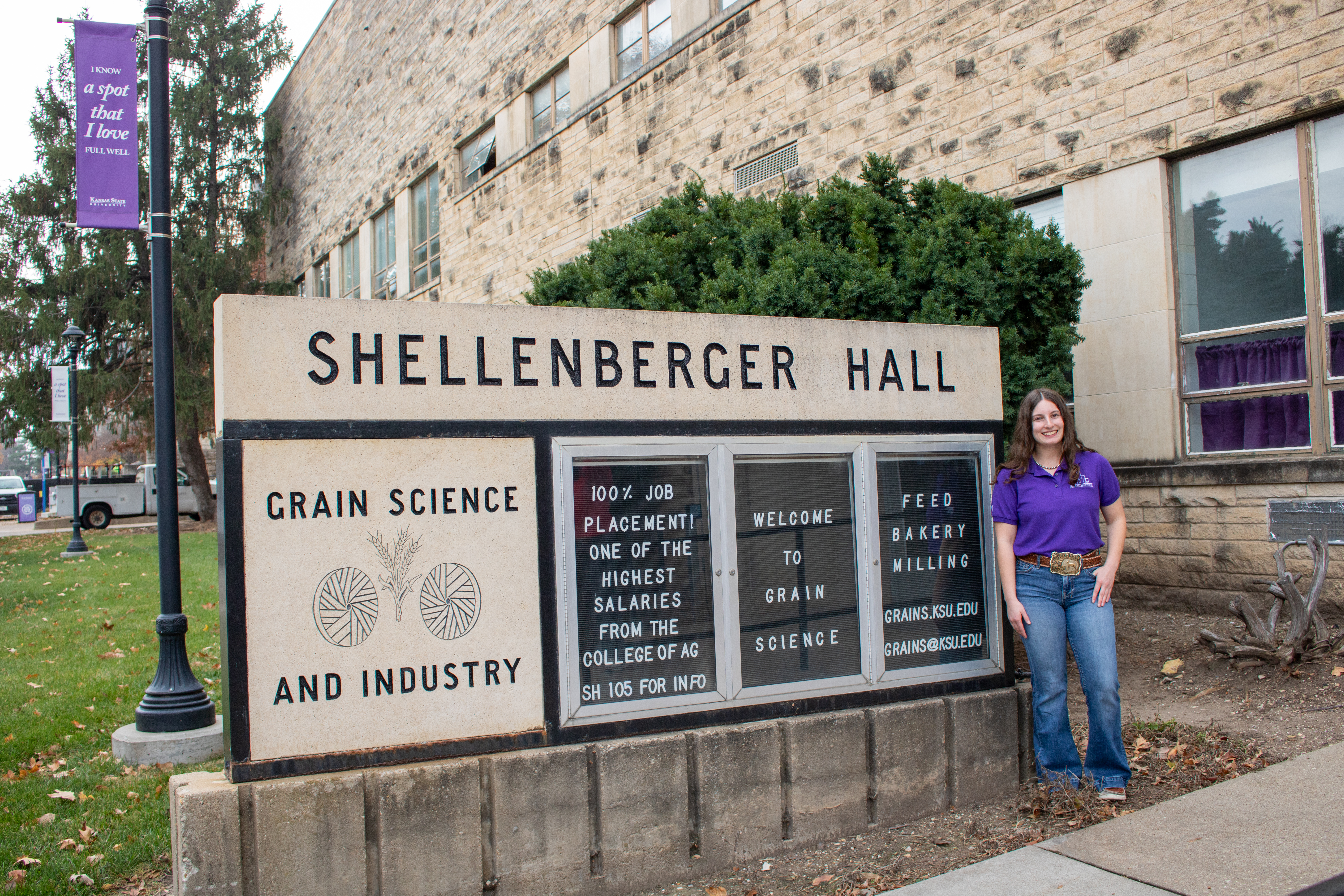
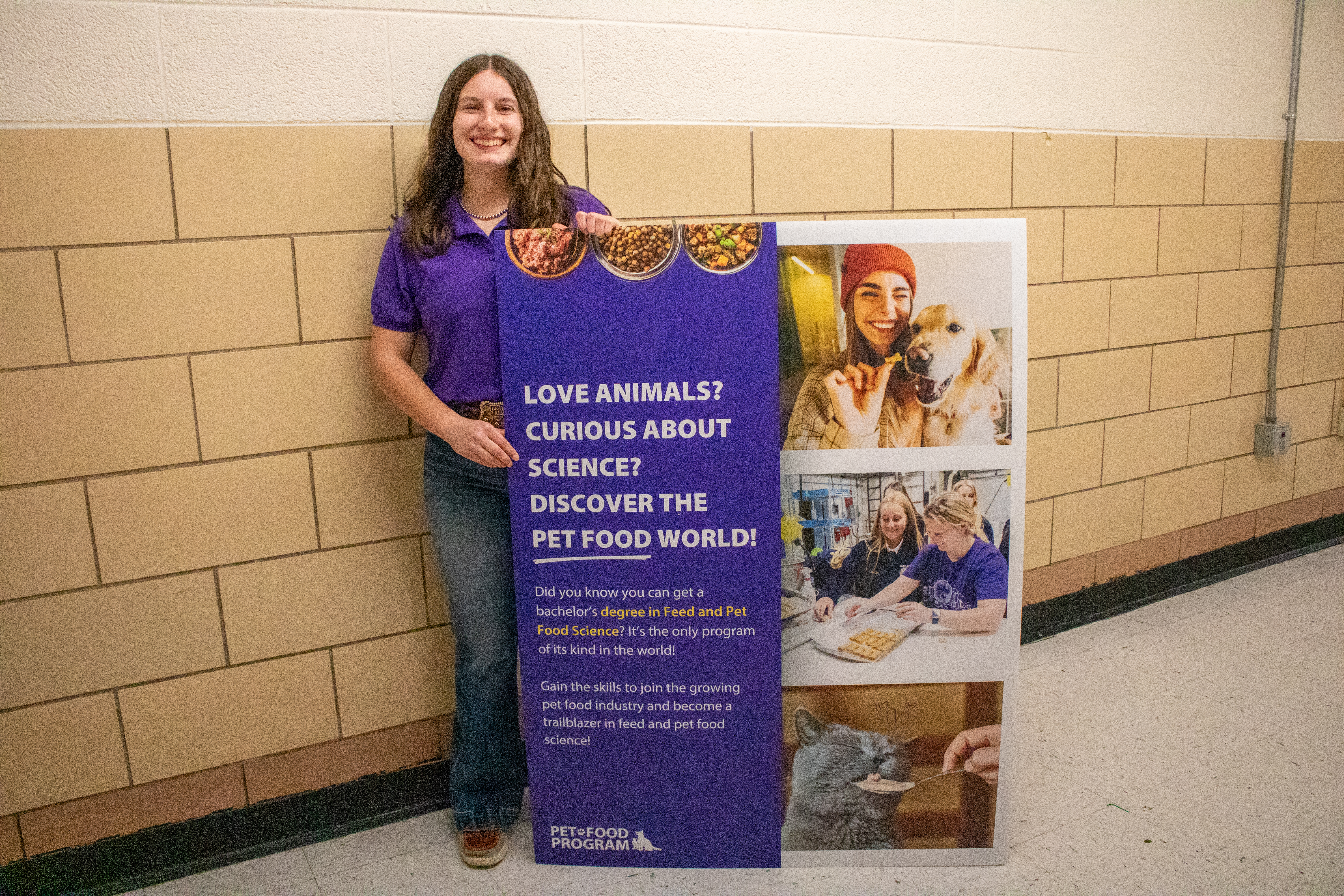
Kansas State University is home to the only four-year feed and pet food science degree in the nation. With roughly 20 students currently enrolled in the major, Chad Paulk, associate professor of feed science and management, says the niche program allows students hands-on experience making the feed and networking opportunities in the industry.
“A lot of people think that if they want to work with animals, they have to go to vet school,” Paulk says.
Through the feed and pet food program, Paulk wants the students to see that there are other livestock-connected, pet-related careers available.
Feeding pets, fueling passion
Pet food and feed science is a field that blends animal care and nutrition with industry application, says Paulk.
For Kennedy Coffin, a third-year feed science major, the program appeals to her for its uniqueness in how it serves both animal and livestock owners.
“I have the flexibility to take all the nutrition classes like animal science students do, and I also have firsthand experience with feed industry research,” Coffin says.
Paulk says feed science students routinely network and engage with professionals representing animal nutrition companies through campus visits and facility tours.
As part of their education, many feed and pet food students gain hands-on experience in one of the department's mills, says Paulk. He adds that this allows students to apply their learning and make before entering the workforce.
“A large percentage of our students work in the quality assurance lab at the feed mill or in the pet food lab,” Paulk says.
Gaining experience
With smaller class sizes of 10 to 30 students and a specialized curriculum, Coffin says it’s easier to build strong relationships with professors, advisers and students, furthering her academic experience.
“The class structure is one of my favorite aspects of the major,” Coffin says. “It's a hands-on learning experience where we see how things work in real-time while learning it in a classroom environment."
Looking ahead, Coffin has plans to further her education by earning a master’s degree and possibly a doctorate degree, before starting her career as an animal nutritionist.
“The science classes in the major have been a great way to prepare me for my career,” Coffin says.
Students have the option to focus on pets or livestock and create their own curriculum path within the program. With the innovation of new pet and livestock feed options on the market, Paulk sees the industry growing and job opportunities expanding far beyond past horizons.
Paulk says future careers include pet food manufacturers, grain buyers, feed ingredient suppliers, equipment and feed plant designers, quality assurance professionals and other industry jobs.
Feed science students take two industry tours yearly to gain knowledge and networking skills. Each spring, students travel to different manufacturing facilities across the state of Kansas. Each fall, students travel to the International Production and Processing Expo in Atlanta – a highlight of Coffin’s time in the program so far.
“It gave me a chance to see the possibilities of careers I could get with my degree and helped me grow closer to students in my major,” she says.
For students looking for a blend of technology, science and agriculture in a program deeply connected to the real world, K-State's pet feed and food science degree could be the perfect fit, says Paulk.
He adds, “You don’t need to have an agricultural background to pursue a pet feed and food science degree.”
Anna Holthaus graduated in agricultural and natural resources communications in fall 2025. This story originally appeared in the spring 2026 edition of The Agriculturist — the student-produced magazine of the College of Agriculture.