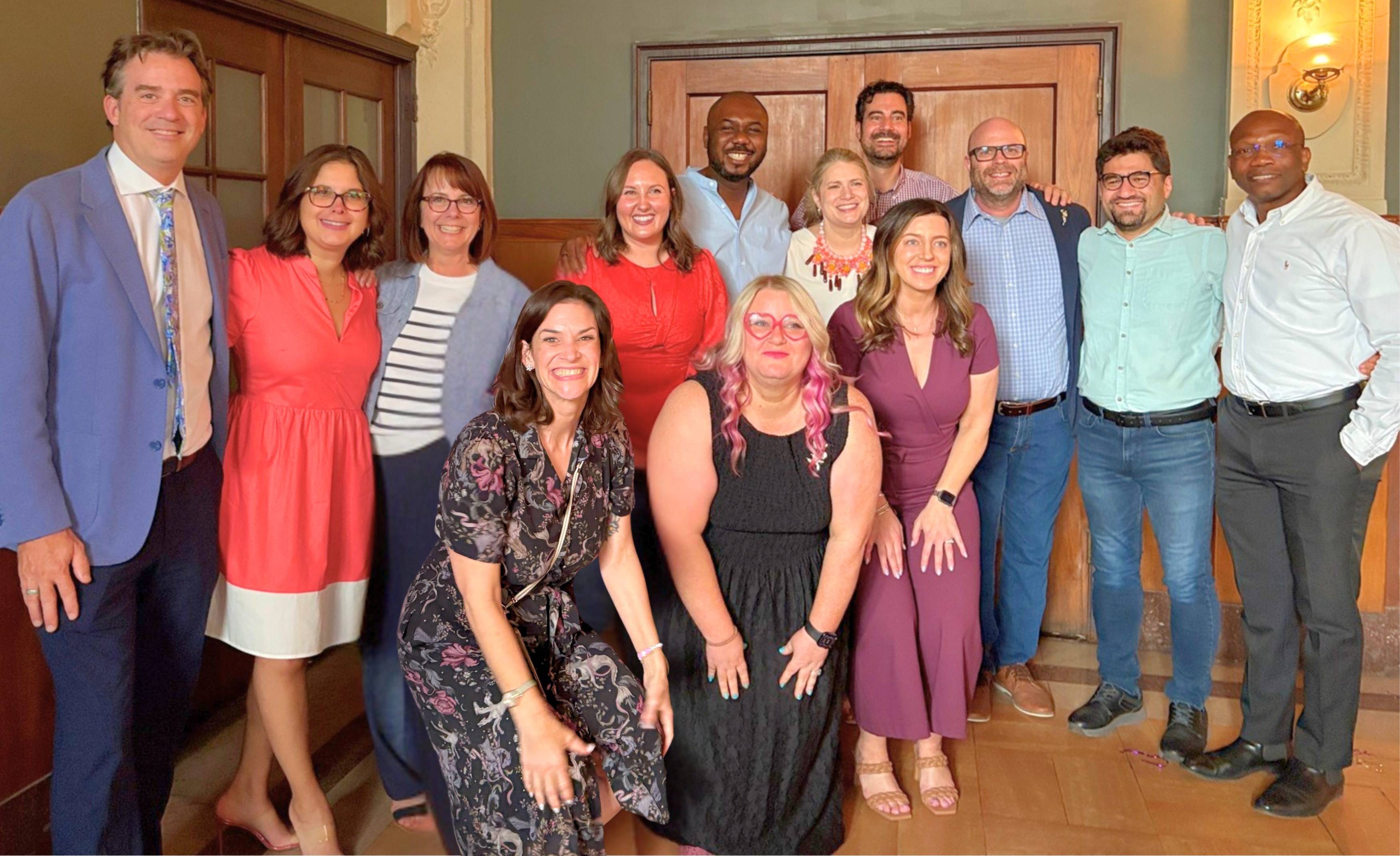
Leadership Communication celebrates spring 2026 doctoral graduates
The Leadership Communication doctoral program at Kansas State University celebrated the spring 2026 graduates in May. R.J. Youngblood, Ph.D., Rebecca Robinson, Ph.D., Isabel Huckins, Ph.D., and Janice Perkins, Ph.D., have completed their doctorates in Leadership Communication, an interdisciplinary program between the Department of Communications and Agricultural Education, the Staley School of Leadership, and the A.Q. Miller School of Media and Communication.
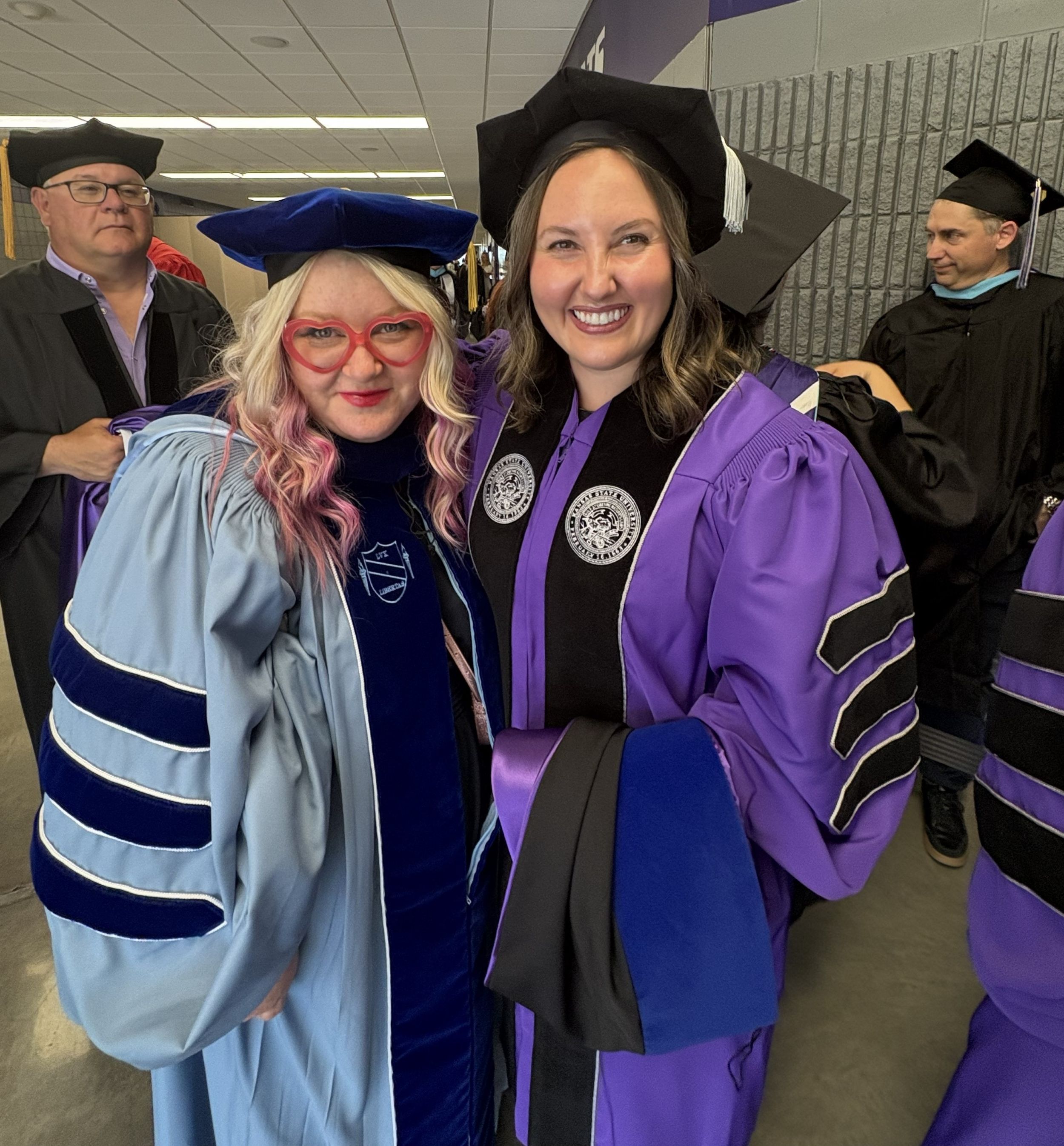 RJ Youngblood, Ph.D., has a bachelor’s in English Literature from the University of Central Florida and a master’s in English from Florida Gulf Coast University. Heather Woods, Ph.D. served as Youngblood’s advisor. Youngblood currently serves as the director of economic engagement and strategic initiatives at the University of Tennessee, Knoxville.
Youngblood’s dissertation, titled Leadership as a material-discursive phenomena: A diffractive analysis in organization, explored leadership as an emergent, relational, and ongoing process.
Drawing on Karen Barad’s theory of agential realism and a diffractive methodology, this dissertation examined how leadership is produced through material-discursive practices, including technologically mediated spaces and interactions, while advancing new theoretical and methodological approaches for observing and analyzing leadership phenomena. This contribution enhances the capacity to understand how human and non-human processes diffractively produce meaning around change and leadership in organization.
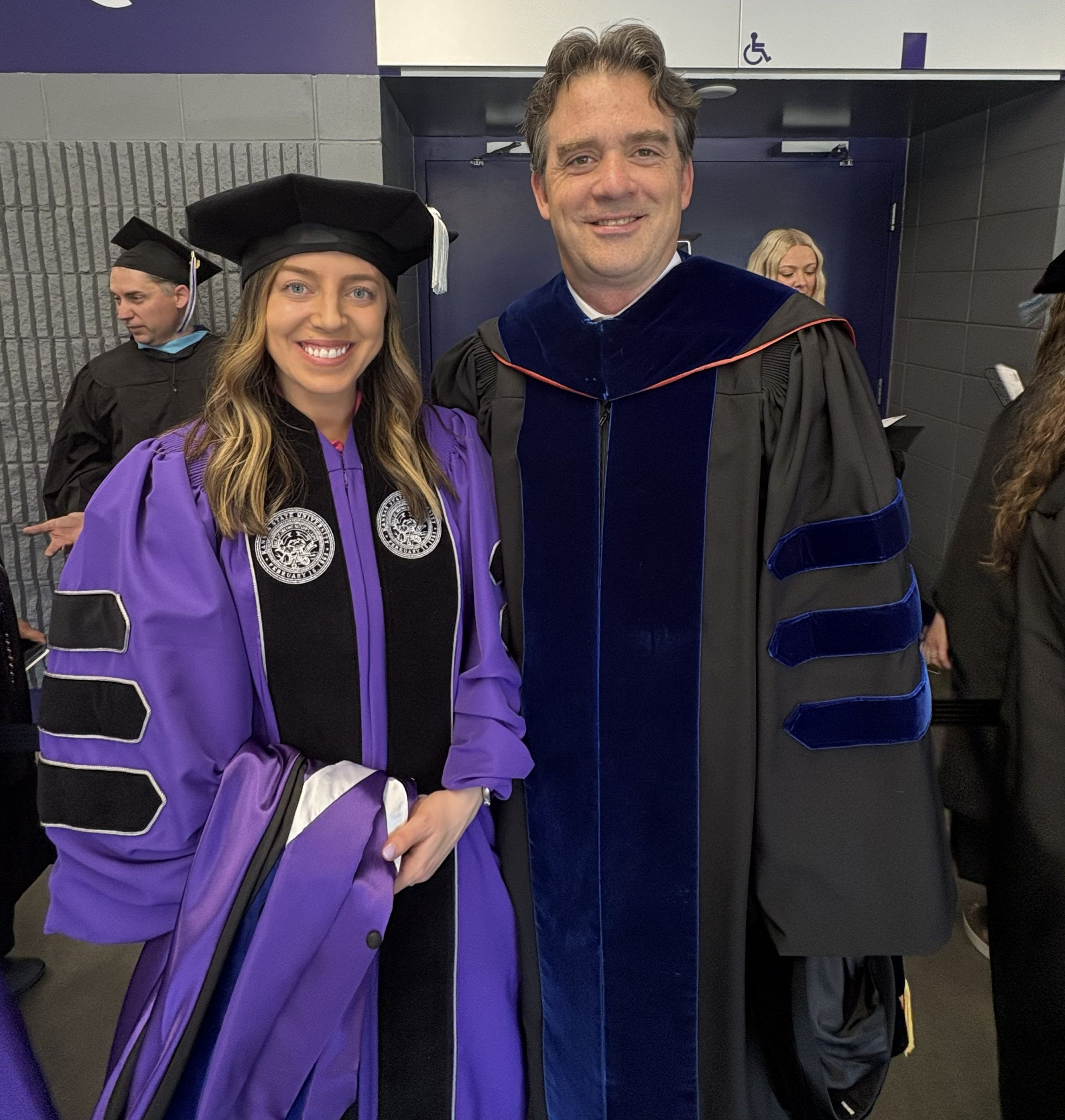 Rebecca Robinson, Ph.D., has a bachelor’s in business administration and marketing; a certificate in Community Development; minors in Leadership Studies and Spanish; and a master’s in business administration from Kansas State University. Tim Steffensmeier, Ph.D. served as Robinson’s advisor.
Robinson currently serves as the Associate Vice President for Economic Development and Industry Relations at Oregon State University.
Robinson’s dissertation is titled Assessing the relationship between organizational communication and university-industry collaboration: A quantitative examination of university strategic plans. Her work examined whether the way research universities communicate about university-industry collaboration through their strategic plans influences levels of industry-sponsored research activity.
Using text mining and regression analysis across 303 R1 and R2 universities, the study finds that structural institutional factors such as research capacity, urban density, and disciplinary orientation remain the primary drivers of industry-sponsored research, while organizational communication did not significantly moderate those relationships. The research contributed a new method for measuring organizational communication at scale and provides insight into how universities signal institutional priorities related to industry engagement.
She said this about the Leadership Communication program, “The Leadership Communication program was the perfect home for my academic journey, because it's built on the belief that scholarship should make a difference in the real world, and helped me design research that connected theory to practice in higher education.”
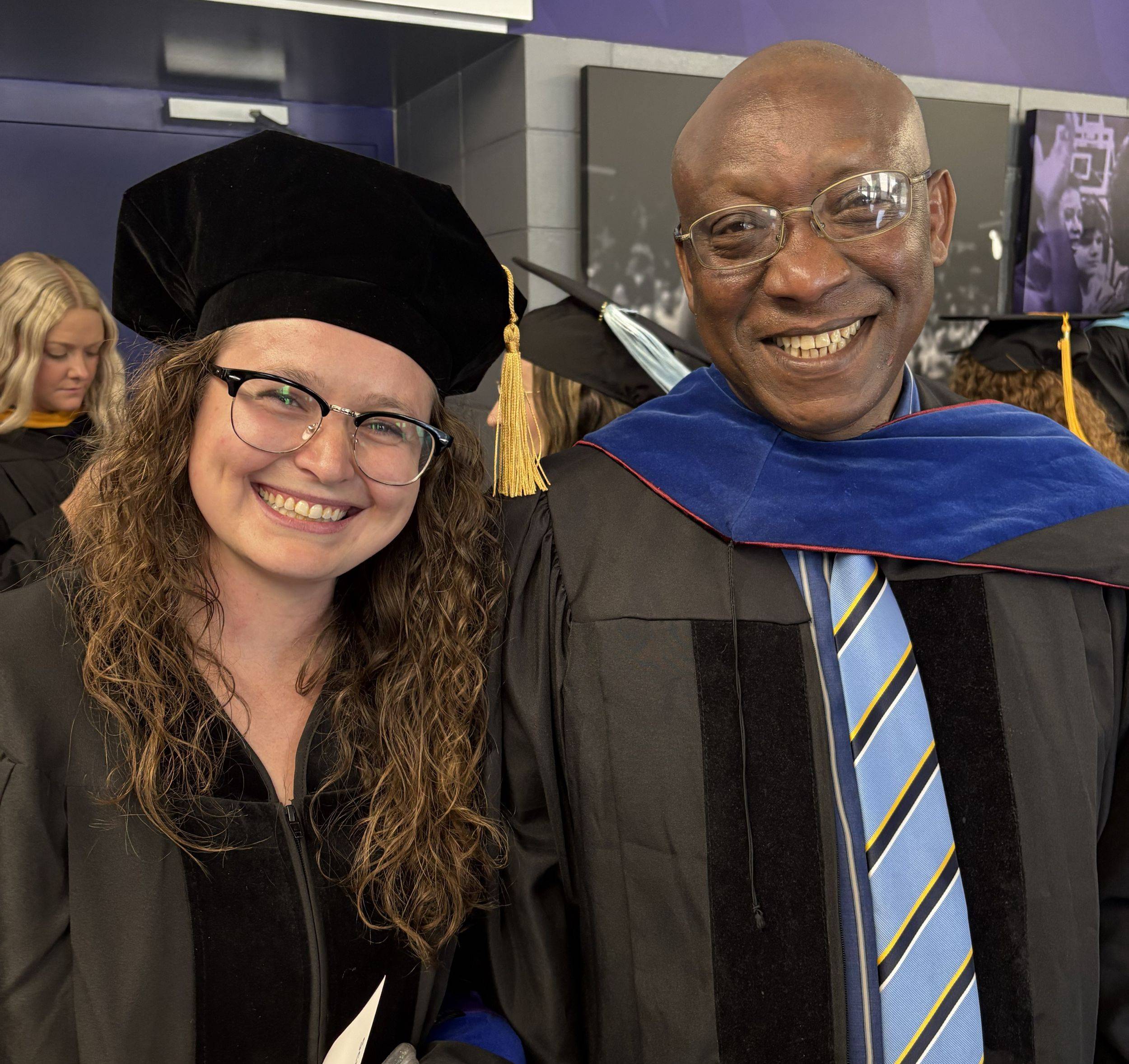 Isabel Huckins, Ph.D., has a bachelor's in criminal justice, a minor in psychology, and a master’s in leadership communication from Washburn University. She also earned a certificate in social justice education from Kansas State University. Sam Mwangi, Ph.D. served as Huckins’ advisor. Huckins is currently a Block Talks Community Navigator at PARS.
Huckins’ dissertation, Reimagining Civic Engagement: A Narrative Inquiry into Block Talks and Community Storytelling in Topeka, Kansas, explored how storytelling within neighborhood-based initiatives like Block Talks can reimagine civic engagement and strengthen community connection in Topeka, Kansas.
Using narrative inquiry, the study centers the lived experiences and stories of residents to better understand how trust, belonging, and collective action are built at the neighborhood level. The research highlights the value of community-driven dialogue and storytelling as meaningful forms of leadership, engagement, and social change.
Huckins said, “The Leadership Communication program at K-State gave me the space to fully embrace community-engaged scholarship and research that is grounded in lived experience, relationships, and storytelling. Before finding this program, I often felt disconnected from traditional ideas of what research was supposed to look like, but this program empowered me to see that research can be collaborative, relational, and deeply rooted in community impact. It helped me grow into a scholar who not only studies communities, but also works alongside them.”
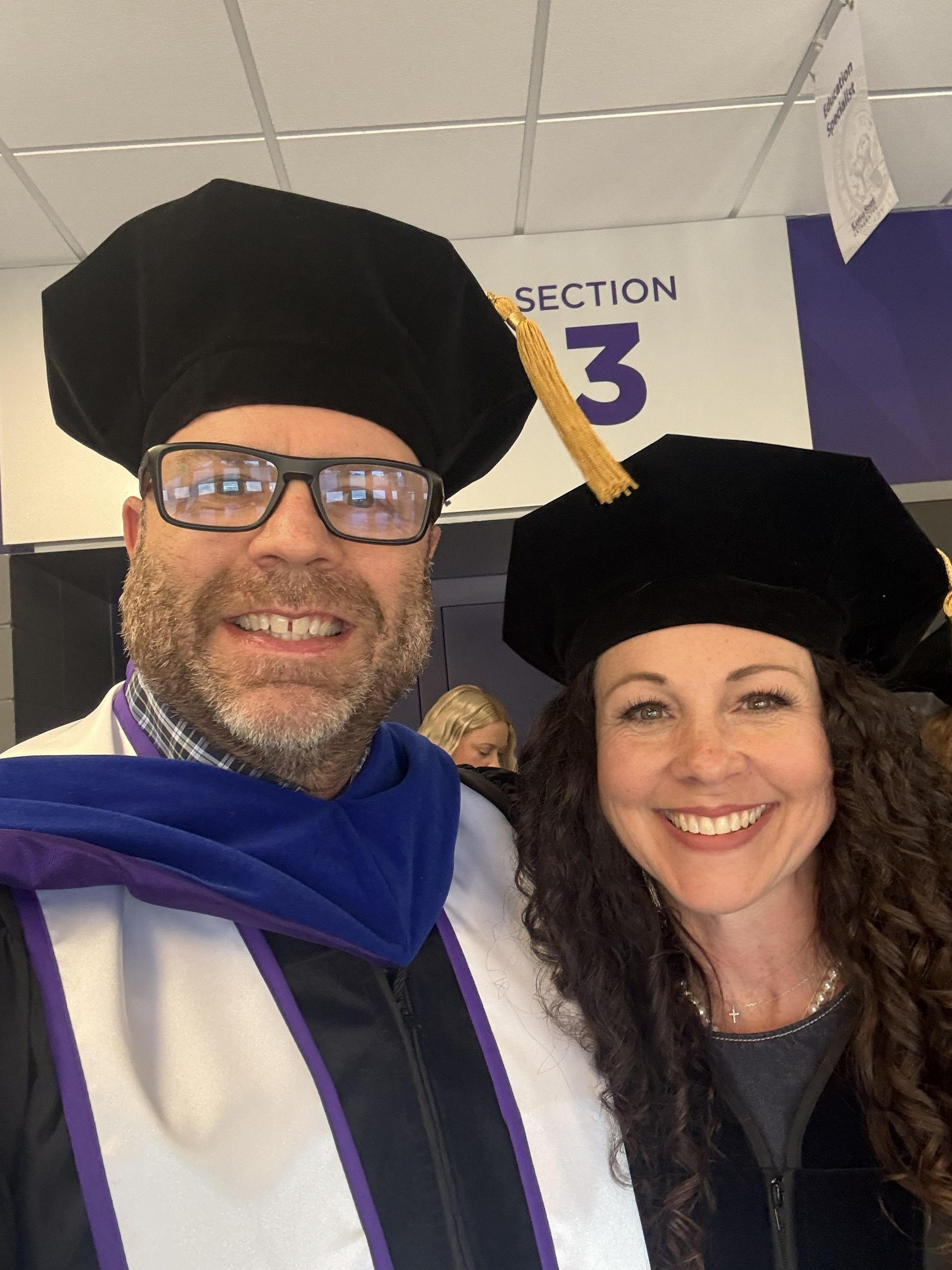 Janice Perkins, Ph.D., has a Bachelor of Fine Arts from Rockford University and a Master's in Business Administration. Andrew Wefald, Ph.D., served as Perkins’ advisor.
Perkins is the CEO and founder of Capacity and is an executive coach and leadership consultant in Wichita, Kansas. She also holds the Professional Certified Coach (PCC) credential through the International Coaching Federation. Through her company, Capacity, she helps leaders and organizations navigate complexity, strengthen communication, and build cultures rooted in connection, trust, and human potential.
Perkins’ dissertation, titled Impacts of chemistry in executive coaching, explored how chemistry in coaching can be redefined not as personality fit or emotional rapport, but as a co-created relational phenomenon that emerges through inquiry, disruption, coordinated rhythm, and shared meaning-making.
The research found that chemistry operates asymmetrically across multiple relational layers, thriving in moments of adaptive tension and accelerating identity stabilization, agency, and leadership growth. Her findings have direct implications to Ubuntu-informed Collective Leadership Theory and Leadership-as-Practice to reposition chemistry as an enabling relational field condition whose effects extend beyond the coaching relationship into teams, organizational culture, and broader communities.
Applications for the Leadership Communication doctoral program for the spring 2027 term are currently being accepted. Learn more and apply online.
Staley School of Leadership
252 Leadership Studies Building
1300 Mid-Campus Dr. N.
Manhattan, KS 66506
785-532-6085
leadership@k-state.edu