CORE
Center for Outcomes Research and Epidemiology
The Center for Outcomes Research and Epidemiology (CORE) at Kansas State University is an interdisciplinary research and training center focused on the application of outcomes research and epidemiology for the benefit of animal and human populations.
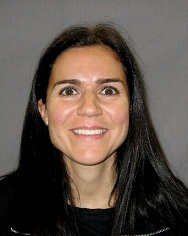
An interview with Natalia Cernicchiaro, director for the Center for Outcomes Research and Epidemiology, and professor of Epidemiology:
What does being an ID3A affiliate mean to your center?
Being an ID3A affiliate strengthens CORE’s mission to advance data-driven solutions for animal, public and environmental health. It formalizes our commitment to interdisciplinary collaboration and aligns our work with a university-wide effort to address complex health challenges through integrative approaches. The affiliation provides a platform to amplify our impact, broaden our partnerships and connect our team with new collaborators who share similar goals in research, outreach and workforce development.
What skills, ideas, or opportunities does CORE bring to the ID3A program or network?
CORE brings deep expertise in quantitative and qualitative research methodologies, including epidemiology, risk assessment, modeling, data analytics and evidence synthesis. Our team routinely engages stakeholders, including industry, government and community partners, to align research outputs with real-world needs. We offer analytical capacity, research design support, mentorship opportunities and established networks across animal health, food systems and transboundary disease preparedness. These strengths position us to contribute practical, data-driven insights that enhance ID3A’s interdisciplinary mission.
What excites your center/team most about being an ID3A affiliate? What are you most looking forward to?
We are most excited about the opportunities for new collaborations that bridge disciplinary boundaries, inspire innovation and accelerate the translation of research into actionable solutions. The ID3A network creates a space where diverse perspectives can converge to address complex health and agricultural challenges. We look forward to developing joint research initiatives, engaging in interdisciplinary conversations and contributing analytical expertise to projects that benefit Kansas, the region and beyond.
What made the center decide to be part of the ID3A affiliate network?
CORE joined the ID3A affiliate network to engage more fully with partners across campus who share a commitment to improving health and agricultural systems through interdisciplinary science. Our center values collaborative approaches to addressing emerging and transboundary animal diseases, food safety issues and surveillance challenges. The affiliate network provides a structured mechanism for collaboration, resource sharing and joint proposal development, all of which align directly with CORE’s strategic priorities.
Why does CORE value working in an interdisciplinary model across focus areas and colleges?
The challenges facing animal and public health are inherently interdisciplinary. Effective preparedness, surveillance and response require expertise from epidemiology, microbiology, diagnostics, data science, ecology, social sciences, engineering and policy. By working across focus areas and colleges, CORE can integrate complementary skill sets, leverage diverse perspectives and develop solutions that are both scientifically rigorous and operationally feasible. Interdisciplinary collaboration also enhances student training and strengthens research competitiveness.
Why do you feel the CORE team’s background is beneficial to this program?
CORE’s team has extensive experience leading multi-institutional, multi-disciplinary projects involving academic, government and industry partners. Our background spans epidemiology, biostatistics, risk modeling, surveillance system design and stakeholder engagement. This combination allows us to connect analytical capacity with applied field expertise, ensuring that research outputs are relevant, actionable and aligned with stakeholder priorities. These strengths directly complement the interdisciplinary goals of the ID3A program and enhance its ability to deliver high-impact solutions.