Identification of Alleles Associated with Drought Tolerance in Bangladesh Rice Landraces
- Cereal: Rice
- Abiotic Stressor: Drought
- Principal Investigator: Diane Wang, Purdue University
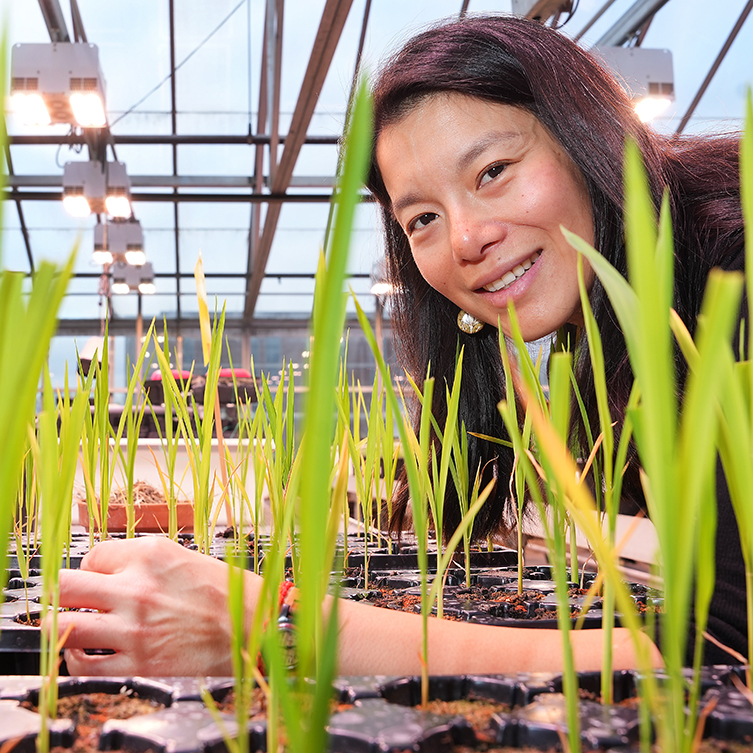 Improving rice performance under drought conditions requires identifying the genetic and physiological traits that enable plants to maintain productivity when water is limited. In Bangladesh, drought affects large areas of rainfed rice production, particularly during the flowering stage which subsequently hampers grain fill, quality and significantly reduce grain yield. This effort focuses on characterizing the genetic basis of drought response using a diverse panel of rice accessions adapted to Bangladesh production environments.
The project leverages the Bangladesh Rice Drought Panel (BRDP), consisting of approximately 450 lines, to conduct genome-wide association analyses linking phenotypic performance under drought to underlying genetic variation. Field trials conducted in drought-prone regions capture natural environmental variability, while physiological measurements—particularly canopy temperature—are used as an indicator of plant water status and transpiration efficiency. This integration of field phenotyping, physiological screening, and genomic analysis enables identification of alleles and loci associated with reproductive-stage drought tolerance.
Key outputs include identified genetic loci associated with drought response, validated physiological screening approaches, and integrated phenotypic and genotypic datasets. In addition, the project supports the adoption a practical screening tools and strengthens capacity in data analysis, phenotyping, and experimental design.