Hageman Distinguished Lecturer in Agricultural Biochemistry
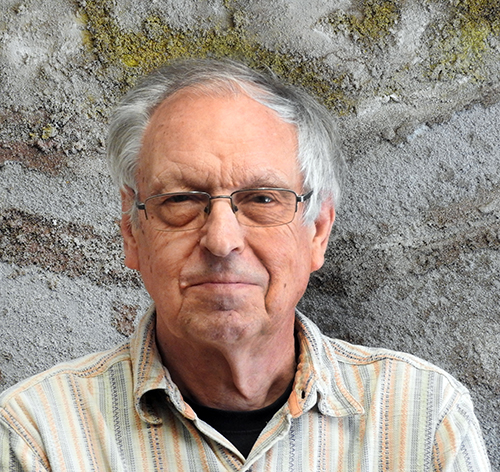
Dr. Fred Nijhout
John Franklin Crowell Distinguished Professor of Biology
Department of Biology
Duke University
Member, National Academy of Sciences
Member, American Academy of Arts and Sciences
Fellow, American Association for the Advancement of Science
Lectures March 11-12
Seminar: The Nonintuitive Genetics of Polygenic Traits in a Nonlinear World
Colloquium: The Biology of Polyphenisms in Insects
About the Speaker
Dr. H. Frederik Nijhout is the John Franklin Crowell Distinguished Professor of Biology at Duke University, where he has been a faculty member since 1977. He was born in the Netherlands and grew up in Guatemala and Curaçao. He earned his BS in Biology at the University of Notre Dame and his PhD in Biology at Harvard University, where he worked with Carroll Williams, who made important early discoveries on insect hormones and development. There he characterized hormonal signals that control molting and metamorphosis in the tobacco hornworm, Manduca sexta.
He has investigated control of pattern formation in insect development, and his work has focused on higher-level control mechanisms in growth and development. He also investigates the hormonal control of polyphenisms, in which animals of the same genotype can develop different phenotypes in response to environmental signals, such as in castes of social insects or different seasonal forms of insects.
Dr. Nijhout also investigates complex traits, which are affected by many genes and environmental factors and whose inheritance does not follow Mendel’s laws. In this work, he uses mathematical models of genetic and developmental processes to study the effects of mutation and selection. His mathematical modeling of metabolic networks in humans has led to understanding of relationships between genetic variation and trait variation, and of the mechanisms by which genetic and environmental variables interact to produce phenotypes.
Dr. Nijhout is a Fellow of the American Association for the Advancement of Science, and the recipient of the Founders’ Memorial Award of the Entomological Society of America and the Kovalevsky Medal for his work in evolutionary developmental biology. He is a member of the American Academy of Arts and Sciences and of the National Academy of Sciences.