A Natural Connection
Awika praises decision to combine food science, grain science programs
By Pat Melgares
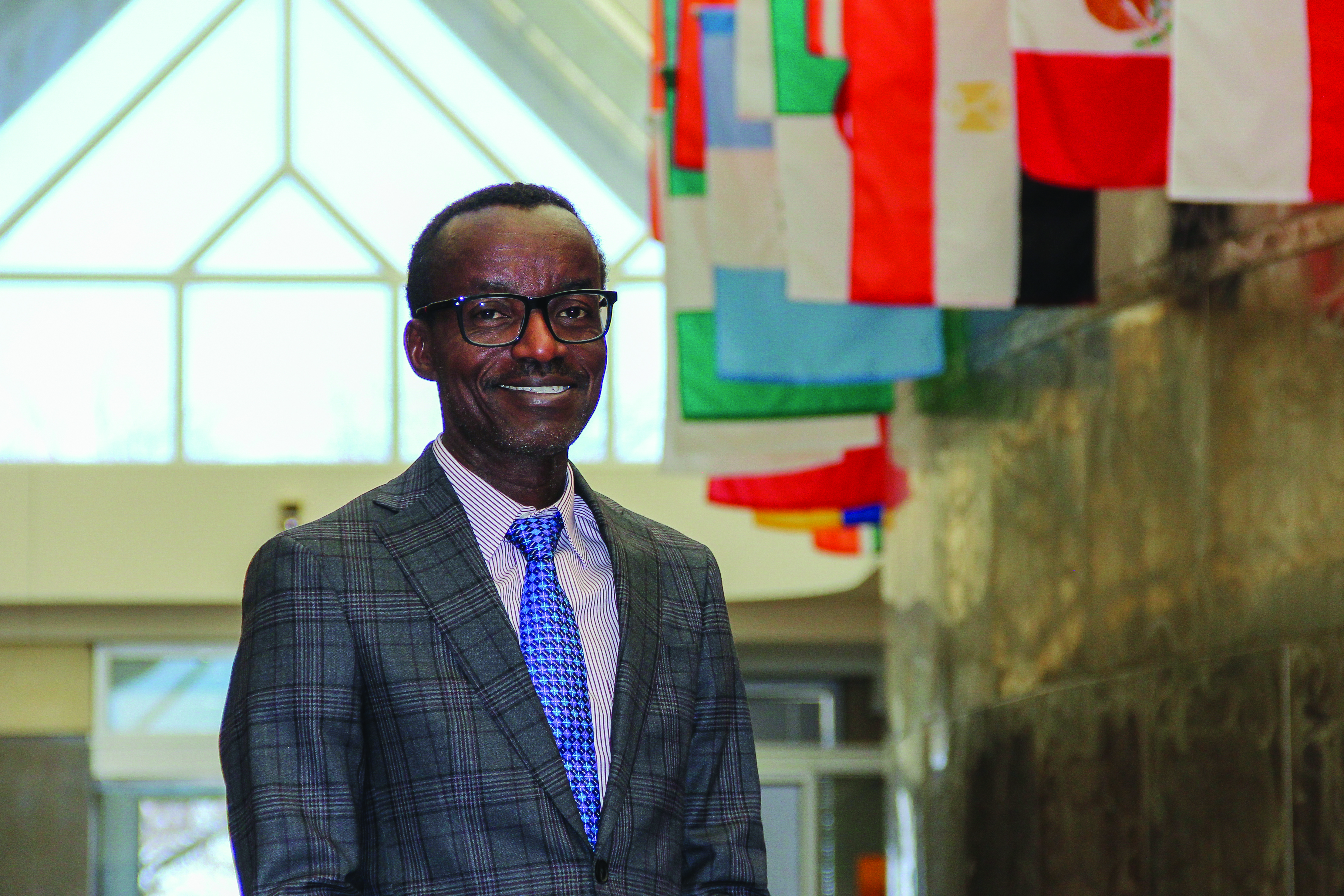
Photo Courtesy Pat Hackenberg
When Kansas State University officials announced in early 2025 that the university's food science program would become part of the Department of Grain Science and Industry, Joseph Awika believed it was a match that was long overdue.
“Both of these programs share synergies in terms of the students they train and what they train them for that makes sense,” said Awika, head of the department. “Both programs train students for the manufacturing sector, including marketing. Both programs train students who will work in post-harvest manufacturing.”
“To me,” he added, “consolidating food science and grain science makes perfect sense. It was a natural connection.”
To better reflect the scope of the combined programs, the department will be named Grain and Food Science, pending approval by the Kansas Board of Regents.
“Grain science is a better fit for food science than animal science was because animal science’s focus and clientele are primarily in production agriculture,” Awika said.
K-State’s Agriculture Innovation Initiative and next year’s expected completion of the Global Center for Grain and Food Innovation also opened the door for merging the two programs. Most of the program-connected faculty and staff will move into either GCGFI or the renovated Call Hall, which currently houses the food science program.
In addition, grain science employees will continue to be located in the International Grains Program building, or the Bioprocessing and Industrial Value Added Products Innovation Center, just off Kimball Avenue near Bill Snyder Family football stadium.
“Some of our teaching labs will stay in Call Hall, but because these areas are now connected,” Awika said. “So, the Global Center is going to be really big for our programs.”
 Enhancing Education
Awika said one of the benefits of combining the programs is that “we can more efficiently offer courses that promote cross-training for students.”
One example he noted is a food safety course in food science, that might be similar to a product safety course in feed science, or a food safety course in the pet food program.
“There is no reason to have three different courses,” Awika said. “We can find a way to combine those courses into one that teaches the fundamental principles and use specific examples to highlight the different disciplines.”
Doing so also prepares K-State students for the future workforce, he said.
“A student may want to get a food science degree so that they can work in the baking industry,” Awika said. “We can offer that degree, and now have more options for them to pick, for example, a minor in bakery science or milling science. So now, they have this broader degree that makes them marketable in any of those industries.”
Awika said companies have indicated their appreciation of graduates of K-State’s undergraduate grain science program – which is the only one of its kind in the United States — “because these are people who get out of college and are immediately professionals in the industry.”
“But,” he said, “one of the weaknesses of the current programs as identified by the industry is that they are too specialized and students miss out on the breadth of knowledge they will need to think on their feet a little bit better… So, having food science courses cross-listed — and identifying other complementary training opportunities — gives these students access to a knowledge base that makes sense.”
To ensure long-term success of the combined programs, Awika said current plans include investing in manpower and facilities. For example, multiple searches are ongoing for seven new faculty positions to strengthen research, academics and outreach.
“We are also seeking support and partnerships with industry stakeholders to modernize our core teaching and research equipment,” he said.
Good for Food, Too
More broadly, bringing together the university’s expertise in food science and grain science encourages interdisciplinary collaboration and research that safeguards one of humans’ most basic needs: food.
“The problem we have in a place like the United States where food is so abundant and affordable is that you rarely think of food as a problem,” Awika said. “We don’t often realize the level of expertise that is needed to do the research to make our food safer and more nutritious, and beneficial to our health.”
Researchers focus on such areas as how to improve efficiencies in food manufacturing for a more sustainable system, and how to make food more beneficial to human health.
“One of the biggest challenges we face because we have so much food is how to make sure that the food doesn’t contribute to chronic diseases that are seen in our society now, like obesity and cardiovascular problems,” Awika said. “The longer people live, the more this becomes apparent, and food is at the center of both making diseases worse, or preventing them in the first place.”
He notes that food scientists are at the heart of making products safe, and transforming them into components that contribute to healthy, productive lives.
“In America, you go to the store, buy a piece of fruit or a bowl of salad, and you expect not to get sick,” Awika said. “But it’s really very difficult to pull that off because many of the foods we eat are growing in the ground and the soil is full of pathogens. As consumers, we assume that someone has implemented the steps to take that food from the ground and make it safe through distribution and retail until we consume it.”
The Global Center for Grain and Food Innovation is anticipated to be completed in Fall, 2026.