Preserving Asparagus
A favorite spring garden perinneal is asparagus. As weather starts to warm, those tasty fresh shoots will soon be popping out of the ground.
A great way to preserve asparagus is to pickle it for a tangy addition to meals or a festive charcuterie board. Here’s a pickled asparagus recipe that is formulated for 12-ounce jars or pint jars from the National Center for Home Food Preservation. Pickled asparagus is safely canned in a water bath canner.
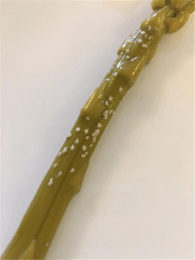
But after preserving your prized pickled asparagus, have you noticed some little yellow/white spots form on the surface? Is it safe to eat?
The answer is yes, it is safe to eat. These little specks are called rutin. According to the University of California Extension, when asparagus is heated with vinegar, the bioflavonoid rutin is drawn out of the asparagus. It becomes insoluble and crystallizes, leaving the spots on the surface of the asparagus. Commercially made pickled asparagus has an additive added to prevent this reaction.
Asparagus can also be canned plain, which requires pressure canning, or frozen. It is best to preserve asparagus the day it is harvested or purchased. Store fresh asparagus upright in about one inch of water in the refrigerator.
Asparagus: Canning, Freezing, Pickling – PennState Extension