St. Patrick's Day and Corned Beef
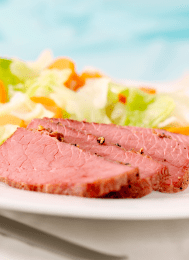
Photo: Canva.com
March is the time of year that we starting seeing signs of Spring! Between St. Patrick’s Day and March Madness basketball, there will be lots of celebrations.
A traditional St. Patrick’s Day feast celebrated by Irish-Americans includes corned beef and cabbage. My personal favorite treat is a Rueben sandwich. So what is corned beef?
According to the USDA Food Safety and Inspection Service, corning is a form of curing. The name comes from Anglo-Saxon times before refrigeration. In those days, the meat was dry-cured in coarse “corns” of salt. Pellets of salt, some the size of kernels of corn, were rubbed into the beef to keep it from spoiling and to preserve it.
Today brining — the use of salt water — has replaced the dry salt cure, but the name “corned beef” is still used, rather than “brined” or “pickled” beef. Commonly used spices that give corned beef its distinctive flavor are peppercorns and bay leaf.
Corned beef is made from one of several less tender cuts of beef like the brisket, rump or round. Therefore, it requires long, moist cooking. Keep food safety in mind when preparing corned beef. It can be cooked on top of the stove or in the oven, microwave or slow cooker.
Corned beef may still be pink in color after cooking. This does not mean it is not done. Nitrite is used in the curing process, which fixes pigment in the meat and affects the color.
Allow the brisket to stand for about 20 minutes after removing from the heat. This will make it easier to slice, and it is best sliced diagonally across the grain of the meat.