Ham it Up!
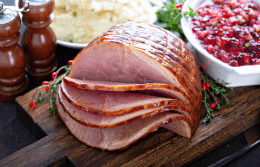
Photo: Canva.com
Easter ham is a prominent menu item for many Easter gatherings.
When buying a ham, estimate the size needed according to the number of servings the type of ham should yield:
- 1/4 – 1/3 lb. per serving of boneless ham
- 1/3 – 1/2 lb. of meat per serving of bone-in ham
Whether you are cooking a raw ham or preparing a ready-to eat ham product, follow these steps for a ham that is cooked to perfection.
- Ham that is not ready-to-eat but has the appearance of ready-to-eat products will bear a statement on the label indicating the product needs cooking.
- Ham that requires cooking before consumption or fresh, raw ham must reach an internal temperature of 145°F (with a three-minute rest time). Set the oven no lower than 325°F.
Cooked canned ham and cooked vacuum-packaged ham, both from federally inspected plants, can be eaten right out of the package. All of these along with spiral-cut cooked ham are safe to eat cold or can be warmed to an internal temperature of 145°F, as they are already fully cooked. For cooked hams that have been repackaged in any other location outside the processing plant, heat to an internal temperature of 165°F, measured with a food thermometer, before you serve it.
Store leftover ham in the refrigerator. Use or freeze leftover ham within 3-5 days. Frozen ham is best used within 1-2 months.
A handy chart is available to determine the temperature and cooking time for the type of ham purchased from the USDA Hams and Food Safety website.