Asian Jumping Worms Present in Our Area
Asian Jumping Worms Present in Our Area
By Pat Burt – Wild West District Agriculture & Natural Resources Agent
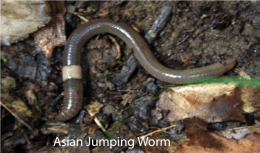
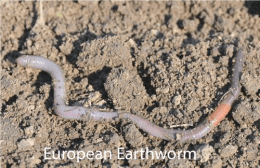
I had not planned to write my next post about a worm but all that changed when a resident of Sublette walked into the K-State Extension office in Haskell County last week and told me he had Asian Jumping Worms in his yard. He had a picture on his phone and yes, indeed it was of an Asian Jumping Worm. Personally, I had only learned about them in April when another ag agent in southeastern Kansas was asking the rest of us ag agents if we knew anything about them as one of his residents had discovered them in his yard.
The Asian Jumping Worm is native to East Asia and are considered an invasive species in the United States. They get their name because of how they thrash around when disturbed. They look different than our normal European earthworms and are easy to distinguish from them. The Asian Jumping Worms are a darker gray color than the European earthworms and the Asian Jumping Worms have a white, smooth clitellum (looks like a white band on their body) that is smooth, while the European earthworms ae a lighter color and their clitellum pinkish (looks like a pinkish band on their body) that is slightly raised and ridged.
The Asian Jumping Worms are a problem because they damage the topsoil. They tend to only be found in the top two inches of soil and their castings they leave behind are dry and grainy and it makes it difficult for seeds to germinate. Due to the destruction of the soil, erosion is also increased.
The worm is currently found in 30 states and it is believed that the Asian Jumping Worms have spread due possibly by anglers and the horticulture trade. They reproduce much faster than our native earthworms so they can spread rapidly. To prevent their spread, it is a good idea to check soil, compost or any other material that you are considering bringing onto your property for these worms.
If you believe you have Asian Jumping Worms, collect and gather any that you can find and place them in a sealed plastic bag. Throw the sealed plastic bags containing the worms in your trash.