Dual Purpose Cover Crops: Grazing and Weed Suppression?
Even as we might still be planting cover crops, it’s easy to look ahead at what they might be doing. A lot of what they do accomplish is related to biomass. Check out these recommendations for cereal rye biomass needs from the University of Wisconsin as it relates to the work we can expect from this popular cover crop:
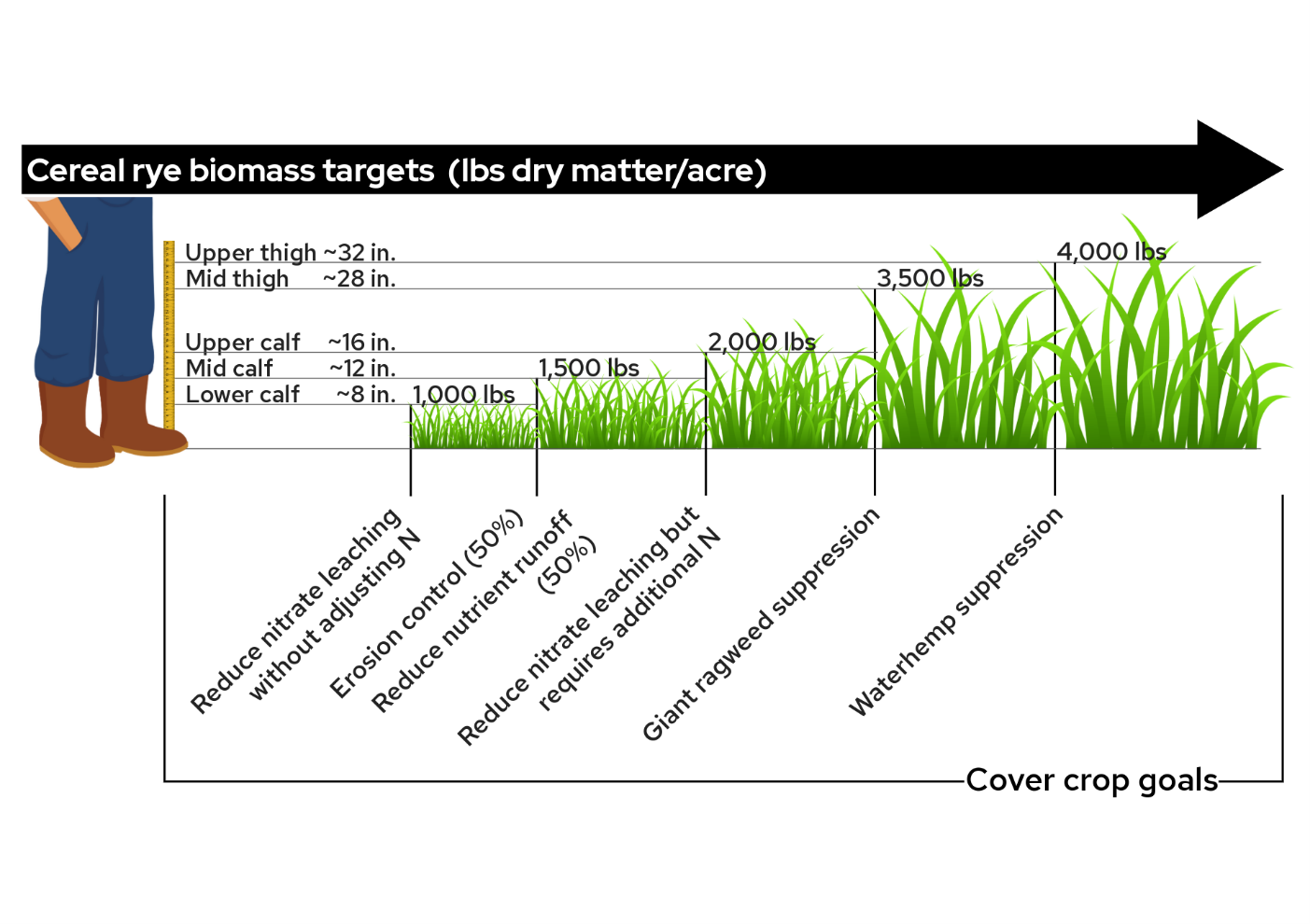 That’s a big difference in biomass and underscores that while we want our cover crop plantings to ‘do everything’, that’s not feasible.
In many of our systems, we also want to get some forage utilization from cover crop stands, and that can affect the other uses as well. For example: how might grazing affect the weed suppression features of a cover crop stand? For that interaction, we can look at work by former Kansas State University Master’s student Lily Woitaszewski.
Woitaszewski spent the 2021-2022 winter cover crop grazing season looking at the effect of grazing cover crops on suppression of various weed species at three different locations. At one site, moderate to heavy grazing did have an influence on the weed suppression value of the cover crop. Summer annual weeds in particular were the challenge in a system where grazing reduced biomass and allowed them to get a foothold.
At two other sites, however, grazing had no influence on preplant weed suppression by the cover crops. Horseweed, chickweed, and henbit were the dominant species present at both sites and differing grazing pressure (grazing exclusion cages were added every two weeks to simulate animal removal timings) did little to affect weed biomass levels.
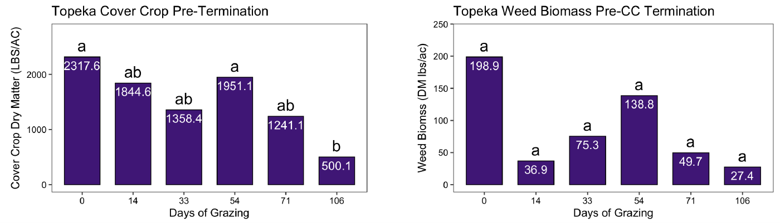
While encouraging, the results suggest just how variable the effects might be when it comes to the dual-purpose use of cover crops for both grazing and weed suppression. On one hand, it’s good to keep in mind that weed suppression is not the same as weed control so it’s unlikely a cover crop will (consistently) provide the same level of weed control as a herbicide program (the key to weed suppression: sufficient cover crop biomass at the time of weed emergence). On the other, there’s the potential for weed seed reduction via different ‘processes’ cover crops might play a part in. That’s work we’ll cover in more detail in the future.