Fall Armyworm Trapping - (Final?) Update
Last year at this time, moth numbers in our fall armyworm traps had dropped significantly after a summer of up and down numbers that mirrored the significant feeding we saw across the area.
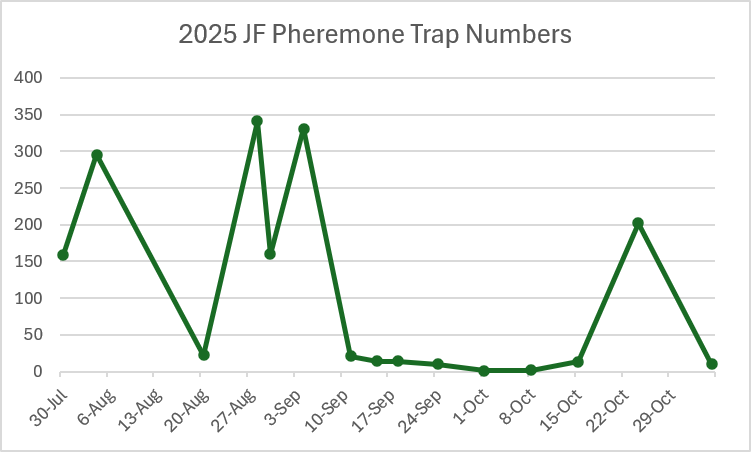
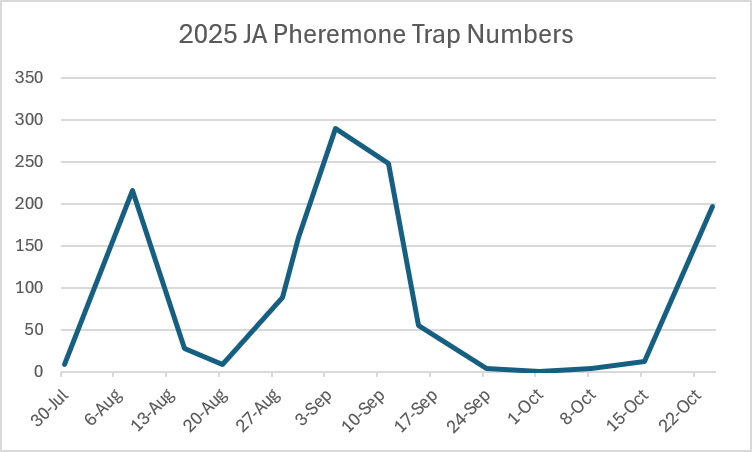
Note the end of season spike. While it didn’t result in much additional feeding injury, it’s a reminder of 2 things about this pest:
- They aren’t leaving until after frost
- Monitoring is still encouraged
Fall Armyworms don’t overwinter in Kansas. Our winter temps are too low and once we get freezing temperatures, they’re likely done. While we’re inching closer to that time – we’re not there yet and that means the presence of fall armyworm and feeding from them is still possible. With any luck it won’t be at significant levels but it doesn’t mean you won’t find them or that isolated spots wouldn’t see feeding.
Other Armyworm species do overwinter here and can be found feeding on green vegetation late into the season. They’ll continue their life cycle as long as temperatures (+/- low 40’s) are conducive.
With ample regrowth in many cool season grass stands combined with lower feeding pressure than in recent years might make it tempting to cease scouting, there are a couple of exceptions to consider.
First: keep an eye on heavily grazed or late harvested stands with limited regrowth. These stands need good regrowth prior to dormancy and would suffer the most if feeding does occur.
Second: newly seeded crops should be a focus. New alfalfa, grass, or cover crops all need an opportunity to develop a root system. The new growth in these situations won’t tolerate feeding nearly as well as well-established stands.
Are we out of the woods for this year? We’re still catching fall armyworm moths in our traps and other armyworm species are present as well – so not fully (follow along here) . That said, you can refocus the bulk of scouting efforts on new seedings or stands recovering from late haying or grazing.