Soybean SDS - The Disease Cycle
Depending on who you ask, soybean planting will start in 30 days – or 90 days! That makes it difficult to be excited about a disease like Soybean Sudden Death Syndrome (SDS) – we won’t see until after flowering, but we do so at our own peril, since it actually gets started early in the growing season.
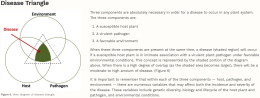
-excerpted from the Plant Disease: Pathogens and Cycles chapter of the UNL Soybean Management Guide
This graphic above outlines the crop disease triangle. We already have the soil or residue borne pathogen. At planting we add the host (soybean), and we do so in an environment difficult to manage. The best we can do is understand how they all fit together and try to manage accordingly. We can implement some prevention to keep the pathogen at bay and can consider crop rotation to reduce host exposure, but environment might be as large a variable as any.
Every disease has a ‘range’ of conditions they persist in. SDS prefers wet soils + temps during early vegetative growth in the 60-65 degrees F range. Often a factor of greater concern with earlier planted soybeans, it’s not uncommon for later planted fields to exhibit greater symptomology than earlier planted fields if they are planted in the right early vegetative stage conditions.
Other factors can contribute to the disease as well:
- Frequent or heavy mid-season rains favor early expression of disease symptoms
- Irrigation provides the ideal environment for SDS development
- Hot and/or dry conditions during the early to mid-part of the growing season can actually delay or even stop SDS symptom development (unfortunately, they often contribute to yield declines in other areas…).
- Soybean Cyst Nematode (SCN) levels can increase SDS severity, but SDS can occur independently of SCN and vice versa. Low soil fertility, poor drainage, and even compaction may contribute as well.
Once infected, toxins move through the plant’s water conducting tissue to leaves where we start to notice the disease. This typically doesn’t occur until after flowering, but if a variety is highly susceptible or soil conditions are extreme, symptoms can occur even early in the season.
Next up: planting time options…