Product Awareness
In this week’s column (read it here…), I wrote of the importance of understanding product labels. It came after I spent some time researching product claims from an e-mail advertisement.
The ad caught my eye because it referenced seed treatments. Actually, it implied the lack of a seed treatment, a surprise since much of our corn and soybean seed includes a treatment (a 2024 American Soybean Association survey showed almost 90% of soybeans planted came with some sort of seed treatment). That ‘contradiction’ caused me to dig a little deeper into the seed applied product where I learned it did include a common fungicide after all.
Why does that matter? Because it’s important to know what you are getting when you purchase a product, both from what it is providing, but what you may or may not have to provide to supplement it.
Take soybean seed treatments: will they pay every time? No – but as this chart shows, soybean seedling diseases are a contributing factor to yield losses.
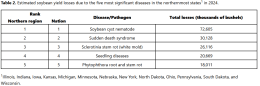
If we go without a seed treatment altogether under conditions favorable for disease, potential for losses increases. If such losses are a concern, knowing a product contains a seed treatment can provide some comfort in knowing we have protection while potentially allowing us to further evaluate seed treatment costs elsewhere (with appropriate caution…).
It also helps us evaluate the product. If we know what’s in a product, we can better compare them to other products or check strips or when we see issues have some idea if a particular product’s claims apply to what we saw.
Bottom line: make sure you –
- know what’s in a product…
- and test it in a small area whenever possible
There are lots of products being introduced every year and it’s impossible to test them all – not to mention the fact that not all have the same labeling requirements, making comparisons even more difficult. Trying new products is never a bad thing – and I hope you find some that DO work – and a basic awareness of what’s in the product can be a great place to start.
NOTE: many of the products being introduced are considered biologicals or biostimulants. That will be NEXT week’s topic!