Soil Fertility Effects on Weed Density (University of Missouri Study)
Cool season forage stands with higher densities of desirable species typically equals lower densities of undesirable weeds/brush. Appropriate densities are typically achieved via fertility and harvest management, but it can admittedly be difficult to see if we’re really making much change. A University of Missouri study sheds some light on how management techniques affect weed density.
The study consisted of a bi-monthly pasture survey during the growing season with each in-pasture site evaluated for weed infestation and soil fertility levels. The goal was to ID the weeds in stands and how fertility levels may be contributing to their presence. Soil tests confirmed the following:
- low P levels at 80% of the sites
- 37% of sites with low K levels
- Average site pH: 5.8.
From a fertility standpoint, the results were what we’d expect:
better fertility = less weeds
For P/K, even a slight increase in soil test level reduced weed pressure with P often the leader of the two in reducing weed density.
Maybe an even better predictor of weed pressure was soil pH. The study found that a one unit increase in soil pH reduced weed density by 4000+ weeds/A.
Not all weeds/brush responded the same, with some increasing in response to higher fertility similarly to our desired grasses. As a rule, however, fertility management – pH in particular – in stands with below optimum nutrient levels helped reduce weed densities as outlined in the MU slide below:
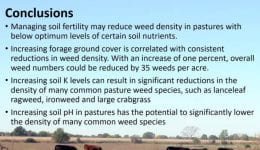
In addition to fertility effects on ground cover, harvest management was confirmed as a factor affecting weed density as well. The study suggested an increase in ground cover of just 1% could reduce weed pressure by 35 weeds/A and if that seems insignificant, consider this: hemp dogbane can produce anywhere from 800-12,000 seeds/plant. That’s the potential for a LOT more weed pressure that could potentially be reduced by increasing plant density.
If fertilizer prices have you reconsidering fertilizer application rates, proceed with caution. This study confirms numerically what we often see with the naked eye: low fertility stands are weedier. With some stand biomass levels already thinned by fall armyworm feeding, be mindful of how fertility management could compound the problem even further.