Invasive Bluestems: Old World Bluestems
Broomsedge Bluestem gets plenty of attention for the problems it causes in cool season grass stands, but another group of bluestems has also become a concern. Old World Bluestems (OWB) are becoming a significant issue.
The two most common species are Caucasian (pictured) and yellow bluestem. While carrying the bluestem name, they are not all that closely related to our native species like broomsedge is. Introduced as a multi-use forage over a century ago, they are competitive and produce large amounts of seed. However, because they are of low palatability and mature quickly, they are less likely to see the grazing pressure our more desirable species do, thus allowing them to gain a foothold. Once established, stopping them is a big challenge.
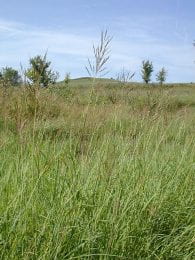
They also tend to look a little like some of our desirable bluestems – and are difficult to differentiate even within the OWB group. The first indication you might have OWB is lighter green patches of grass seen during the growing season that turn to a light straw color when dormant. If you note areas matching this description, collect samples for positive identification. Seed heads will also begin to emerge earlier than most other native species (mid-June/early July) providing identifying characteristics to confirm whether we have a problem species – or not.
Our ‘standard’ management may struggle against OWBs. Current recommendations include just two herbicides – a non-selective product for spot treatments and another with strict rate guidelines to prevent damage to desirable species (and not labeled for all grasses – always read/follow product labels. Late-season prescribed fire may have a place in native grass stands.
Why think about OWB during dormancy? You can actually pick it out now in some places due to it’s straw-colored appearance and leftover seed heads. So, while we can’t do anything about it now, it is time for some pre-scouting and forward planning for monitoring during the growing season. Try to catch OWBs early – even if it means taking a second look at that ‘out of place’ grass you can’t quite place. It might be a bigger problem than you think.
For information on Old World Bluestems, check out the herbicide information in the 2025 KSU Chemical Weed Control Guide (available at any District Office) or drop me a line for additional identification and management resources, including information from control research by former K-State Research & Extension Range Management Specialist Dr. Walt Fick and additional work from NRCS Range Conservationist Dustin Schwandt.