Invasive Bluestems: Broomsedge
The term ‘bluestem’ often conjures up images of waving prairie grasses – but there are other much less desirable bluestem species as well. One is the all too common Broomsedge bluestem. If you’ve confirmed it in a grass stand, it’s all too familiar. If you haven’t, it’s a good time to look across the stand for an orange/straw colored grass overshadowing the cool season grasses (picture below). It might remind you of the aforementioned desirable prairie grasses, but in reality: it’s just an invader.
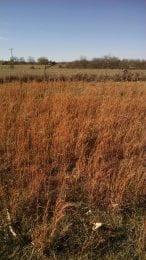
There’s a statement in a USDA Plant Fact Sheet on broomsedge bluestem stating: On infertile soils, broomsedge is a long-lived competitor. That pretty well defines where we see broomsedge, and we’ve unfortunately got a lot of acres that fit into this category. It isn’t necessarily a species that only survives in low fertility, however. Rather it likes the open space created in cool season forage stands often the result of low fertility. It can also get a foothold when stands are thinned by armyworms or heavy grazing pressure or even drought.
If you confirm broomsedge, a soil test is a great place to start. Results of a 2008 study at the University of Missouri evaluating the response of cool season grass (fescue) stands with broomsedge to fertilizer showed the addition of fifty pounds of Phosphorous (P)/A + lime increased fescue stand composition from <15 percent to >35 percent – while slightly reducing the broomsedge composition. In addition to P and lime, take a look at Potassium (K) as levels of this important nutrient continue to decline.
Take a look at previous weather, harvest (grazing/haying) management, and other potential contributing factors as well. Anything that opens space in the canopy can allow Broomsedge Bluestem to get a foothold – and not look back.
If you’re in need of additional recommendations for Broomsedge management, drop me a line. Getting a stand back from an infestation isn’t easy or fast, but it does take a first step to get started.