Webworms active in pigweed and alfalfa in western Kansas
Heavy webworm infestations in pigweed have been observed in western Kansas in the last two weeks and more recently in alfalfa fields around the region.
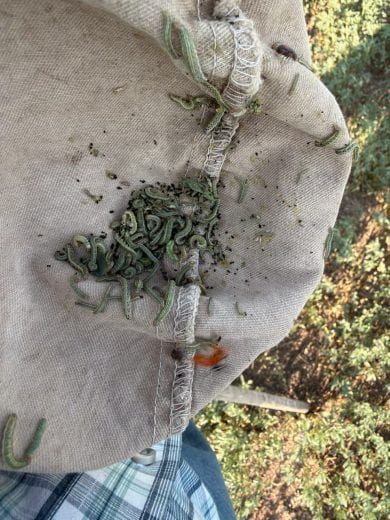
Abundant non-crop hosts and warm weather has likely allowed for rapid development and population buildup of this pest in the landscape. Webworm caterpillars are yellow to green with clusters of black spots on each body segment and a stripe down the center of the back. Reaching approximately 1 inch at maturity, these caterpillars are typically first noticed by the messy webbing that forms towards the top of infested plants along with heavily skeletonized leaves.
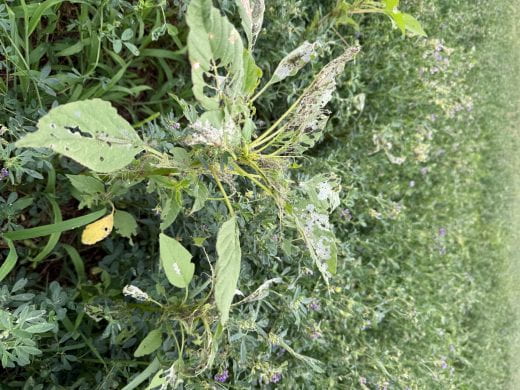
From a distance, terminals in an infested alfalfa field take on a bound-up appearance due to the webbing.
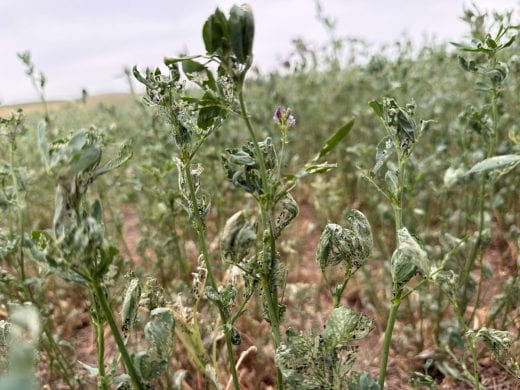
Upon closer examination, the webs usually contain varying amounts of frass (caterpillar waste) and caterpillars.
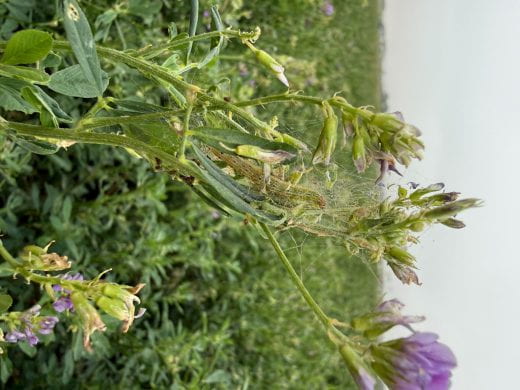
Webworms have many hosts and pigweed is a preferred one. Heavy infestations of caterpillars or herbicide applications that kill off pigweed stands can often force this pest to seek out other nearby hosts such as alfalfa. Multiple generations of webworm occur in Kansas each year and it is the second and third generations occurring August through September that can be most concerning for alfalfa. Infested alfalfa stands with 25 percent or more of terminals covered in webbing will likely need some form of control. If early cutting is possible, this should eliminate the problem. If cutting is over two weeks out, chemical control should be considered. If fields need to be sprayed, it is important to use enough carrier to achieve penetration into the webbing and foliage where caterpillars will be sheltering.
For more information and control options regarding webworm in alfalfa, refer to the Alfalfa Insect Management Guide.
Anthony Zukoff—Southwest Research and Extension Center – Garden City, KS