What’s On A Feed Label and Why It Matters
Jason Warner, cow-calf specialist
Feed manufacturing is an essential component of animal agriculture production, and the feed milling industry is a complex business. Making high-quality, consistent feed and getting it to the end user in the desired time frame is not an easy feat. Yet, when we purchase a bag or tub of feed, it’s easy to overlook the challenges of the manufacturing process and the role quality control plays in protecting product integrity. This is why proper feed labeling is a critical aspect of the milling industry. Here, we will review key points regarding feed tags that affect both manufacturers and consumers.
The Objective of Proper Feed Labels
The primary goal of proper feed labeling is simply to help protect and ensure the wellbeing and health of all people and animals. This includes everyone involved in both the manufacturing and live animal production sides of the process, and the ultimate downstream consumers of animal protein products. Feed tags are necessary for 1) the manufacturer to know what they are providing and 2) the purchaser to understand what they are buying and how it should be properly fed to their livestock. Accurate, complete, and clear feed labeling helps ensure fair and transparent commerce.
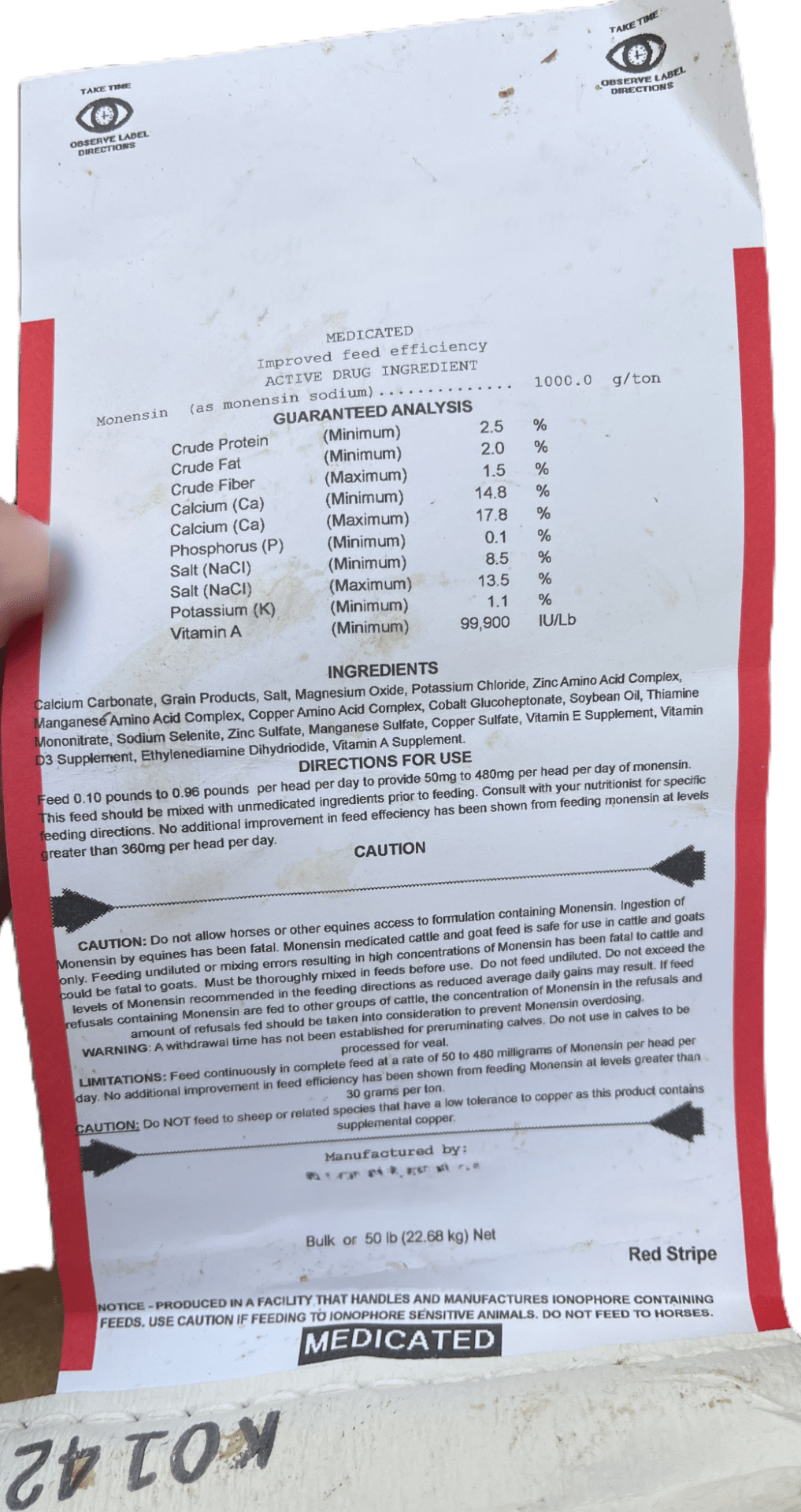
Industry Guidance
While feed manufacturers follow state and federal regulations, much of the industry’s overall guidance is provided by the Association of American Feed Control Officials (AAFCO; https://www.aafco.org/). The AAFCO is an organization that helps set industry standards for items such as the information that needs to be on a tag and how it is presented, how ingredients are defined, and the use of analytical techniques, among others. Essentially, the AAFCO provides consistent direction and counsel to state and federal regulatory agencies, again to help ensure that animal and human health are safeguarded. For example, AAFCO helps ensure a consistent layout of required information on a feed tag, so that the information for a beef protein supplement is listed in the same format and order on the affixed label, regardless of the manufacturer.
The Main Areas of a Feed Label
Commercial feeds are products that anyone can purchase at retail, sometimes referred to as “floor stock” feeds. For these feeds, regardless of the type of feed or manufacturer, the main areas in which pertinent information on a tag must be provided, and examples of wordage that may be used include:
1) the brand name (Any Name Feeds, Inc.)
2) the name of the product (25% Beef Cube)
3) a clear statement of purpose (A Protein Supplement for Beef Cattle)
4) a guaranteed nutrient analysis (Crude Protein (minimum)…25%)
5) an ingredient statement (Processed Grain ByProducts)
6) clear feeding/usage directions (Feed 2 to 5 pounds per head per day…)
7) manufacturer information (Any Name Feeds, Inc., Anytown USA)
8) a net quantity statement of the amount in the container for sale (Net Weight 50 lb)
A precautionary statement is also often included on labels but not always as it depends on the formulation and intended use. An example of a precautionary statement would be “Store this feed in a cool, clean, dry location”. If feed contains any medicated additive, then medication claim and guaranteed drug level statements are required. Likewise, if the medication requires a Veterinary Feed Directive (VFD), such as chlortetracycline or tylosin, an additional precautionary statement regarding the drug’s restricted use must be prominently displayed on the label. Manufacturers may elect to include a lot number and the date of manufacturing, which are helpful for tracking purposes, particularly for products marketed through distribution channels involving multiple retail outlets. Keep in mind that the specific nutrients listed in the guaranteed analysis section of the tag will vary depending on the species it is intended for and the type of feed. For example, both crude protein and crude fat are required to be on the label for a beef protein supplement, but neither are necessary for a product that is labeled as a mineral supplement. When ingredients are listed, the use of collective versus specific ingredient terminology is at the manufacturer’s discretion. An example of this is that the ingredient wheat middlings could be listed as the specific term (wheat middlings) or as the collective term (processed grain byproducts).
Considerations for Custom Feeds
Custom manufactured feeds largely refer to a mix or formula that only one producer requests and receives and are not available for commercial retail sale. Most commonly, these involve feeds made in larger bulk quantities. Label requirements for custom feeds vary by state, but in general, the following information is required:
1) purchaser’s information
2) manufacturer’s information
3) date of sale
4) the name or description of the product
5) list of ingredients and amount included in the mix batch
6) percentage or amount of nutrients (if specified by the purchaser)
7) amounts, directions, warnings, and withdrawals for medications (if included)
Regardless, if it is a floor stock or custom manufactured product, it is the responsibility of both the mill and purchaser to have a clear understanding of the feeding directions, medications used if included, and other items of precaution. If the directions on a feed label are unclear or inconsistent with your method of feeding or desired feeding rate, consult with the manufacturer for guidance. Open, clear communication among everyone is essential to help ensure products are used in alignment with their intended purpose, ultimately safeguarding animal agriculture production and our food supply.