Managing Bloat in Beef Cattle
AJ Tarpoff, DVM, extension veterinarian
Under normal function, gases are produced continuously by fermentation in the rumen and are regularly eructated or burped up. There are various scenarios that interfere with normal eructation and gas release in cattle. The outcome is a buildup of gases, distention of the rumen, and then ultimately a life-threatening situation. This is what we refer to as “Bloat”.
The distention in the rumen is the primary clinical sign of bloat. Distention is noted in the animal’s left paralumbar fossa (high on the abdomen, behind the ribs, below the spine, in front of the hip). It is very evident if you observe the animal from behind. As the abdomen continues to expand, pressure is put on the diaphragm that increases difficulty to breathe. The pressure also compresses blood flow to the rear of the body leading to weakening rear legs. Without immediate intervention, the animal will suffocate and expire from the buildup of gas in the rumen.
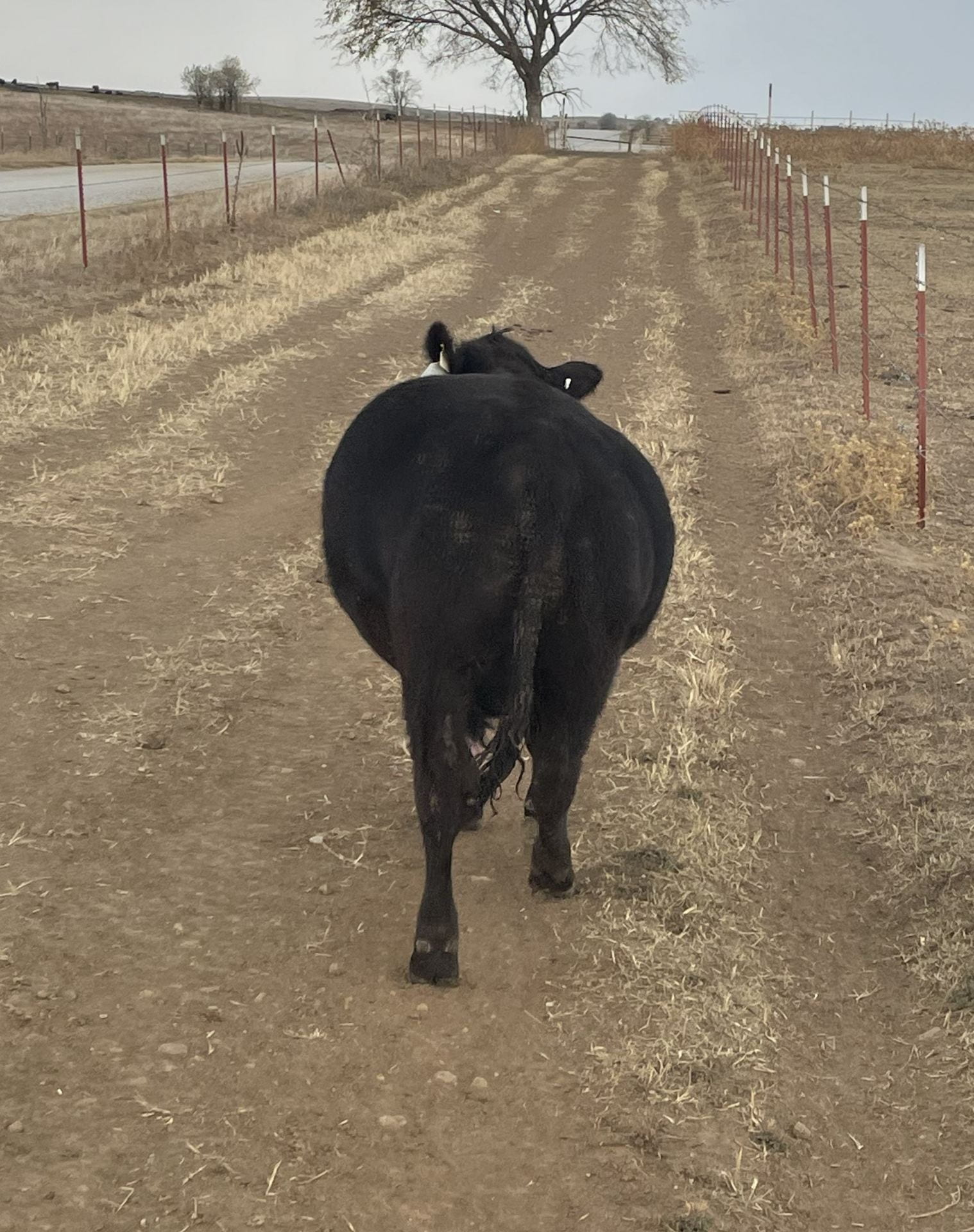
There are 2 main forms of bloat in cattle: Frothy and free gas. Frothy bloat occurs when gas produced from fermentation becomes entrapped in tiny bubbles in a foam-like consistency that cannot be burped out. There are many factors that can lead to this foam creation, but it is often attributed to consuming highly digestible rapidly degraded soluble proteins in lush growing legume pasture. This form is often referred to as “Pasture Bloat” as that is where it is most often seen but can occur in feedlot cattle depending on the rumen conditions and ration. In pasture scenarios, frothy bloat can be a concern for the entire grazing group.
Free-gas bloat on the other hand is typically seen in feedlot or growing scenarios and involves issues with rumen motility and ability to burp. Free gas bloat is often associated with bouts of acidosis or due to vagal nerve entrapment. Acidosis induced bloats occur by consuming finely ground grains and rapid fermentation leading to rapid gas production as well as reduced pH. Acidosis can cause direct damage to the rumen walls (rumenitis) and also lead to chemo osmotic changes in the rumen. Both situations interfere with rumen contractility, leading to bloat. Vagal nerve entrapment can also lead to free gas bloat. The vagal nerve travels through the chest cavity before it enters the abdomen. The vagal nerve sends signals to the rumen and the intestines to control contractions of the smooth muscle. In some situation after a bout of BRD (Bovine Respiratory Disease), the lymph nodes can swell near the lungs (mediastinal lymph nodes) leading to entrapment of the vagal nerve. If the rumen is no longer receiving complete signals to contract correctly, eructation interference occurs leading to bloat. Free-gas bloats are often an individual issue within larger groups.
Regardless of the root cause, bloat is an emergency situation. The goal of treatment is to relieve the pressure on the diaphragm to allow the animal to freely breathe. Ideally, the animal is mechanically restrained, an oral speculum is placed in the animal’s mouth, and a large bore stomach tube is passed through the speculum from the mouth into the rumen. Once the tube reaches the rumen the gas or froth is immediately expelled providing relief. In frothy bloat cases, complete alleviation of the bloat cannot be done until the gas trapped in the froth is released. In such cases, some type of surfactant is recommended to break down the foam and release the gas to be belched out. Common products that are used are poloxalene or mineral oil, and are administered orally through the stomach tube. Never drench the products into a bloated animal, as swallowing ability is often impaired and puts the animal at risk of aspiration pneumonia.
If proper restraint is not available or the animal begins to go down (ultimately to expire), emergency trocarisation may be necessary. Either use of a large bloat needle, trocar, or pocket knife can work for this procedure. The tool is stabbed through the skin (high in the paralumbar fossa on the left side of the animal) into the rumen to relieve the pressure. This is a last resort, and veterinary intervention is essential for proper treatment to reduce the likelihood of severe infection in the abdomen, especially if froth was involved.
Relieved bloat cases should be monitored closely for a few days, as re-tubing and therapy for relief is often necessary. For animals that have chronic (continuing) free gas bloat, a small surgical fistula can be created by a veterinarian. These fistulas will provide relief to any bloat without intervention for 60-90 days (until they heal over).
Preventing bloat in most cases comes down to grazing and feeding management. For frothy bloat, this can entail utilizing free choice anti-foaming products as well as changing grazing practices to reduce the likelihood of problems. For free-gas bloat, the main goal is to reduce acidotic events and maintain consistent feed intake. Utilizing products like ionophores can moderate intakes to help reduce risk as well. If numerous free gas bloats occur in a short period of time, it’s essential to investigate water tanks for availability or stray voltage, as well evaluating ration composition for problems (fines).
Bloat is a relatively common issue that can occur on any cattle operation. Cattle producers should all consider prior planning, having the proper tools, and having the practical know-how to alleviate bloat. Your local veterinarian is an excellent resource to ensure you have a proper plan in place.