Ahead of the curve
Stephanie Hall leads research efforts toward preventing Alzheimer's disease

By Joe Montgomery
College of Veterinary Medicine
Wednesday, Nov. 18, 2026
Exercise is widely recognized for its benefits to physical health, but its effects may extend much further — including helping protect the brain against Alzheimer's disease.
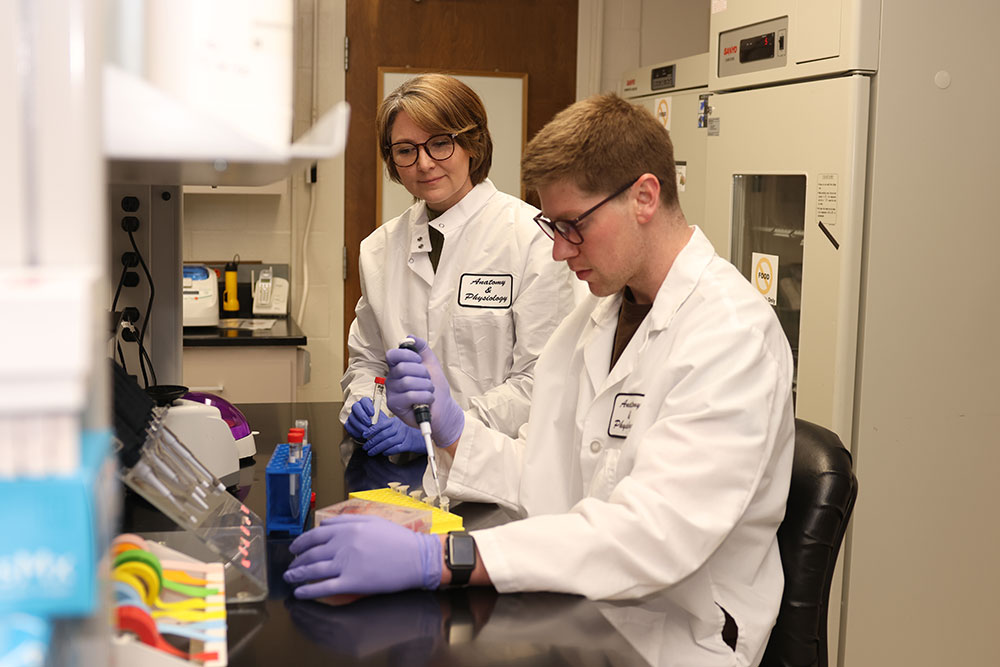
Stephanie Hall, assistant professor in the Department of Anatomy and Physiology in Kansas State University's College of Veterinary Medicine, is studying how exercise influences the development and progression of Alzheimer's disease, or AD, with the goal of better understanding how physical activity could help prevent or delay the disease.
"While age is the greatest risk factor for AD, there are 14 identified modifiable risk factors, and modifying those risk factors could prevent or delay the prevalence of AD by 50%," Hall said. "Of those 14 modifiable risk factors, and in more than half of them, exercise has direct impacts. It reduces depression. It improves blood pressure. It improves cholesterol. So, exercise is a huge player in this area."
Hall has an extensive research background in exercise physiology and its effects on a variety of diseases relevant to both humans and animals.
"The pathology of AD is present as early as 20 years before symptoms," Hall said. "It is essential to understand these early stages of AD. And exercise is one of the ways we can do that. I felt I could help contribute to this with my training and apply it to a different disease model."
Read the full story in the Wildcat Veterinarian, a magazine produced by the College of Veterinary Medicine.