People with Purpose: Kory Beighle
In a discipline built on precision, Kory Beighle makes room for students to color outside the lines.
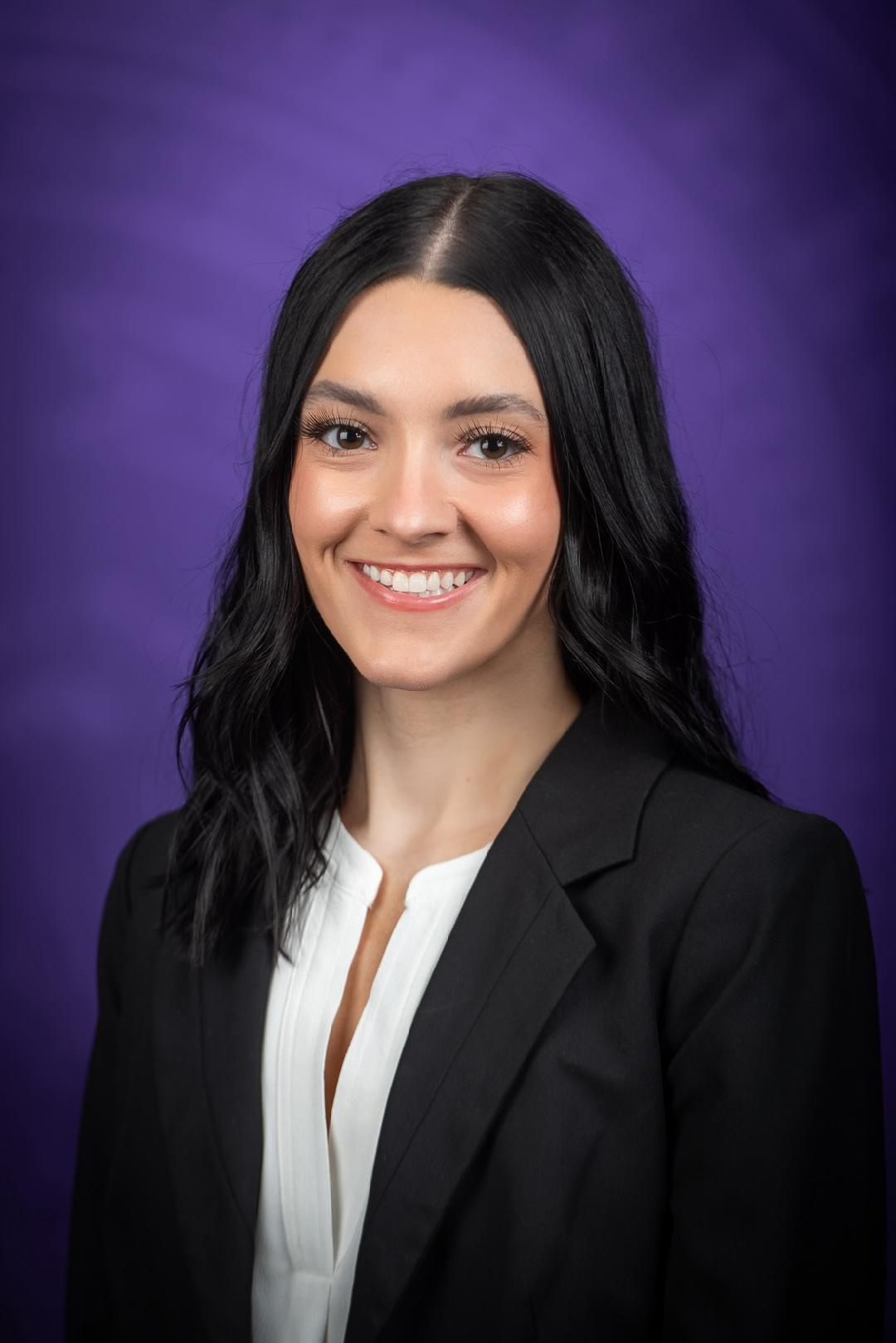
By Abbigail Marshall
Division of Communications and Marketing
Monday, Nov. 16, 2026
Kory Beighle believes a question mark takes you places an answer never could.
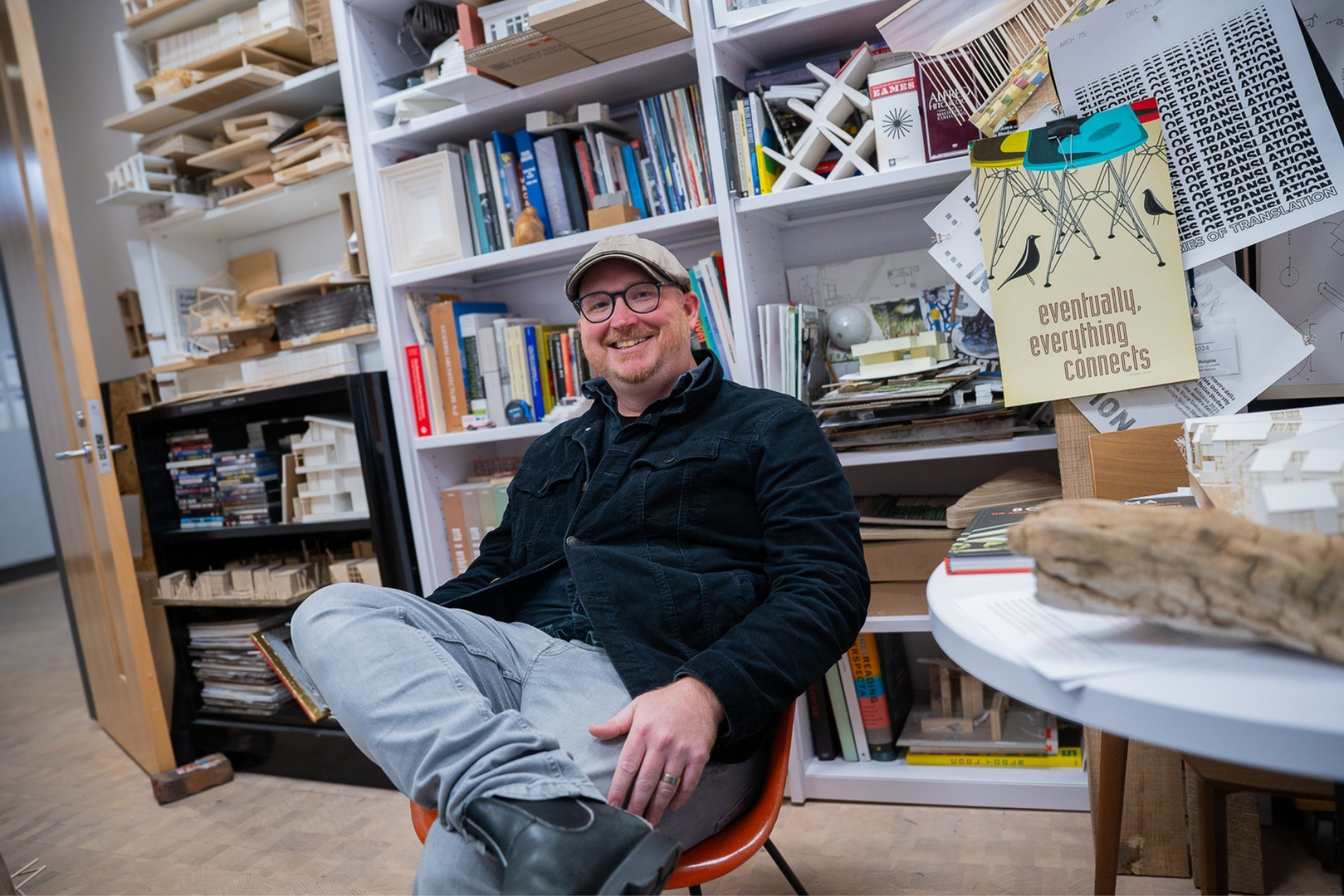
Beighle, assistant professor of architecture and Commerce Bank and W.T. Kemper Foundation Undergraduate Outstanding Teaching Award winner, aims to develop great architects by first building expert observers.
Guided by the idea that curiosity shapes both good design and lifelong learning, Beighle encourages students to see every unknown as an opportunity to expand what's possible — finding his purpose in nurturing confident and creative thinkers.
Q: How do you encourage students to take creative risks?
Beighle: I think one of the most common things that keeps people from taking risks, in any aspect of their lives, are the assumptions they're unaware they bring to decision-making. A student often perceives the consequences of stepping outside of their assumed expectations as too great. They then conform to a standard that their assumptions created; something that often has nothing to do with my expectations as an instructor.
As such, I push students to view the creative process as one of asking questions and having a conversation, but I also recognize that students have a deep desire to understand the path before traveling down it. When they're unsure what a project is asking of them, that uncertainty can become a major obstacle. With this in mind, I try to distinguish between the aspects of a project with defined expectations and those that leave room for exploration.
From the outset, I encourage students to view points of confusion in a project brief as opportunities rather than roadblocks. By leaning into that uncertainty, they can discover interesting directions and perhaps even new questions worth pursuing.
Q: What continues to surprise you about how people interact with the spaces around them?
Beighle: I'm not sure it surprises me anymore, but I was shocked when I first noticed how often people have habitual and ritualized interactions with the spaces they inhabit; to the point that they can become unaware of the spaces they move through every day.
If someone asked you to make a mental map of your commute into work each day, it may be challenging to develop a detailed picture. We remember landmarks and certain details — often things that stood out to us and were shaped by intense memories — but for the most part, we move passively through our environment, and our sense of place becomes detached from the physical spaces we're in.
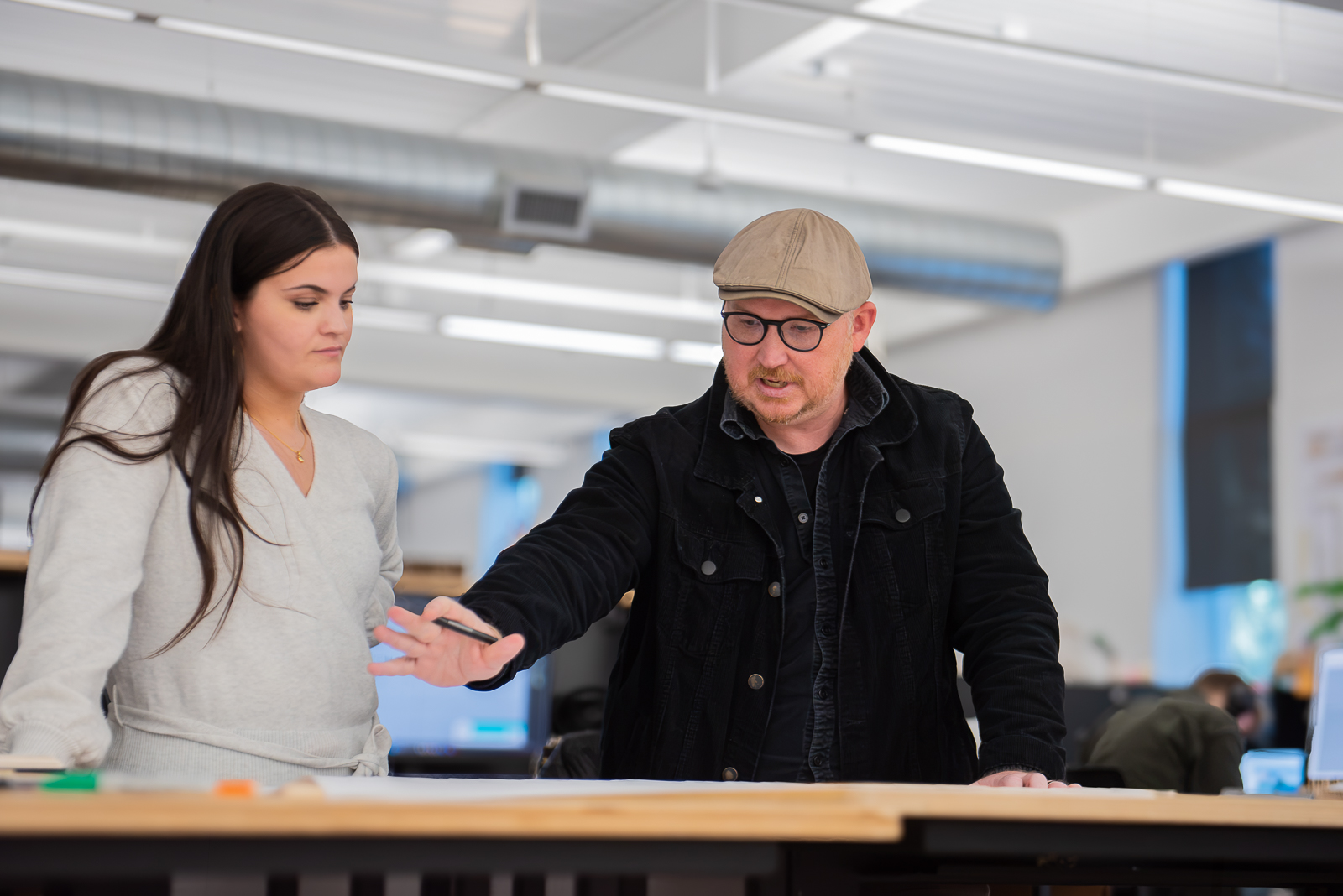
I often tell my students that one of the most important skill sets we need as designers and architects is the capacity to pay close attention to our environments. We need to be acute observers of the world around us to identify the implicit ways space shapes our lives, for better and for worse.
Q: What drives you to support students?
Beighle: It feels super cliché, but I think a majority of my drive as an educator and researcher comes from a need to pay it forward. I have had some amazing mentors and teachers throughout my life and each one supported my journey without asking for anything in return. Over time, I’ve built relationships with some of them that have lasted beyond the classroom, and I have seen that my influence on their lives was just as significant as the influence they had on me.
Growing up, my father often talked about how important it was to be a lifelong learner, and I have found that engaging in an intentional back-and-forth with students, both inside and outside of the classroom, supporting their journeys and their pursuit of life's questions, is one of the most interesting ways that I continue to learn about myself and the world.
The [Manhattan] community feels like a quiet place to reflect and think, to ask big questions and explore new ideas. There is an energy to the community that is constantly refreshing and challenging all at the same time.
ㅤ
Q: What experience has shaped you the most as a teacher? A designer?
Beighle: As an architect, designer and human, I think we are only limited by the capacity of our imaginations. Every experience that I've had going out into the world and experiencing it firsthand has shaped me dramatically.
One memory that stands out most is a trip that my grandparents took me on when I was 13. My grandfather worked for an airline as a gate agent, and he traveled a lot with my grandmother, so they decided to take me on one of their trips during my last spring break before high school.
It was my first trip outside of the U.S., and it reframed my full understanding of the world. I saw centuries-old cathedrals, amazing museums and, most importantly, people living their everyday lives in a very different way than I lived back home. Ever since then, I have sought as many of these new experiences as I can, and each one reframes my understanding of the world.
Q: How does collaboration influence the way you approach your work?
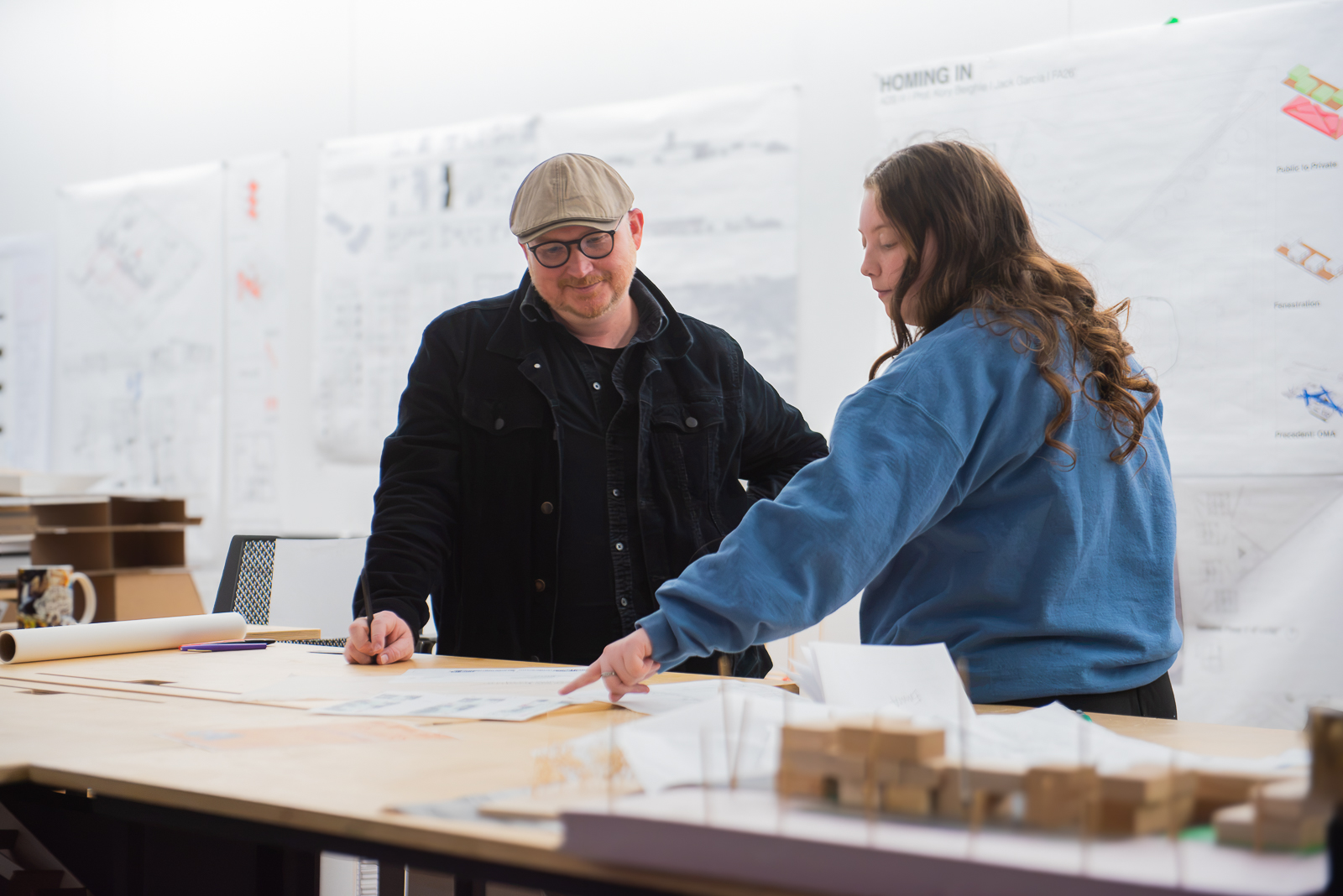
Beighle: I view my role as an educator as a conversation with my students. This is true in the design studio, but just as much so in the lecture hall. I see this conversation as a back-and-forth where I establish structure and learning objectives for the course, and then the students and I engage. I try to build projects that allow space for evolution, so when something isn't working, we can work back and forth to shift direction and move toward the new outcomes we weren't even aware were possible at the beginning of the journey.
I bring a similar attitude toward my role as a researcher and scholar. In both roles, you are navigating a constantly changing landscape of knowledge, and you are one voice amongst many. My work has often been less concerned with creating strikingly original content than with reframing our collective understanding of things that we thought we knew.
In both cases, as scholar and educator, the role of collaboration is that the world beyond you, whether it be a student, a colleague, or the rest of your field of study, can push back against your assumptions and challenge you to live the question in much the same way I ask my students to approach their work.
Q: What's your favorite thing about being a part of the Manhattan community?
Beighle: I have lived in Manhattan for a bit more than four years now, and I love they way the community feels like a small town and an international hub all at the same time. I might be exaggerating a bit, but I have met so many different people from different walks of life in my time here, and I feel much closer to them than I ever did living in much larger cities.
I have also grown to love the way this place feels like an enclave. The community feels like a quiet place to reflect and think, to ask big questions and explore new ideas. There is an energy to the community that is constantly refreshing and challenging all at the same time. I never feel uncomfortable, but I also never feel fully settled here. There is a movement to the landscape and the seasons, which causes things to feel on the move, evolving and renewing themselves. All of these things make me feel at home.
Related Stories
People with Purpose: Mindy Markham
Mindy Markham, director of the School of Human Sciences and recipient of the Presidential Award for Outstanding Department Head, believes in the power of connection...
People with Purpose: Zac Malcolm
Zac Malcolm, director of recruitment in the College of Arts and Sciences, helps students recognize their potential and find the confidence to pursue opportunities...
People with Purpose: Jessica Lane
Jessica Lane, associate professor of counseling, shapes future counselors' confidence in caring for others by helping them recognize their own strengths.