Uncovering the hidden layers of protein production
Katsura Asano explores how cells use alternative genetic instructions to produce proteins that influence cellular activity

By Rafael Garcia
Division of Communications and Marketing
Wednesday, Nov. 18, 2026
The human genome contains tens of thousands of genes that provide instructions for making the proteins responsible for carrying out essential functions throughout the body. But those instructions may be more versatile than scientists once understood.
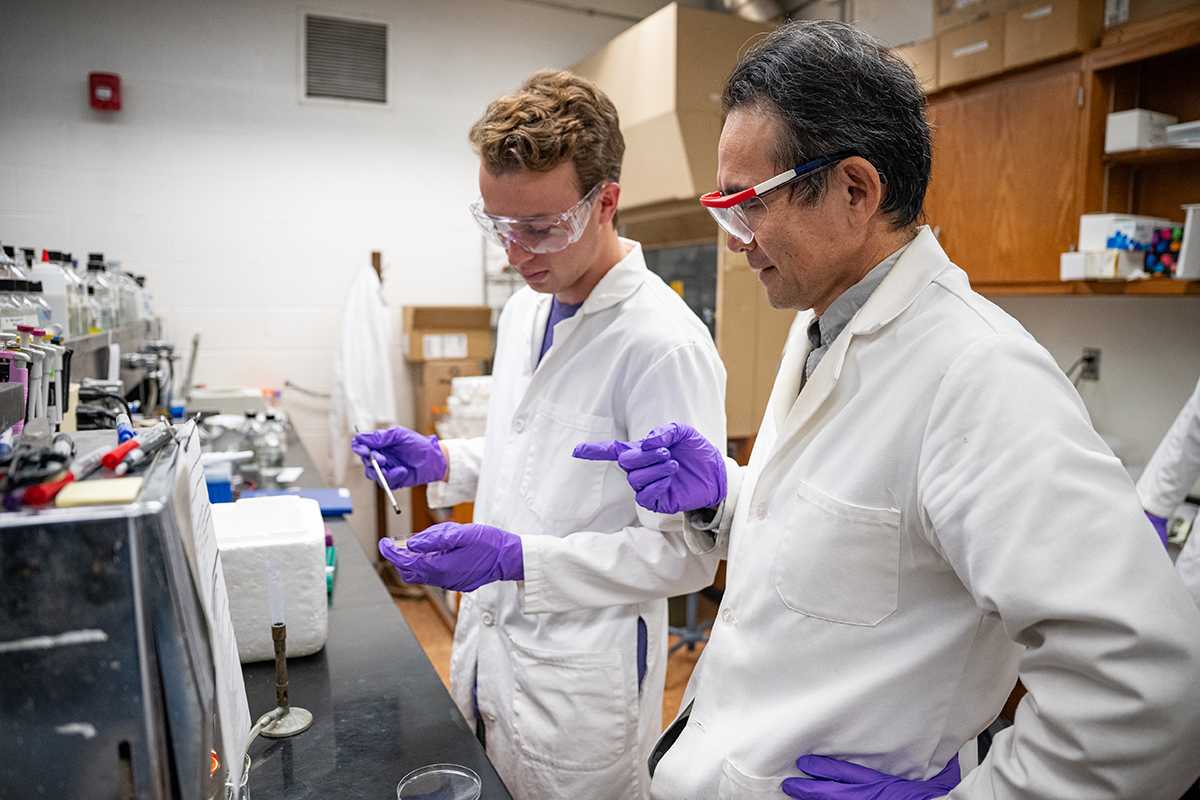
Katsura Asano, professor of biology at Kansas State University's Division of Biology, is studying how cells use alternative starting points within genetic instructions to produce additional proteins, as well as how those proteins can influence the activity of others.
His research team's latest work reveals another layer of regulation in how cells produce and use proteins, offering new insights into processes associated with cancer and neurodegenerative diseases.
The findings were published earlier in November in "Science Advances."
Shadowing proteins
Typically, cells begin translating messenger RNA, which carries genetic instructions from DNA, at a specific three-letter sequence called a start codon. The most common start codon is AUG, which signals the cell's protein-making machinery where to begin.
However, translation can also begin at alternative locations using non-AUG start codons. This process, known as noncanonical translation, allows cells to produce additional proteins from the same messenger RNA molecule.
Asano's research examines how these additional proteins function and influence the proteins produced by conventional translation. Asano uses the term "shadowing proteins" to describe some of the additional proteins cells can produce through alternative translation.
Depending on where translation begins, these proteins can interact with conventional proteins and influence their activity, providing another layer of regulation within the cell.
A molecular balancing act
The team's latest research identified a sequence motif, a recurring pattern of genetic material, that helps promote translation at non-AUG start codons.
The motif, called NAT1, is a short, GC-rich sequence found near alternative starting points in messenger RNA. It helps the cell's protein-making machinery recognize these alternative starting points, allowing translation to begin where it otherwise might not.
The researchers also examined the role of a protein called 5MP, which helps regulate the accuracy of protein production by suppressing translation that begins at non-AUG start codons. Working alongside another regulatory factor, eIF1, 5MP helps keep this alternative translation in check, limiting the production of additional proteins that could influence conventional protein activity.
When that regulation is disrupted, proteins associated with cell growth and migration can become more active. Left uncontrolled, these processes often become important characteristics of cancer development and progression.
Understanding this relationship could help researchers better understand how changes in protein production contribute to cancer.
Asano and his team also found evidence that evolution has helped shape where this alternative translation occurs. Their analysis suggests that strong non-AUG translation sites have been selected against over time in mammals, limiting their presence in the human genome while preserving a smaller number of sites that may serve important biological functions.
The findings also could have implications beyond cancer biology. Asano pointed to repeat-associated non-AUG translation, a process in which unusually long stretches of repeated genetic sequences can lead to the production of abnormal proteins. This process has been associated with several neurodegenerative diseases, including certain forms of amyotrophic lateral sclerosis, or ALS.
Asano's previous research has examined how 5MP can suppress alternative translation, raising questions about whether similar regulatory mechanisms could help scientists better understand repeat-associated protein production. Further research could shed light on the molecular processes involved in these diseases.
Pioneering research made possible through collaboration
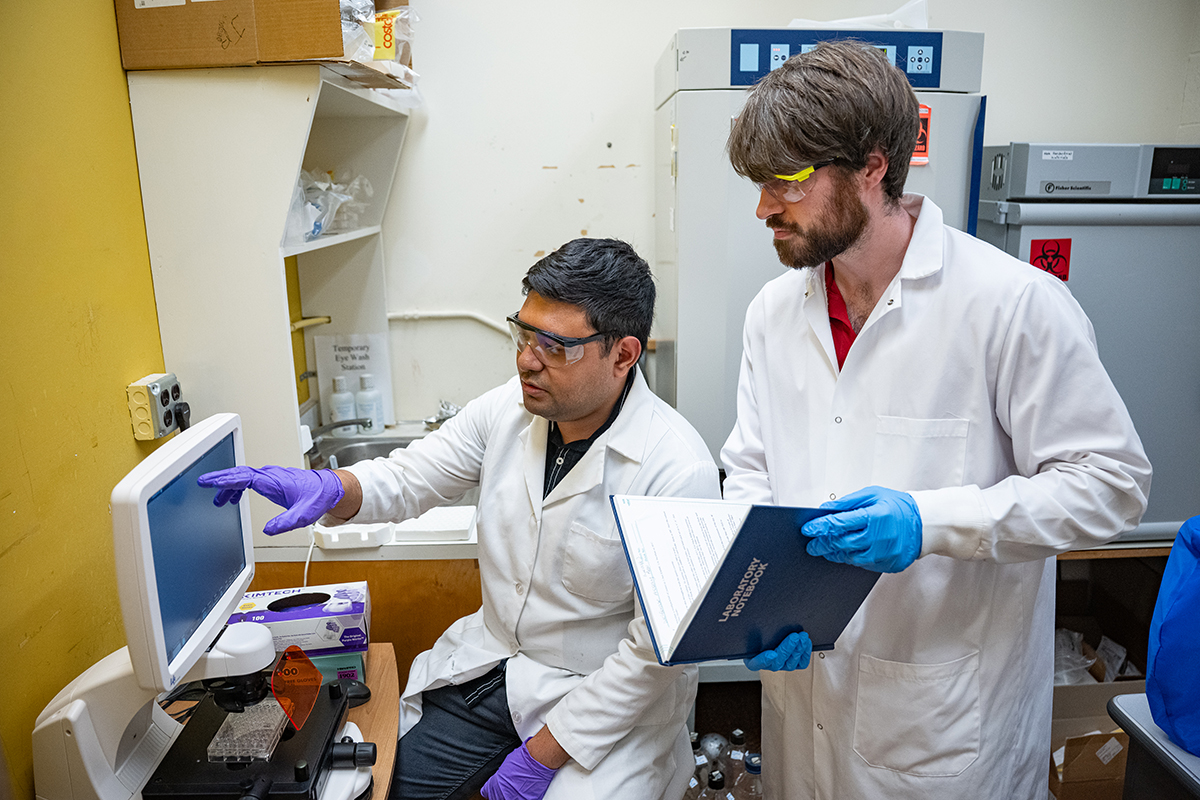
The findings represent an international collaboration involving scientists in the United States, Japan and France, Asano said. It was supported by grants from the National Institute of General Medical Sciences, the National Science Foundation and K‑State's Johnson Cancer Research Center in the U.S., as well as from the Japan Society for the Promotion of Science.
The research also provided opportunities for K-State undergraduate and graduate students to contribute to research published in Science Advances, a prominent peer-reviewed scientific journal.
K‑State authors on the paper include postdoctoral researcher Susumu Ishiguro; doctoral candidates Grant Brooke and Abhineet Banerjee; and undergraduate students William Finane and Payton Henderson. Former lab members include research faculty member Chingakham Singh, exchange student Hitomi Yahi and undergraduate alumni Kinsley Ochsner, Keat Robinson, Hailey Casey, Grace Sakai, Megan Freeman and Anastasia Meyer.
Asano said the findings are part of a broader effort to understand a relatively unexplored area of biology. By studying how cells use alternative starting points to produce proteins, his team hopes to uncover additional mechanisms that influence cellular behavior.
"Noncanonical translation is not a major field yet, but this is going to be kind of a pioneering concept," he said.