
Pet wellness and obesity prevention: Tips from a K-State veterinarian
K-State veterinarian Susan Nelson shares tips to keep pets healthy and in shape

By Rylee Moore
College of Veterinary Medicine
Tuesday, Oct. 13, 2026
Pet health is a year-round concern, and each October — Pet Obesity and Wellness Month — there's a special emphasis on resources to keep pets at their best. Susan Nelson, clinical professor and veterinarian at the Kansas State University Hill's Pet Health and Nutrition Center, shares strategies that pet owners can use to keep their beloved pets healthy.
Pet wellness, Nelson said, starts with prevention.
Pet wellness exams are a vital component of what is known as "preventive medicine," which aims to find and treat diseases before they become serious. This approach is typically much easier on the pet, the owner and the pocketbook.
"There have been so many advances in veterinary medicine that many diseases that may have greatly shortened your pet's lifespan in the past can now be managed, if detected early, so that your pet can live a longer, happier life," Nelson said.
What does a typical pet wellness exam entail?
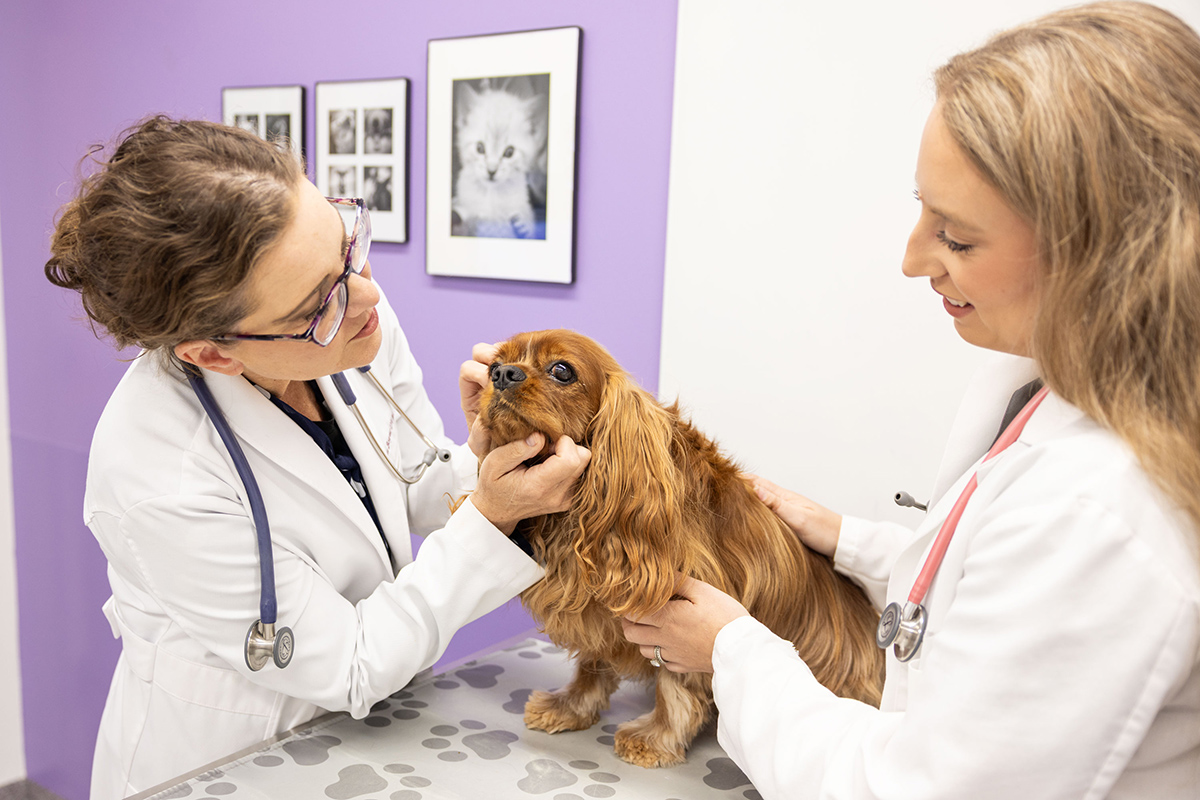
Wellness exams typically involve a thorough evaluation of the pet's body systems by your veterinarian.
Nelson said veterinarians typically check for health issues such as dental disease, ear or skin infections, weight issues, heart murmurs, skin tumors, cataracts, dry eyes, painful joints, and infestations of fleas, ticks and intestinal parasites.
Many of these concerns have the potential to cause severe discomfort — and sometimes, fatal disease — in pets. Some are also zoonotic and could cause health issues in people.
What happens after a pet wellness exam?
After the physical pet wellness exam has been completed, Nelson said your veterinarian will discuss any additional steps or diagnostic procedures, such as screening lab work, that your pet may need.
The specific procedures will depend on your pet's circumstances, but they will be informed by criteria such as age, breed, lifestyle and physical exam findings.
Nelson said some commonly recommended tests include:
- Complete blood count to check for anemia, infection or platelet count
- Chemistry panel to evaluate organ functioning and electrolyte levels
- Urinalysis
- Thyroid screening
- Heartworm test
- FELV/FIV screening (cats only)
- Blood pressure reading
- Fine needle aspiration and cytology of any concerning masses
- Fecal exam
After evaluating all physical and laboratory findings, your veterinarian will discuss any changes needed in your pet's diet, preventives, lifestyle or medications. They will also review your pet's vaccine status and lifestyle to determine which vaccines may need to be started, discontinued or updated. Additional tests, such as imaging, may be needed if abnormalities are found on initial tests.
“There have been so many advances in veterinary medicine that many diseases that may have greatly shortened your pet's lifespan in the past can now be managed, if detected early, so that your pet can live a longer, happier life”
Susan Nelson
When do I talk to a veterinarian about pet health concerns?
Your pet's wellness exam is also a good time to discuss any behavioral issues you may have noticed, as many of these can be due to undetected illness.
"Many older pets can develop dementia similar to that seen in humans," Nelson said. "If no medical reason is found for the symptoms, you and your veterinarian can then discuss behavioral modification and/or drug therapy for your pet's behavioral problem."
How often pet wellness exams need to be performed varies depending on your pet's age, breed, lifestyle and illness history. Generally, animals 7 years old or younger need annual wellness exams. Pets older than 7 should have a semiannual wellness exam.
Pets with potentially serious diseases may need more frequent exams and laboratory testing. Nelson said it's important to remember that pets age at a more rapid rate than their human caretakers, and medical issues can develop quickly in older pets.
What to know about pet obesity
Obesity in cats and dogs is at epidemic levels in the US. According to the most recent data published by the Association for Pet Obesity Prevention, about 3 in 5 dogs and cats are overweight or obese.
As with people, this trend has been increasing. In many cases, Nelson said, owners may not even realize their pets are overweight. In others, the convenience of tasty but calorie-heavy foods and treats leads to obesity.
Weight might become a lower-priority concern during veterinary appointments that run short or are focused on other, more pressing health issues, but there are negative health implications of pet obesity that should not be ignored.
Pet obesity can lead to joint/mobility issues, the development of diabetes mellitus, skin or urinary infections, certain cancers, and even a shortened life span, which studies have shown can be reduced by as much as 2 years.
What do I do if my pet is overweight?
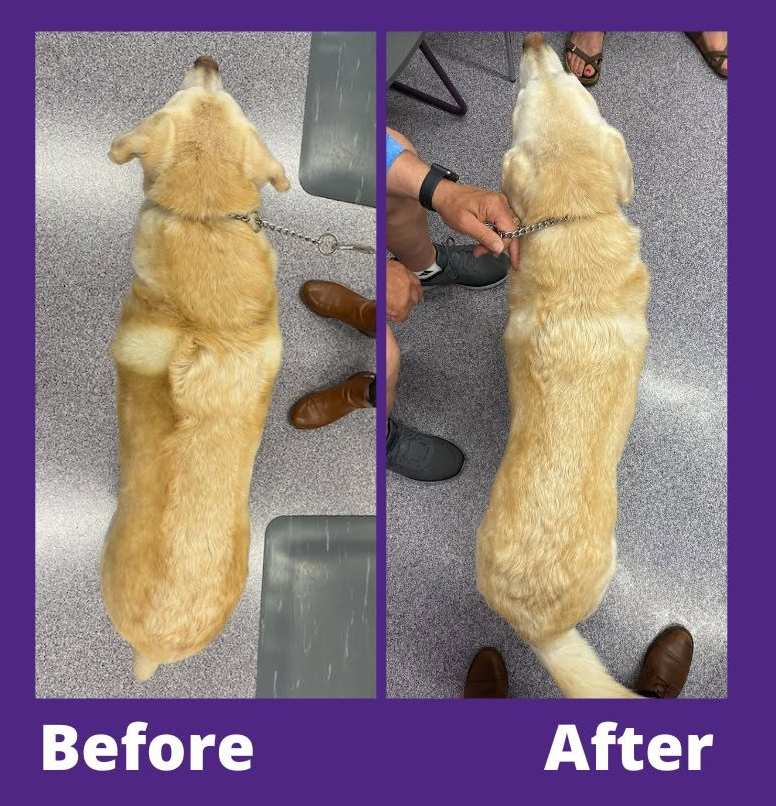
Bailey participated in the Veterinary Health Center's Healthy Weight Clinic.
There are options if your pet is overweight, including the Healthy Weight Clinic at K-State's Veterinary Health Center. This six-month program includes regular consultations and weigh-ins, and weight-loss food is provided by Hill's Pet Health and Nutrition Center for the duration of clinic participation.
Regardless of whether you participate in the K-State pet weight clinic, Nelson recommends starting your pet's weight-loss journey by talking to your veterinarian.
"Speak with your veterinarian about weight-loss food for your pet, including whether it's appropriate for them and which type would be best," Nelson said. "Your veterinarian can also perform a calorie calculation to ensure your pet is not consuming excessive calories."
If pets consume a lot of high-calorie, processed treats, consider switching to lower-calorie fruits, vegetables or other low-calorie treats. Veterinarians can provide recommendations for healthy and low-calorie treats.
Increasing your pet's exercise amount can also help, but Nelson said to be sure to discuss with your veterinarian what would be safest for your pet. She also encourages monthly weigh-ins to keep your pet on track with their weight loss journey.
"Pet wellness and obesity prevention is a collaborative journey between pets, veterinarians and owners," Nelson said. "When we all work together, we can make sure our furry friends live the best lives they can."