
On the pulse of progress
Carl Ade named K-State's Big 12 Faculty of the Year honoree
By Abbigail Marshall
News and Communications Services
Wednesday, Sept. 9, 2026
Carl Ade's research is a work of heart — quite literally.
Passionate about studying how the cardiovascular system responds to stress, Ade, associate professor in the School of Health Sciences, follows questions that take his research in remarkably different directions. One day, he's researching ways to reduce cardiotoxicity in chemotherapy patients; the next, he's contributing to NASA-funded research aimed at limiting the risks of spaceflight through aerospace pathophysiology.
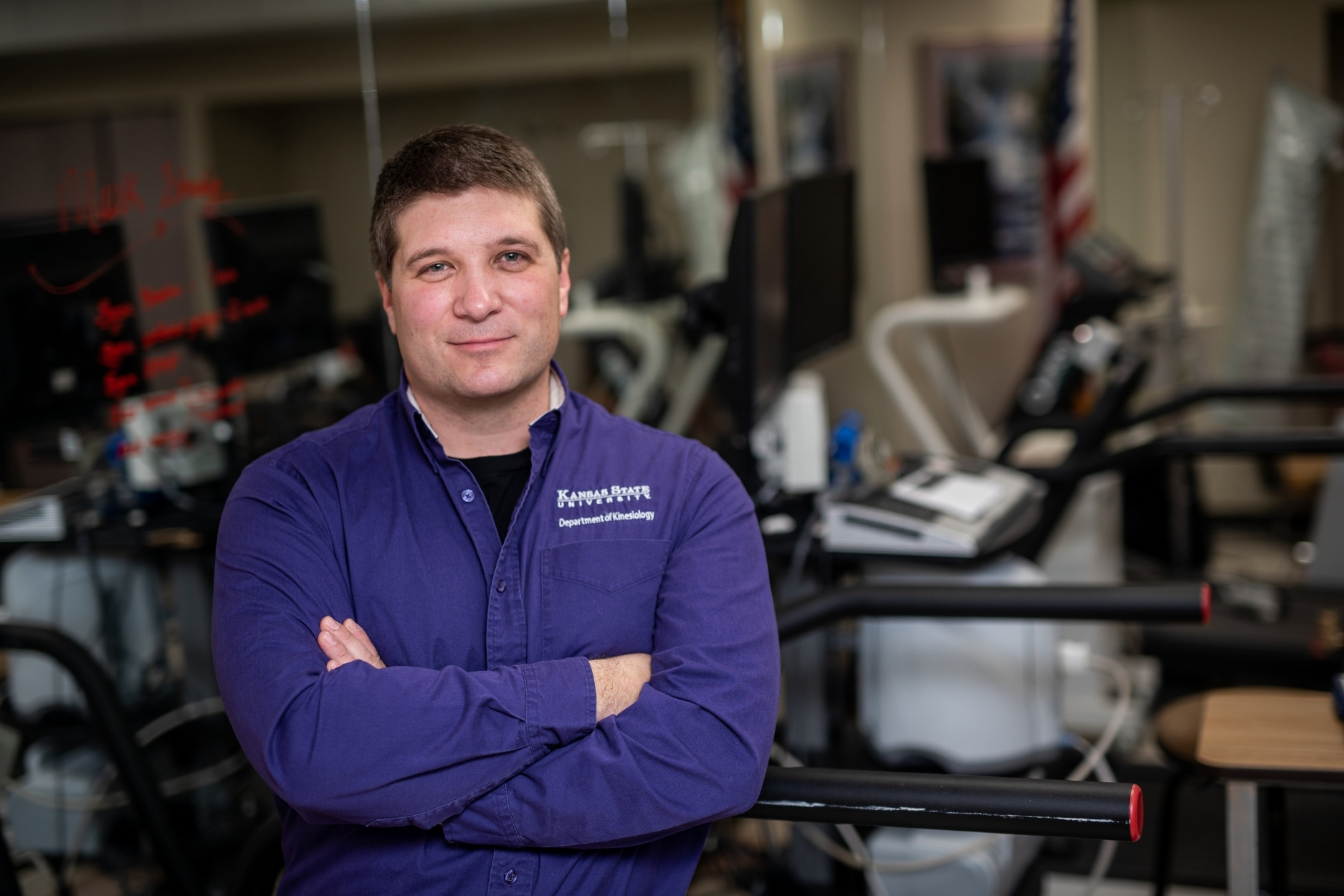
From cancer care to the cosmos, Ade has built a body of work with implications far beyond the lab since joining K-State in 2013. That wide-ranging impact has earned him recognition as K-State's Big 12 Faculty of the Year honoree, placing him among the conference's leading faculty innovators in research.
The award, given to one faculty member at each of the 16 Big 12 institutions, recognizes exemplary, innovative research.
"Dr. Ade's work has and will continue to have an immeasurable impact on the university, Kansas and the world," said Provost and Executive Vice President Jesse Perez Mendez. "His ability to pursue ambitious questions, build meaningful partnerships, secure high-level funding and translate discovery into better health practices reflects the very best of K-State research. Just as importantly, he brings students into that work, providing opportunities and mentorship that prepare them to graduate as leaders in their fields."
Vital impact
In addition to his teaching work in the Departments of Kinesiology and Physician Assistant Studies, Ade serves as director of the Clinical Integrated Physiology Lab and K-State and Stormont Vail Clinical Research Coordination Center and associate director of the Cognitive and Neurobiological Approaches to Plasticity, or CNAP, center.
In the Clinical Integrated Physiology Lab, Ade and his team study how the cardiovascular system responds when the body is pushed to its limits — and how those responses can be better managed or prevented.
One major focus of that work is cancer survivorship, particularly the cardiovascular effects of chemotherapy. For cancer patients, Ade investigates lifestyle and pharmacological interventions that could help protect the heart from treatment-related damage.
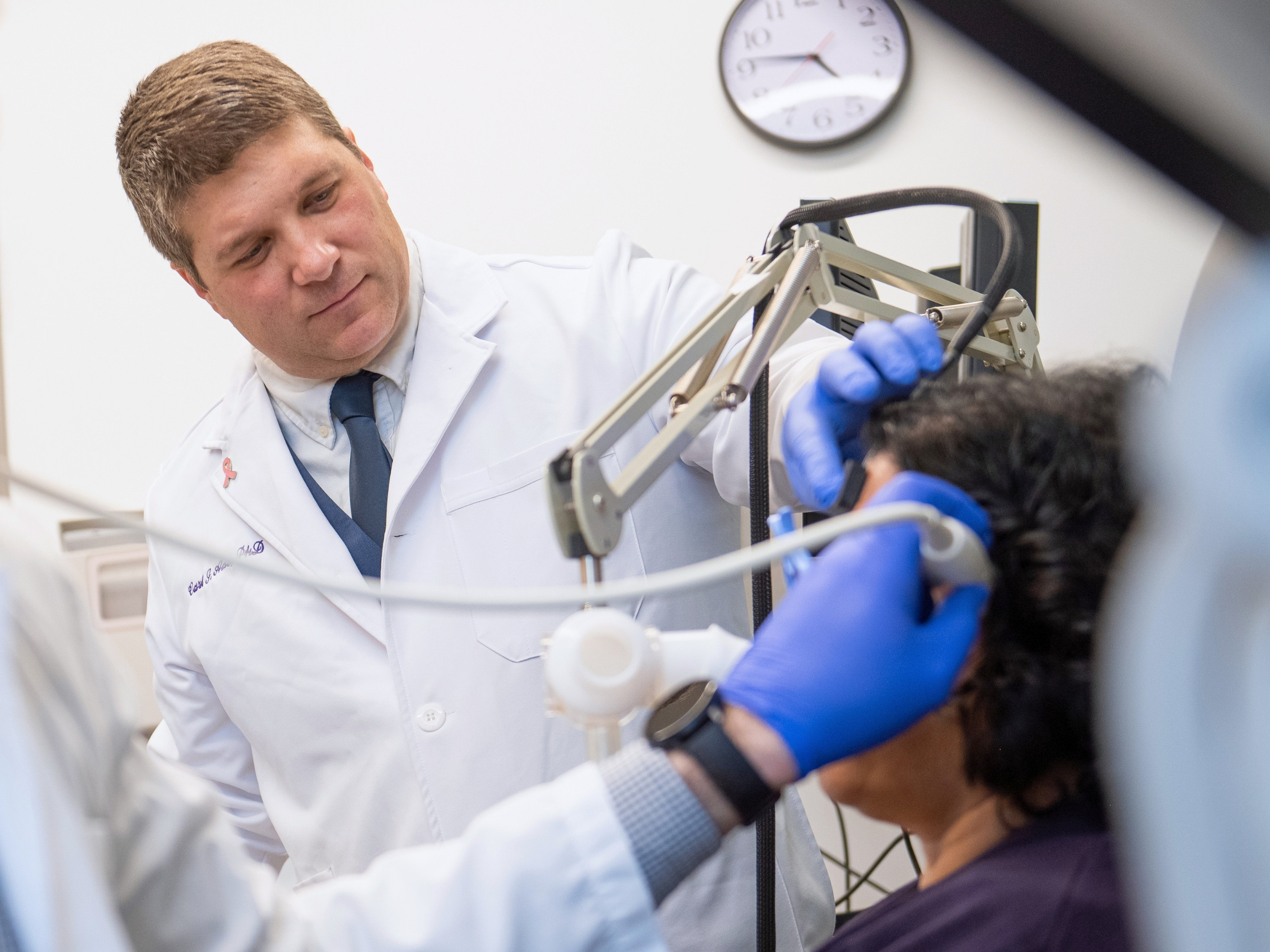
But the physiological questions driving Ade's research extend well beyond cancer care. They also open doors to work in spaceflight, high-performance athletics and heart disease, and findings from one line of research can help Ade ask — and answer — questions in another.
"Both spaceflight and chemotherapy put stress on the heart through what we call deconditioning, or a decline in heart function due to physical inactivity," Ade said. "We see similar types of changes, but they happen in very different ways. Finding parallels has really shifted the way that I think, teach and do my research. I can use what I learn in one area to better understand another."
Ade applies that same integrative thinking to cross-campus collaboration. Whether conducting interdisciplinary work with CNAP or exchanging ideas with colleagues, he says those connections bring new perspectives to the questions driving his research.
"I got my Ph.D. at K-State, so coming back was outstanding for me. We've always had more programs, but they used to be a little more siloed," he said. "But the collaborative nature across campus has really changed; it feels like every year there's more and more integration."
Setting the pace
The breadth of Ade's work also creates unique learning opportunities for the undergraduate and graduate students he mentors.
For example, through the Kansas State University and Stormont Vail Health Research Collaboration, students work alongside researchers and health care professionals on studies involving real patients.
"The development of our physician assistant program and partnership with Stormont Vail is something that's really important to me," he said. "There's a big need for healthcare professionals, especially in rural medicine, and I'm excited to see it evolve over time."
In his Clinical Integrated Physiology Lab and CNAP studies, Ade leads teams of undergraduate and graduate researchers who contribute to data collection, health risk assessments and patient care, giving students a closer look at where research can lead while shaping their own professional path.
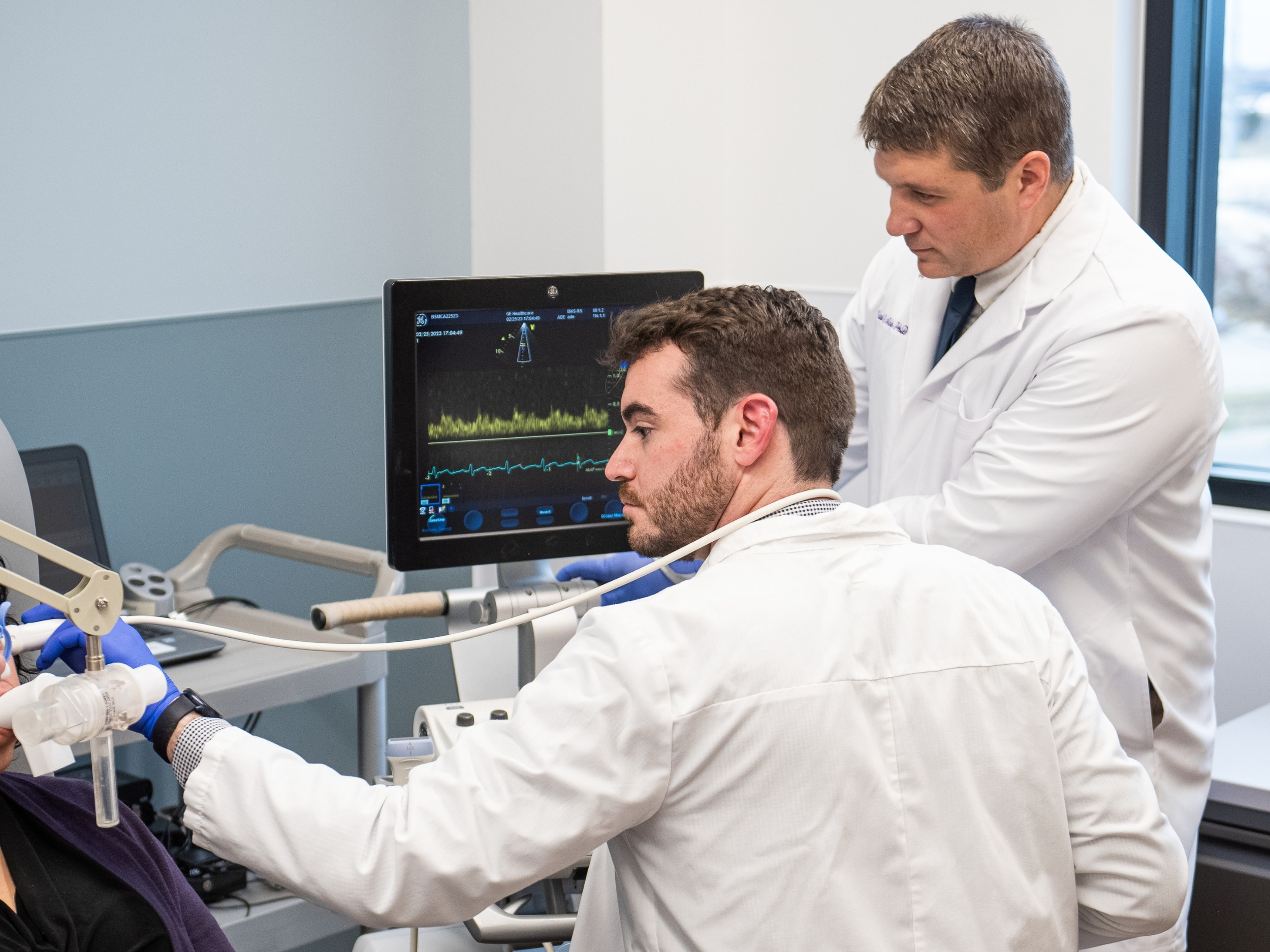
For doctoral graduate Britton Scheuermann, that path led to a significant discovery. In 2025, with Ade as his mentor, Scheuermann served as lead author on a published study validating the American Heart Association's new equation for calculating patients' cardiovascular disease risk.
After earning his doctorate in kinesiology, Scheuermann — now a research assistant professor — chose to stay at K-State, continuing cardiovascular research alongside Ade.
"Training with Dr. Ade for my doctoral degree was one of the greatest experiences over the course of my education," Scheuermann said. "The creativity and drive he brings to work every day was a big factor in my decision to stay at K-State, knowing there will never be a slow day working together as faculty."
For Ade, many milestones have made his time at K-State meaningful. In fact, he says he's checked quite a few items off his professional bucket list.
He's watched his first classes of physician assistant students enter the field, fulfilling a longtime dream of teaching future medical professionals. He's stepped inside NASA's Neutral Buoyancy Laboratory, seen his research published by the American Medical Association and accomplished plenty more along the way.
"There isn't one good memory that stands out because there are so many. There's been no shortage of challenges, either, but with challenge comes opportunity," Ade said. "And when we're willing to take the risk, there's always more opportunity out there."