K-State, Stormont Vail partnership fuels global DataFest challenge
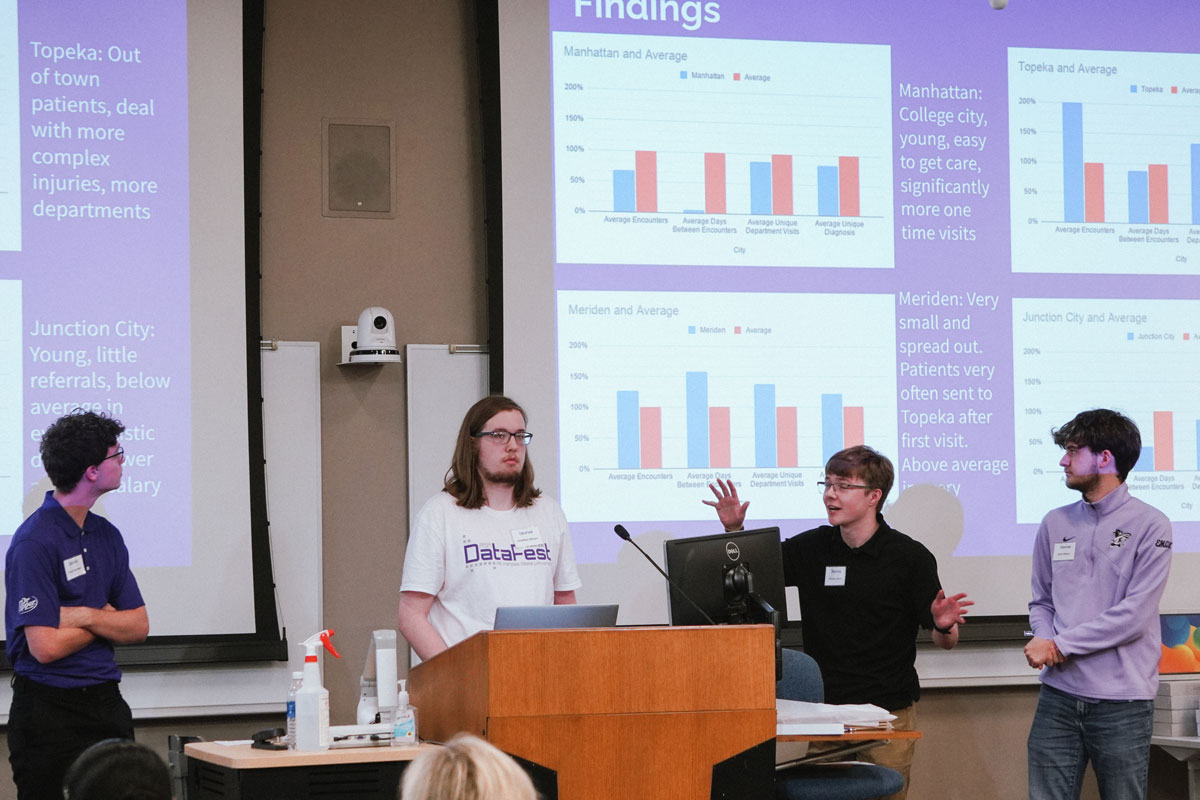
Twelve teams of 44 undergraduates competed in K-State's ASA DataFest event in April.
By Vikki Watson
K-State News and Communications Services
Wednesday, June 3, 2026
From Kansas State University to colleges across the world, undergraduate students participating in this year’s American Statistical Association, or ASA, DataFest tackled the same challenge: using real-world data from a K-State research partner to improve patient care.
K-State’s Institute of Digital Agriculture and Advanced Analytics, or ID3A, coordinates and hosts DataFest on the Manhattan campus annually as part of the larger global competitions sponsored by ASA. Universities can select one of six weekends to host the event, with undergraduate teams having 48 hours to analyze a large, complex dataset and present their findings. More than 2,000 students worldwide participated this year, from disciplines such as statistics, computer science, engineering and mathematics.
K-State was one of 61 colleges and universities across the United States, Canada, Europe, Africa and Australia to host DataFest between mid-March and early May. In all, 12 teams of 44 undergraduates competed in the K-State event and were supported by 22 university mentors consisting of graduate students, faculty and staff. Faculty, staff and industry experts also served as judges.
Turning partnership into opportunity
In just its second year, K-State’s DataFest received a significant boost when Stormont Vail Health became the lead sponsor of the event, which allowed the university to extend participation to teams from the University of Nebraska and Colorado State University. SAS and K-State’s Department of Statistics were additional sponsors.
Stormont Vail also powered DataFest on a global scale. Through its research collaboration with K-State, the Topeka-based regional health system was selected as the event’s official data donor, supplying the dataset and challenge used at DataFest events worldwide. That data enabled students to analyze anonymous patient journeys through the Stormont Vail system and uncover insights to improve patient experiences and strengthen health outcomes.
“This data represents lives and experiences,” said Austin Jackson, director of strategy and system improvement at Stormont Vail. “As a research scientist before, I didn’t really get that interaction with patients. Unless you’re in it, you don’t know how complex, how varied and, honestly, how beautiful the data can be. It’s not only crucial to serving our mission, but in advancing health care forward.”
And Stormont Vail’s strong relationship with K-State helped make it all happen.
“It’s through our research partnership that we actually learned about DataFest,” said Ali Wisniewski, clinical research program manager at Stormont Vail Health and former research assistant professor of psychological sciences at K-State. “We were honored to be selected as the data donor. It was a wonderful surprise, and it presented an incredible opportunity for us to grow as a health care system.”
Wisniewski’s connection with Trevor Hefley, K-State professor of statistics, director of ID3A and lead faculty member for K-State's DataFest, helped Stormont Vail connect with ASA, positioning the health system as the potential data donor for the international program.
The collaboration reflects the strong and growing partnership between K-State and Stormont Vail Health, established through an academic affiliation in 2020 to advance health education, research and community-based care across the Flint Hills region. Since that time, the partnership has expanded to support multiple initiatives and an increasingly robust and coordinated research enterprise.
Making a real-world difference
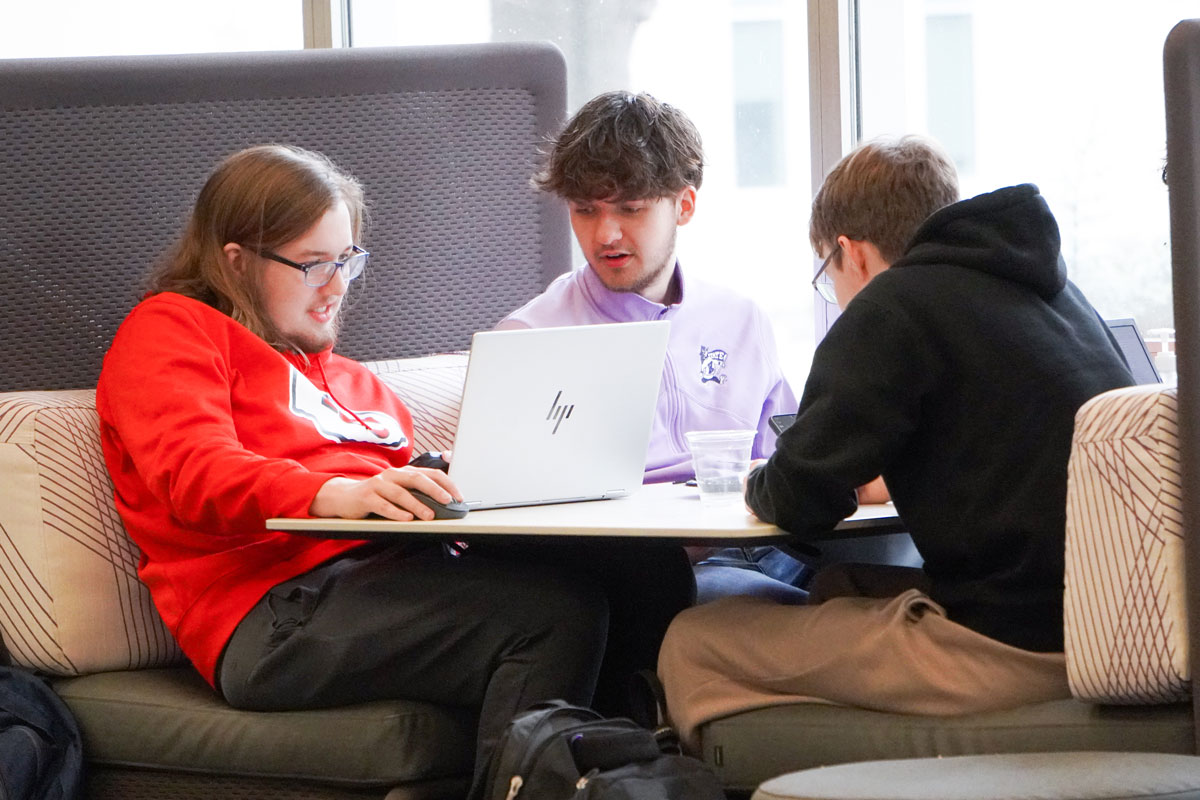
DataFest is the land-grant mission in action. It expands learning opportunities beyond the classroom by giving students practical ways to apply analytical and problem-solving skills to real-world challenges. It supports experiential learning, encourages interdisciplinary collaboration and highlights how data-informed approaches can contribute to addressing complex issues affecting communities and public well-being.
“Most companies have invested a ton of money into data collection and data storage, but not nearly as much into turning that data into human insights,” Hefley said. “Stormont Vail was able to harvest the knowledge of a large undergrad population to help make the health care journey better for all of us. That’s powerful.”