Stocked for success
Mobile pantry cart provides essential nutrition support to K-State Olathe students

By Abbigail Marshall
News and Communications Services
Thursday, May 21, 2026
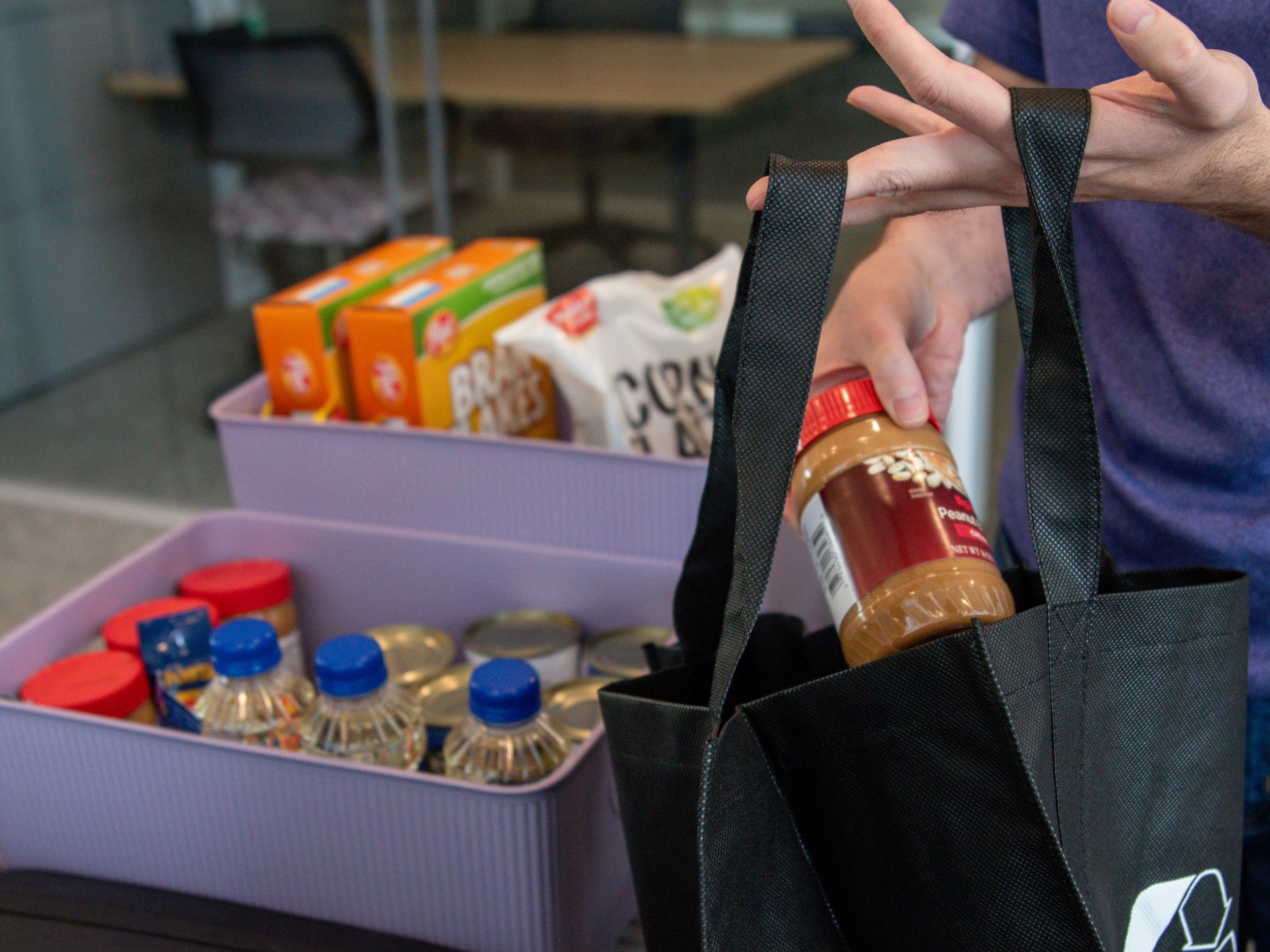
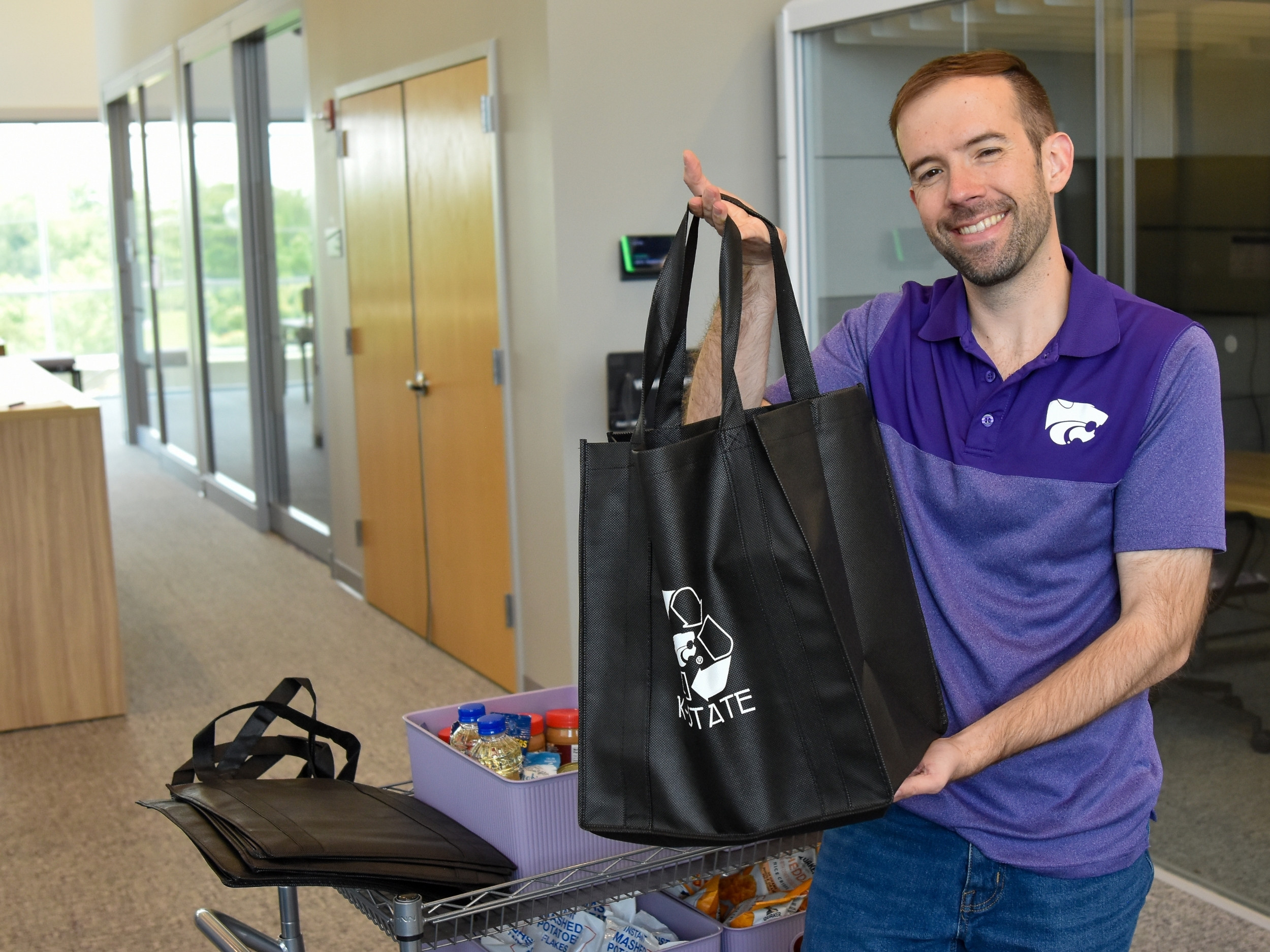
In the middle of the Student Success Center at K-State Olathe, a modest cart sits stocked with soup, cereal and snacks. But, for many students, its shelves mean no-questions-asked support — and that means everything.
As a student success coach at K-State Olathe, Steven Brockschmidt spends much of his day helping students navigate questions, challenges and campus resources. But over the past two years, that modest cart has become his passion.
New beginnings, new ideas
In spring 2024, K-State Olathe opened its new Student Success Center, providing both a centralized space for students to access support services and a new home for Brockschmidt and the student success team. Without an on-campus dining center, the new space also created an opportunity to address a growing need for accessible, nutritious food. That's when Kimberly Voight, assistant dean of student services, approached him with an idea: creating a campus pantry.
"She brought up wanting to find a way to provide a campus pantry, and I quickly became passionate about the idea," Brockschmidt said. "We want every student to be successful, and food should never be a barrier to that."
The first step was adapting the Cats' Cupboard concept successfully implemented in Manhattan and Salina to the unique needs of the Olathe campus. After meeting with Bryan Severns, retired manager of food programs and services, the team determined that a mobile setup would be the best way to maximize the pantry's impact while working within the Student Success Center's space.
“Everybody needs to eat, and we're removing stigma around that every day.”
Brockschmidt
The cart system allowed the pantry to fit directly into the student success team's office space, ensuring resources remained easily accessible for faculty, staff and students throughout the day. While the cart may not provide every item needed, Brockschmidt said, the cart's supplemental items have made a lasting impact on the community — providing over 411 pounds of food since its launch.
"Between jobs, families and commutes, life is expensive enough outside of groceries," Brockschmidt said. "We had one student who was a single parent commuting part-time to finish her bachelor's degree. She mentioned how comforting it was to know that when the building is open, food is available."
More than a cart
Once a plan was in place, Voight encouraged Brockschmidt to meet with Shelly Williams, director of Cats' Cupboard in Manhattan, for guidance on sustaining the initiative long term. Williams connected him to the Harvesters Community Food Network, a partnership that now helps supply the cart with a variety of dry goods.
In addition to support from the student success team, K-State faculty, staff and partners like Harvesters have taken active roles in donations, fundraisers and outreach efforts.
"It's really a community effort. So many people are passionate about what we're doing," Brockschmidt said. "Working together not only keeps the cart stocked but strengthens our relationships across campus and the community."
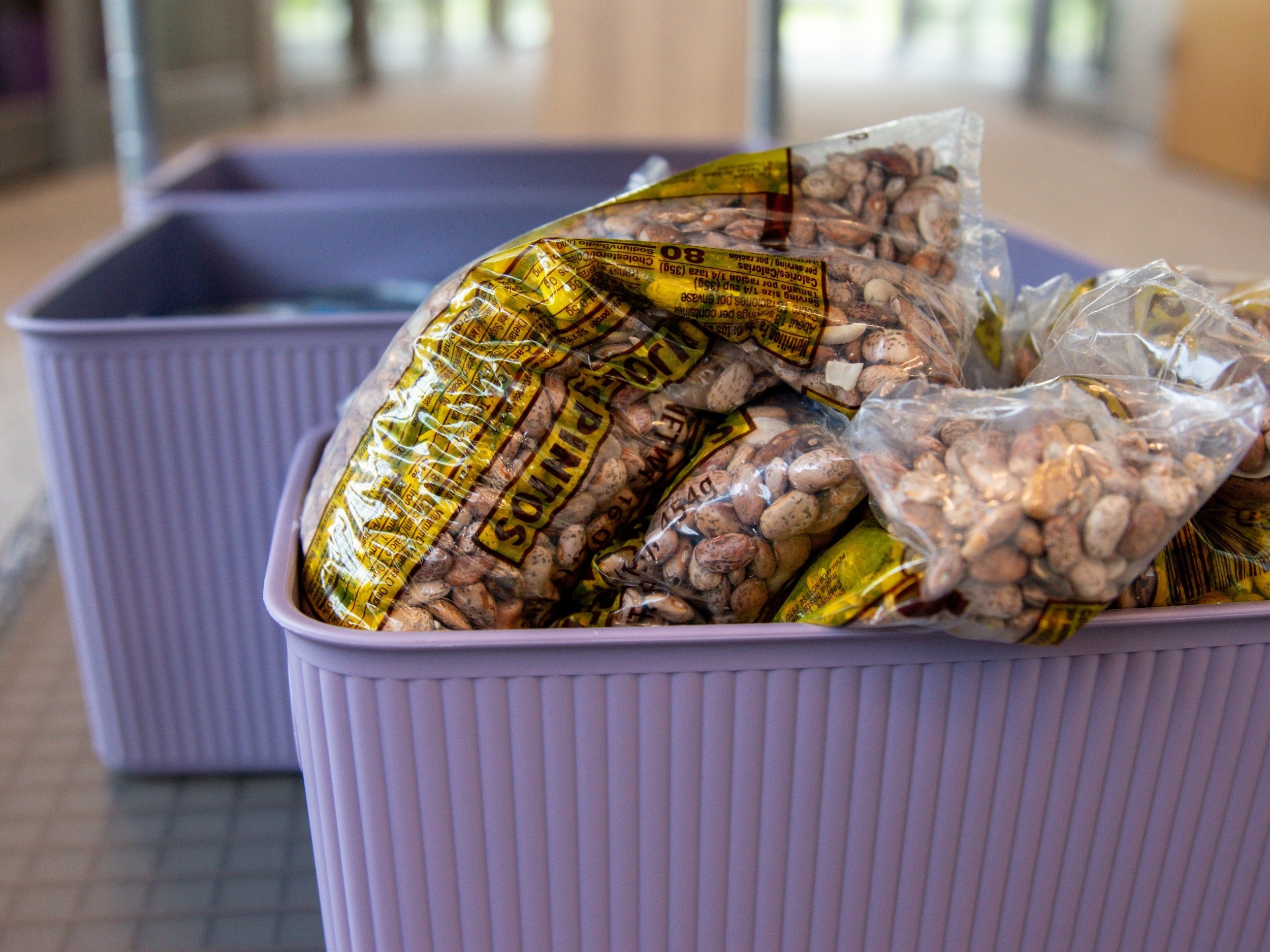
The cart is regularly stocked with shelf-stable, non-perishable items, with a priority on high-protein or quick snack items. Students and employees can request items through a centrally managed Amazon wishlist, opt in to Listserv notifications about inventory updates and provide feedback through semester surveys.
"It's important to us that we're being culturally responsive and providing comforting things people want to eat," Brockschmidt said. "We've seen that items like rice, beans, tomato paste and sugar are really popular with our international students, so we try hard to keep those stocked."
Rolling forward
What began as a small idea has turned into a daily reminder for students that support at K-State can be as simple as knowing food is there when they need it.
As the cart approaches its third year serving students, future goals include pursuing grant funding and expanding access to personal care and hygiene items.
But beyond additional resources, Brockschmidt hopes the cart continues to change how students think about asking for help.
"To see how important it is to so many people at K-State and within our community and to see students using the resource rather than shying away from it means everything," Brockschmidt said. "Everybody needs to eat, and we're removing stigma around that every day."