Big ideas, Big 12 collaboration
K-State faculty expand research collaborations through 2026 Big 12 Fellowships

By Rafael Garcia
K-State News and Communications Services
Thursday, April 30, 2026
From developing systems to forecast mental health risk from wearable sensors to optimizing sustainable irrigation systems, K‑State's 2026 Big 12 Faculty Fellows represent the cutting edge of the university's research and extension.
Created by the chief academic officers at each institution, the Big 12 Faculty Fellowship program provides funds for faculty to travel to other member institutions and participate in cross mentoring, develop working relationships and exchange ideas with experts at other universities.
These six faculty members are leveraging their fellowships to build interinstitutional partnerships that span fields as diverse as polymer chemistry and digital architecture. Their work focuses on turning complex data into practical applications for infrastructure, public health and regional economic vitality.
These collaborations strengthen K-State’s research enterprise and ensure that students learn from experts well-versed in the latest advancements in their fields.
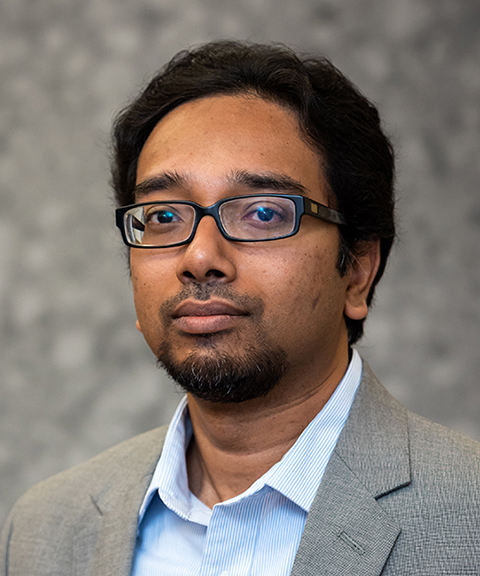
HM Abdul Aziz, associate professor of civil engineering
What is your area of research?
My research is in transportation systems engineering, with a focus on connected and autonomous vehicles, safe and sustainable freight systems, traffic operations, energy-efficient mobility, and infrastructure resilience.
My research group develops system-level models and data-driven methods to better understand how vehicular traffic flows through transportation networks, how fuel and energy can be used more efficiently and how transportation infrastructure can operate more reliably under changing conditions and external stressors.
The value of our research is that better transportation systems can mean safer roads, cleaner, more efficient freight movement, lower energy use and more dependable delivery of the goods people and businesses rely on every day.
Where did you travel for your fellowship? Who did you work with there, and what did you accomplish?
For my Big 12 Faculty Fellowship, I plan to travel to the University of Cincinnati, Ohio, where I will work with Dr. Mohamed Ahmed and his research team in the Department of Civil and Architectural Engineering and Construction Management.
Our current collaboration focuses on autonomous trucking, fuel-efficiency optimization, infrastructure resilience and the use of data-driven and AI-based approaches to improve freight system performance.
This fellowship will help advance a shared research agenda on energy security in connected and autonomous freight systems, including early model development, planning for large-scale data analysis, and proposal development for future external funding from agencies such as the National Science Foundation and U.S. Department of Transportation.
How did participation in a Big 12 Faculty Fellowship help you as a researcher and faculty member?
Participating in the Big 12 Faculty Fellowship helped me grow as a researcher by allowing me to build a strong interinstitutional collaboration, refine new research directions and position joint work in areas that are both scientifically important and nationally relevant, such as sustainable freight, energy security and resilient infrastructure.
It also strengthened my role as a faculty member, because the fellowship directly supported my teaching in transportation systems, intelligent transportation technologies and sustainability, while also opening the door to new student projects, guest lectures, workshops and potentially a new graduate course built around connected and autonomous freight systems.
It also created opportunities to bring new ideas, datasets and research experiences into the classroom while deepening mentoring and collaboration opportunities for students and colleagues across institutions.
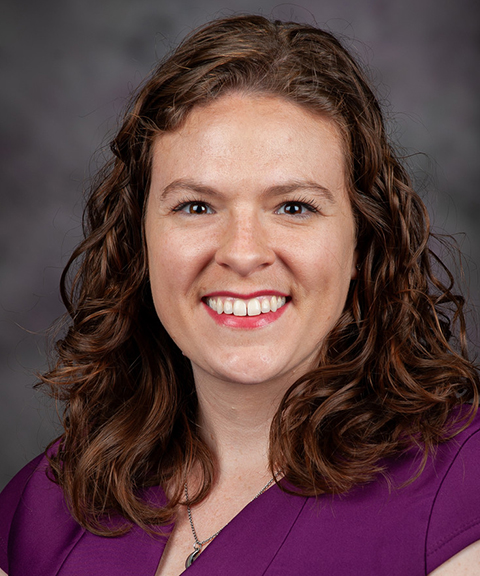
Christina Bridges Hamilton, assistant professor of kinesiology
 What is your area of research?
My research area focuses on promoting health and opportunities for active living. My work centers on understanding the social determinants of physical activity, including factors that facilitate or hinder active living in rural, underserved communities.
I specialize in Community-Based Participatory Research, meaning I collaborate with community partners to understand the cultural contexts and unique situations different communities are experiencing and to advance policies that increase active living opportunities for all communities. This usually involves understanding how to adapt health promotion programs and policies designed for urban areas to meet the needs of a rural community.
When we ensure a community's unique needs are addressed in promoting active living behaviors, we see increased community buy-in and more sustainable, healthy and active living programs.
Where did you travel for your fellowship? Who did you work with there, and what did you accomplish?
I traveled to West Virginia University in Morgantown. I worked with Dr. Christiaan Abildso, who is a physical activity specialist within the WVU Extension system. Dr. Abildso is one of only nine physical activity extension specialists in the United States.
In rural areas, extension agents are strong partners in implementing health promotion programs. Still, they rarely focus on physical activity or active living behaviors, despite "promoting physical activity" being a goal of the National Cooperative Extension.
Therefore, during our time together, we developed a project proposal to understand the training needs of extension agents, specifically regarding the implementation and evaluation of policy, systems and environmental approaches to physical activity/active living. We are submitting a pilot grant to the North Central Regional Center for Rural Development to further this work.
How did participation in a Big 12 Faculty Fellowship help you as a researcher and faculty member?
This opportunity has helped me expand my knowledge of the Cooperative Extension system and how we can leverage it to scale up healthy and active living programs to serve all Kansans, especially given K‑State Extension's presence in all 105 counties.
The partnership with Dr. Abildso also enables future collaboration to advance rural active living and to add to the existing body of literature on how the Extension system can be a critical partner in implementing physical activity policy, systems and environment approaches for rural communities.
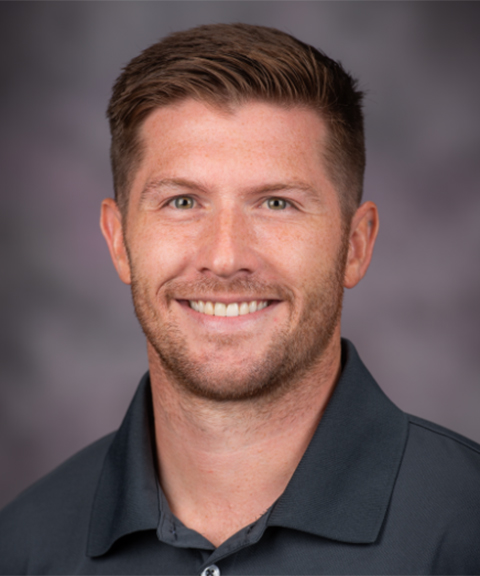
Denver Brown, assistant professor of kinesiology
 What is your area of research?
I work in the field of behavioral medicine, which focuses on understanding how everyday behaviors such as physical activity, screen time and sleep affect our health and well-being. My research examines why people are active or inactive, and how we can help them build and maintain healthy, active lifestyles over time.
A major focus of my work is young people, especially during important life transitions such as leaving high school. During this time, routines, support systems, and environments often change, and many young people become less active.
My goal is to understand what drives these changes and to develop practical, real-world strategies that help young people stay active. By supporting physical activity during these critical periods, my work aims to reduce the risk of mental health challenges like depression and anxiety, while also promoting long-term health and well-being.
Where did you travel for your fellowship? Who did you work with there, and what did you accomplish?
I completed my fellowship at Arizona State University, where I worked with Dr. Matthew Buman, a professor in the College of Health Solutions. During this time, I received mentorship on a project focused on adapting and implementing the Cooperative Extension-based Walk Kansas physical activity promotion program for delivery to rural adolescents through 4-H club programming.
This work has led to several grant submissions, including recent applications to the Frontiers Clinical and Translational Science Institute and the Kansas Center for Implementation Science, both funded by the National Institutes of Health. Dr. Buman also provided guidance on next steps for my Kansas IDeA Network of Biomedical Research Excellence-funded project examining how physical activity, sedentary behavior and sleep influence the onset and progression of depression among students transitioning to college. The long-term goal of this work is to develop systems using wearable devices, such as Fitbit and Apple Watch, to detect early signs of depression and deliver support at the right time.
This approach, known as "just-in-time" adaptive intervention, has the potential to make mental health support more personalized, timely and accessible.
How did participation in a Big 12 Faculty Fellowship help you as a researcher and faculty member?
Participating in the Big 12 Faculty Fellowship gave me access to mentorship and expertise that isn't available at my home institution. It also connected me with a broader network of collaborators and exposed me to innovative approaches in areas like precision health and digital health technologies. Arizona State University is known for being forward-thinking in health research, and the experience gave me new ideas and tools that I've already started bringing back to Kansas State.
These insights are helping shape my current projects and future research, ultimately strengthening the work we do at K-State.
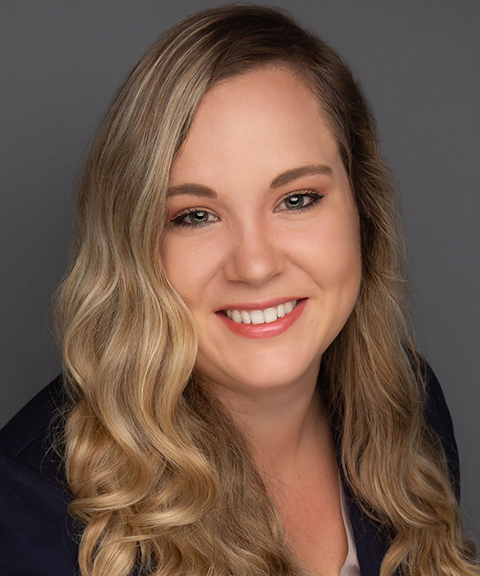
Patricia Calvo, assistant professor of chemistry
 What is your area of research?
My research focuses on designing new polymer-based materials with precise control over their structure and function.
In particular, my group develops functional polymers for applications in biomedicine, environmental sustainability, and advanced materials. For example, we create polymers that can deliver cancer therapies more effectively, capture contaminants from water or respond to changes in temperature or environment.
At a broader level, our work aims to connect how a material is built at the molecular level to how it performs in real-world applications, helping to create smarter, more sustainable technologies that improve human health and environmental outcomes.
Where did you travel for your fellowship? Who did you work with there, and what did you accomplish?
I will be completing my Big 12 Faculty Fellowship this summer at the University of Central Florida, where I will work with Dr. Kaitlyn Crawford in Materials Science and Engineering.
My visit will focus on developing a new collaboration at the interface of polymer chemistry and flexible electronics, particularly in wearable health-monitoring devices. I will receive hands-on training in materials characterization techniques for electronic materials and explore how polymer systems developed in my lab can be integrated into flexible electronic devices.
This collaboration is expected to open new research directions centered on sustainable materials for next-generation wearable technologies.
How did participation in a Big 12 Faculty Fellowship help you as a researcher and faculty member?
The Big 12 Faculty Fellowship provides a unique opportunity to build meaningful collaborations and expand my research program into new areas. This experience will allow me to gain technical expertise in materials characterization and device integration, complementing my background in polymer synthesis.
It also supports the development of interdisciplinary research directions that are increasingly important for addressing complex challenges in health and sustainability.
Beyond the research, the mentorship component of the fellowship will be especially valuable as I continue to develop as a faculty member, particularly in areas such as grant writing, research group leadership, and long-term career development.
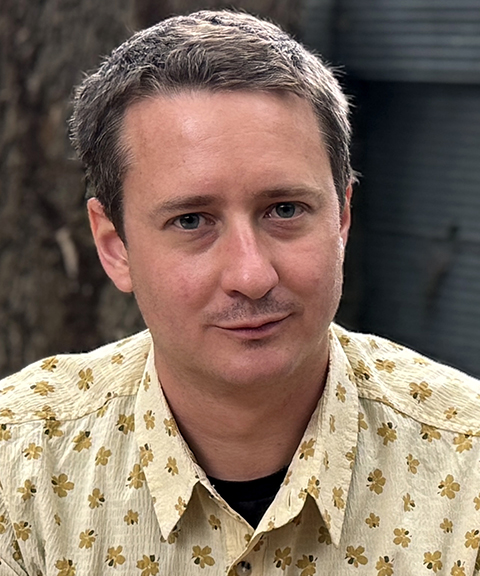
Reese Greenlee, assistant professor of architecture
 What is your area of research?
My research investigates the intersection of architecture, structural performance, digital fabrication and housing resilience. In this project, I focused on whether off-site construction using 3D-printed concrete can produce affordable, adaptable and code-compliant storm shelters for manufactured home communities and on how the directional material behavior of 3D-printed concrete can be understood and used strategically in that context.
The work combines computational modeling, material characterization, full-scale prototyping and economic feasibility, with the broader goal of testing whether prefabricated 3D-printed concrete shelters can become a scalable alternative to reinforced concrete construction.
Manufactured housing communities are among the most exposed to extreme weather, but many still lack access to storm shelters that meet current safety standards. This research asks how we can make better shelters that are faster to produce, easier to deploy and useful to communities not just during emergencies, but in everyday life as well.
The public value is both practical and immediate: safer access to shelter, stronger community infrastructure and new ways to make resilient buildings more affordable.
Where did you travel for your fellowship? Who did you work with there, and what did you accomplish?
I traveled to Iowa State University, where I worked with Associate Professor Shelby Doyle and her research teams in the Computation & Construction Lab and Architectural Robotics Lab. The fellowship supported a new collaboration between Kansas State and Iowa State focused on 3D-printed concrete, prefabrication and storm shelter research for manufactured home communities.
During the visit, we developed and printed test prototypes that evaluated structural strategies for tornado loading, such as directional infill and crumple zone configurations to absorb debris impact, and compressive shell curvature to resist extreme wind pressure with less material.
Alongside the printing trials, I developed custom material models for the concrete that account for the anisotropy introduced by the printing process and used finite element analysis to validate the structural approach against ICC 500 and FEMA P-361 loading criteria — including EF5-level wind pressures and debris impact from a 2×4 at 100 mph.
These prototypes are now being prepared for physical testing to verify the computational models and evaluate how geometry, infill and print orientation affect performance. We also advanced GIS mapping of manufactured home communities and shelter coverage gaps in Iowa, which informs siting and deployment strategies going forward.
How did participation in a Big 12 Faculty Fellowship help you as a researcher and faculty member?
The Big 12 Faculty Fellowship supported a focused research exchange that I would not have been able to build on my own. It gave me access to collaborators, labs, equipment, and technical expertise at Iowa State that directly advanced the project, and it helped establish a longer-term research partnership around digital fabrication, prefabrication and resilient housing infrastructure, with plans for joint grant applications and co-authored publications.
As a faculty member, the fellowship directly shaped my teaching. It informed the development of "Building Shelter," a graduate design studio in which students design prefabricated tornado-shelter systems for manufactured home communities in Kansas, using ICC 500 and FEMA P-361 as design constraints to be understood, tested, and challenged.
The studio integrates physical modeling, structural simulation, GIS mapping and architectural development across site, structure and community program — methods that grew directly out of the fellowship research.
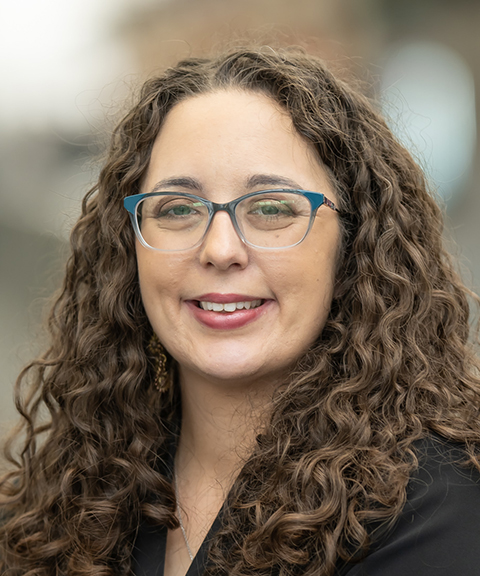
Tina Sullivan, Northeast Area Agronomist
 What is your area of research?
My applied research focuses on traditional and alternative cropping systems and irrigation management to enhance regional productivity, economic vitality and environmental sustainability.
I currently work in eastern Kansas production systems, including corn, soybeans, wheat, sorghum, cotton and perennial forages, across 31 counties.
In my position, I work directly with the region's extension agriculture and natural resource agents to assist with agronomic concerns in their counties, working with those who use Extension.
Where did you travel for your fellowship? Who did you work with there, and what did you accomplish?
I traveled to Oklahoma State University under the mentorship of Dr. Steve Phillips. The first day, activities included speaking to 30 graduate students about my professional experience path, from where I started to getting to Kansas State University in graduate student seminar and connecting with other faculty.
The second day was spent on the road to Muskogee to connect with the OSU Northeast Area Agronomist, Roy Grant, who is new to his position and covers 24 counties. With Roy and Steve, we toured the Mingo Valley and Haskell Research stations to see their cattle-forage operations and row crop research.
The third day included one-on-one meetings with specific faculty members — Sumit Sharma, Brian Arnall, and Josh Lofton — for Extension connections, speaking to a leadership class on the importance of professional organizations and sitting in on some classes. The final day included a tour of the research stations near Stillwater.
How did participation in a Big 12 Faculty Fellowship help you as a researcher and faculty member?
I gained an opportunity to build connections with the university south of Kansas with their specialists, extension programs, and research areas. All these are important for new faculty to gain perspectives from those in another system at different points in their careers.
Seeing the resources available at OSU helped me understand how to leverage my own and identify potential research collaborations with the OSU faculty.
Related Stories
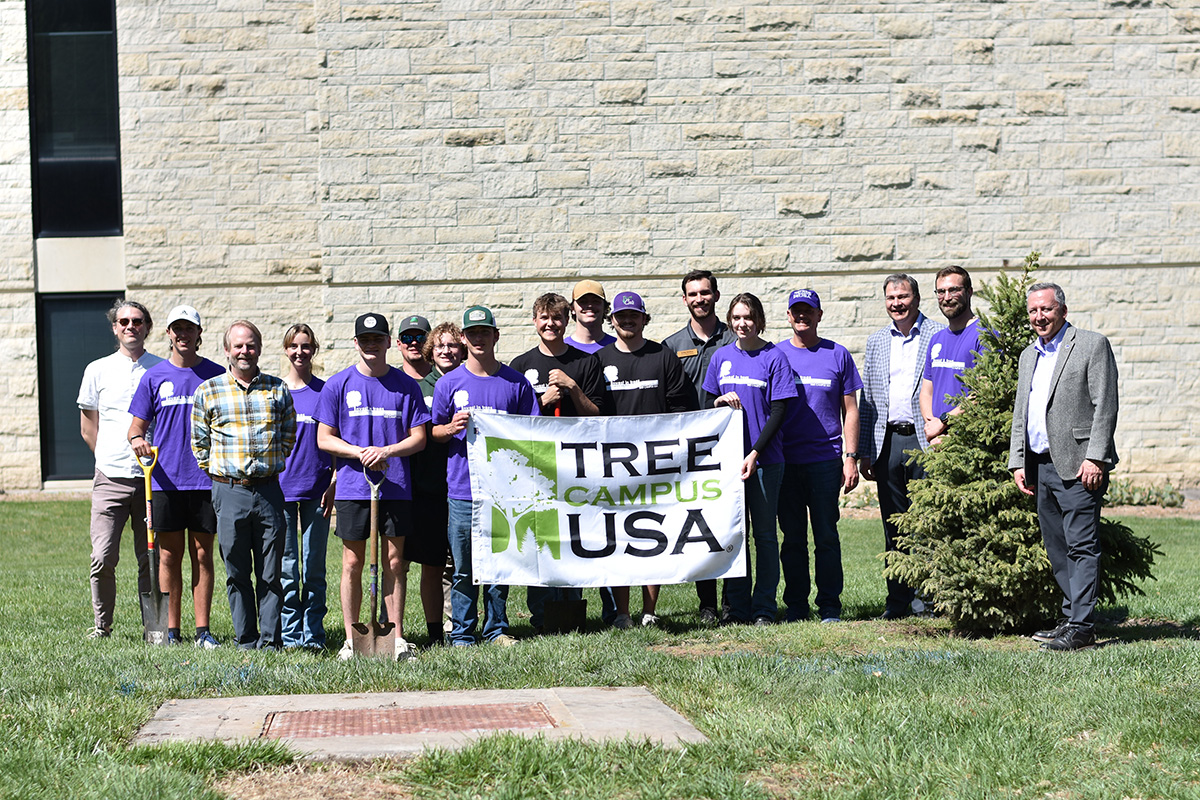
Roots of Research award honors 11 faculty with trees on campus
K-State's 2025 Roots of Research Faculty Honor Program will recognize 11 faculty members from disciplines across campus by planting commemorative trees in their...
Next-generation innovation
K-State is one of the nation's top patent-producing universities and has climbed to No. 83 in the Top 100 U.S. universities granted utility patents in 2025,...
From rivalry to results
K-State and KU may be fierce rivals on the field and on the court, but they’ve long been teammates in labs and Kansas communities, tackling problems that...