People with Purpose: Shirley Tung
Whether she's drawing lines between distant time periods or helping students find common ground in the classroom, connection is at the heart of Shirley Tung's work.

By Abbigail Marshall
Division of Communications and Marketing
Monday, March 30, 2026
For Shirley Tung, 17th- and 18th-century stories aren't just artifacts from the past, but rather tools for understanding the present.
A University Outstanding Scholar and associate professor in the Department of English, Tung examines how today's cultural dynamics mirror those memorialized in centuries-old literature, finding her purpose in uncovering human patterns and sparking conversation around shared experiences.
Q: What is a moment you saw a student's hard work pay off? How did you get to be a part of that story?
Tung: I will always remember, and be inspired by, the challenges that the students in my spring 2020 graduate course surmounted amid the early days of the pandemic.
The class centered on 18th-century life-writing and included very dense, lengthy readings. Rather than becoming disengaged or dispirited during the switch to remote instruction, the students transformed the course into an outlet for creative expression and human connection.
Together, my students and I shifted the class's focus from a historical study of the life-writing genre to a philosophical and personal exploration of writing about the human experience, especially amid significant global events. For example, in lieu of our regular weekly discussion board, we launched a project called "Journal of a Pandemic Week." Inspired by the life-writers we read, such as Samuel Pepys and James Boswell, the students kept a daily journal that we collaboratively edited at the end of the semester.
The project became a lifeline for all of us, allowing us both to process the experience of living through a global pandemic together as a community and to record it for posterity. The "Journal of a Pandemic Week" is now archived at the Hale Library in Special Collections.
Q: Besides a degree, what is one thing that every K-State student should take away from their time on campus?
Tung: Every K-State student should have an experience that pushes them outside of their comfort zone, strengthens their belief in their own capabilities and ultimately expands their sense of self. A university campus is one of the most intellectually and experientially rich environments in the world. Thus, it is the best place to discover something unexpected that ignites a secret thrill inside of you — whether it is taking a class unrelated to your field of study, joining a club or service organization, auditioning for a play or taking up a new sport or musical instrument.
Q: What is something you do behind the scenes that you wish more people knew about?
Tung: I wish that more people knew that being a professor is at least three separate jobs rolled into one. These "three jobs" all require different skill sets and can sometimes be at odds with one another. For me, my research job involves long, solitary hours scouring historical archives and intensely engaging with specialized scholarship.
My teaching job is the opposite of research, requiring energy, creativity and personability to make niche topics accessible, interesting and memorable for a general audience.
Last, but not least, my service job demands competency in organizational and administrative skills for strategic planning, problem-solving and policymaking, and requires responsibility for the mentorship and guidance of students. It is a constant balancing act to fulfill all three jobs to the best of one's ability, especially if one is passionate about each aspect of being a professor.
Q: How do you build connections with students?
Tung: I build connections with students by creating a respectful and community-oriented classroom environment where students become increasingly confident in their ability to participate in the production of knowledge.
During the first week of class, I facilitate an icebreaker activity that I've given the tongue-in-cheek title of "Battle of the Bad Thesis Statements." Using a pop song selected by the class, I randomly assign students to two groups and give them simple, drastically different interpretations of the song. The groups are then asked to defend their interpretations using the song's lyrics, musical arrangement and music video — for example, David Bowie's "Starman" is about an alien encounter or an encounter with a celebrity superstar.
From this seemingly frivolous debate, they learn that their class is a community of individuals with varying perspectives and approaches, and they begin to recognize these differences as assets in the creation of ideas. They discover that collaboration, civil and knowledgeable critique, and eventual balanced consensus are crucial aspects of creating scholarship. In my experience, I found that such debates, rather than sowing division, bring classes closer together, fostering shared openness and acceptance.
Q: What is a time a student interaction stayed with you long after the day ended?
Tung: During the last week of class, one of the students in my honors English class prepared a PowerPoint presentation for her classmates and me as a thank-you. The presentation was a humorous and touching retrospective of our semester together, but also revealed that the previous year she had survived a life-threatening condition.
She told everyone that she never expected to live, let alone attend college, so the honors English class and friendships she formed within it would always be precious to her. I often think of that student, her enthusiasm for life and for learning and how she showed me that the classroom can be a sanctuary amid dark and difficult times.
Q: How does your work transform lives in Kansas and around the world?
Tung: During a time marked by political divisiveness and the rise of artificial intelligence, literature put us back in touch with a universal humanity that unites us across cultures and time itself. Reading is a deeply transformative and social experience. Literature empowers us to imagine what it is like to walk a mile in another's shoes by exposing us to new ideas, places and points of view that enlarge the boundaries of our own minds. And, in turn, understanding the inner workings of characters in literature develops our social skills by honing our cognitive abilities to interpret, interact and respond to real-world situations with openness and empathy, making us better global citizens and human beings.
Through my work as a teacher and director of the English department's graduate literature program, I share my enthusiasm for literature — and all the surprising ways it is reimagined by popular culture — with K-State students. As a scholar who specializes in 17th- and 18th-century life-writing, I get to present and collaborate on research with academics across the globe, from the Centre for Life-Writing at the University of Oxford to Keio University in Tokyo, Japan.
Related Stories
People with Purpose: Adam Ahlers
A lifelong outdoorsman, Adam Ahlers invests hands-on in the future of wildlife conservation through both research and teaching.
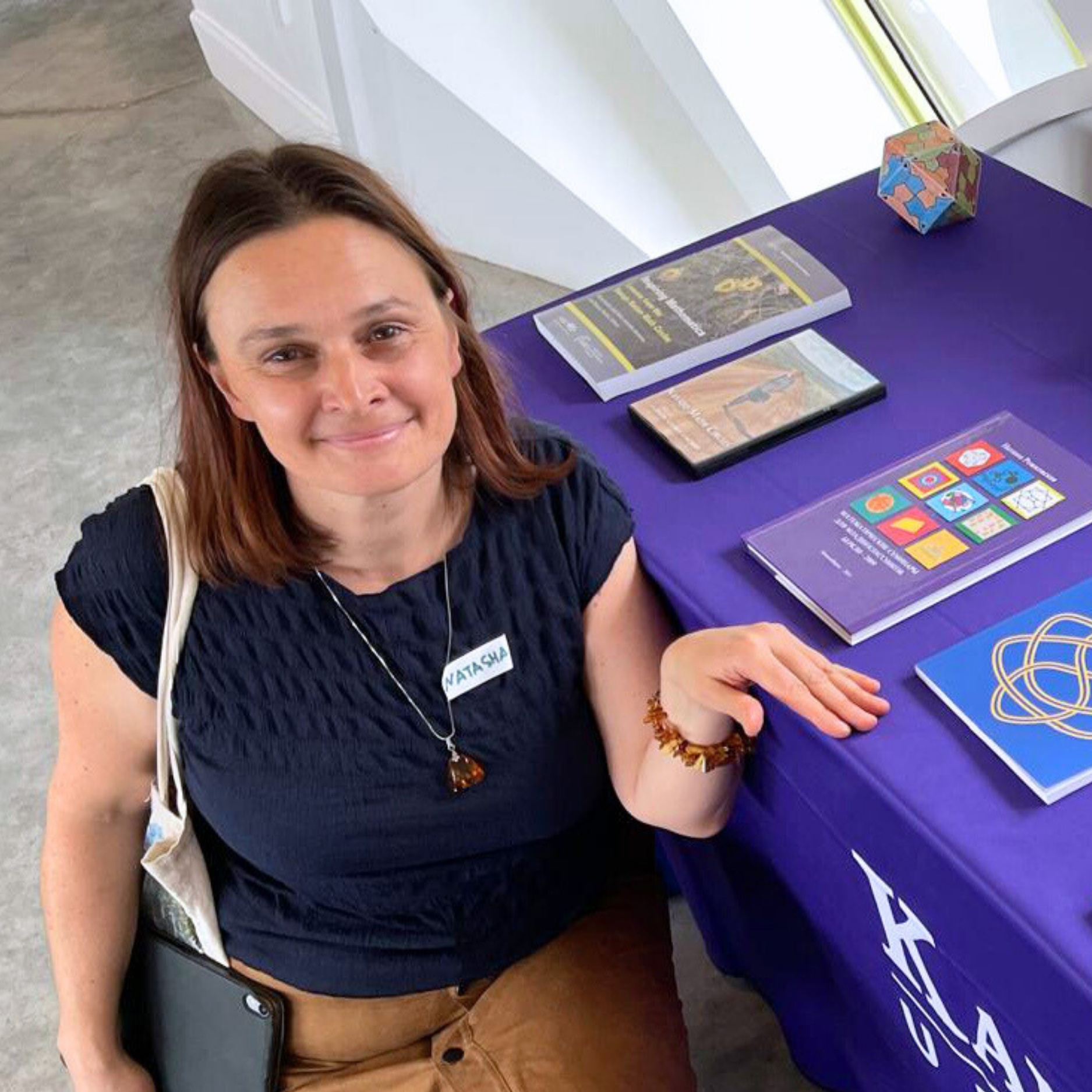
People with Purpose: Natasha Rozhkovskaya
Through teaching, outreach and interdisciplinary collaborations, Natasha Rozhkovskaya works to make mathematics more accessible, visual and inspiring for learners...

People with Purpose: Chuck Laughlin
As a McPherson County Extension agent focused on family and community wellness, Chuck Laughlin leads programming that helps residents build relevant life skills...