Severe Weather Preparedness Week: Tornado drill and Alerts test March 4
K-State's Office of Emergency Management invites you to participate in the National Weather Service's Severe Weather Preparedness Week, March 2-6, by reviewing your department's preparedness plans and emergency kits, and taking part in an upcoming tornado drill.
As part of the week, the university will test the K-State Alerts system following the statewide tornado drill at 10 a.m. Wednesday, March 4. K-State sirens and the K-State Alerts system will be activated, and Riley, Saline and Johnson counties will participate in the drill.
The university participates in the drill as an opportunity to both test our on-campus alert systems and to provide weather safety and education information to students, faculty and staff. The drill will be broadcast on NOAA Weather Radio All Hazards, as well as local news and radio stations.
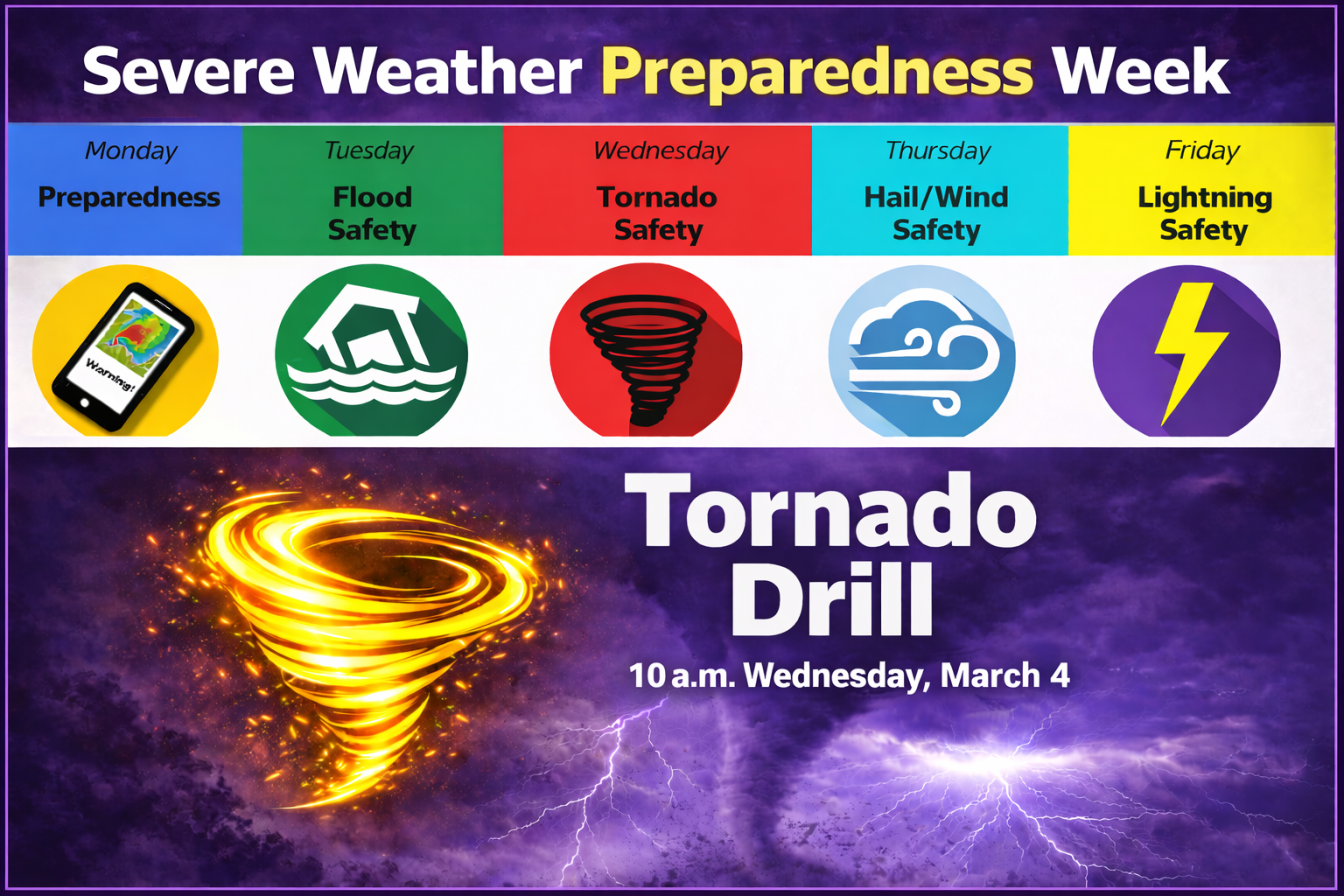
K-Staters are invited to review the following preparedness topics for the week:
Monday: Preparedness
Preparedness starts today. Review your emergency plans and update your emergency kit. Ensure you know how you will receive weather alerts and where you will go if severe weather threatens your area.
Resources
Preparedness begins before severe weather develops. Take time to review your emergency supplies and understand how you will receive alerts.
Tuesday: Flood Safety
Turn Around, Don’t Drown. Know your risk. Is your home, office or classroom in a floodplain? Could your usual travel route be impacted?
Resources
Wednesday: Tornado Safety
Kansas averages 95 tornadoes each year, with peak season between April and June. Participate in the 10 a.m. drill and identify the nearest severe weather shelter or safest location near your workplace or home.
Resources
Thursday: Hail and Wind Safety
Severe thunderstorms can produce damaging winds and large hail that impact trees, homes and vehicles. Understand the risks and protective actions before storms develop.
Resources
NWS Severe Thunderstorm Safety
Friday: Lightning Safety
Lightning strikes the United States approximately 25 million times each year and causes an average of 47 deaths annually. Every lightning strike has the potential to be deadly.
Resources
For additional historical severe weather information, view the NWS 2026 Kansas Severe Weather Awareness Information Packet.