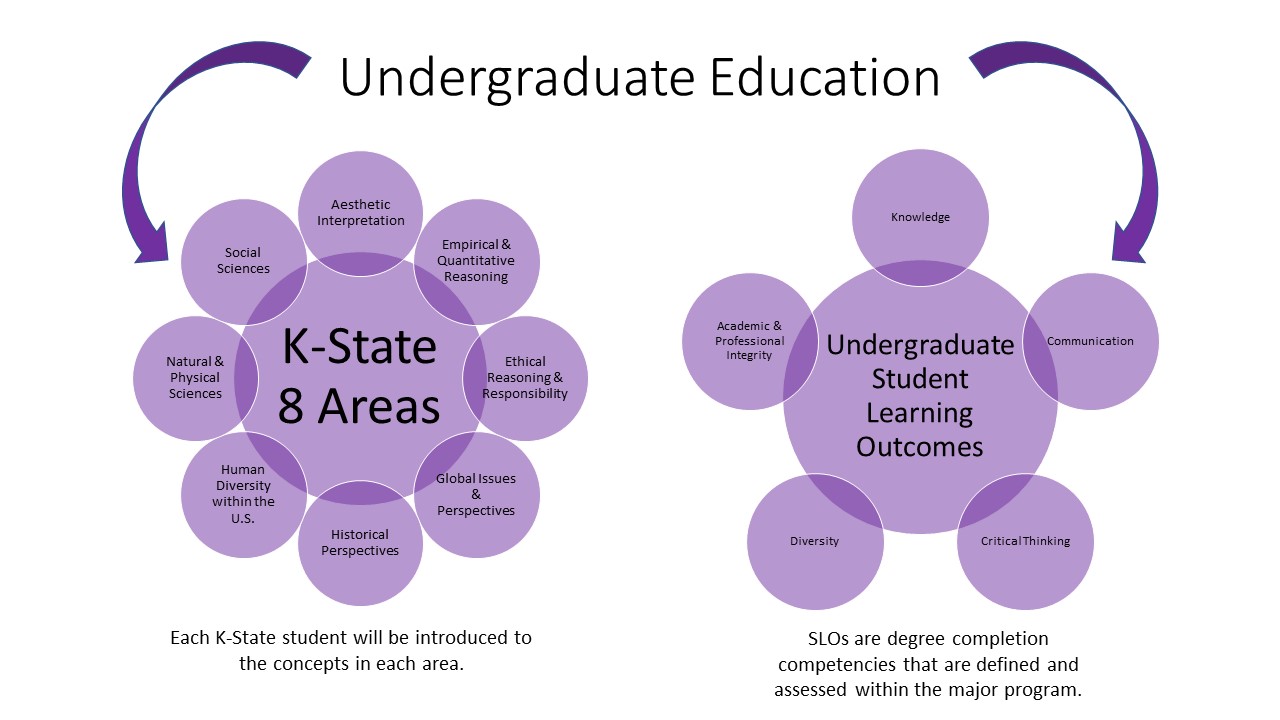
University General Education begins with the premise that learners want to increase their capacity to help with the improvement of life and to enjoy living more fully beyond the dimensions of their special careers. That assumption requires a different, but no less rigorous, design for UGE courses/experiences.
When faculty members submit courses/experiences to be approved for UGE credit, they are to describe learning processes and outcomes as well as content. Clear statements of the performance expected of students and the means of evaluating student learning or performance are to be indicated. UGE courses are usually designed with non-majors in mind, but some UGE equivalent courses are designed for majors and include significant advanced writing experiences.
The following criteria must be met.
For courses designed with non-majors in mind:
First, UGE courses and experiences are to be designed with the general education of non-major students in mind.
Second, all UGE courses and experiences designed with non-majors in mind are to incorporate the ideas of :
For upper-division courses designed for majors and with signigicant advanced writing experiences:
First, it's important to know that the colleges must have instituted the Optional UGE Equivalent in their UGE Programs before faculty members can submit these course proposals.
Second, all upper-division courses designed for majors must incorporate the three UGE benchmarks outlined above -- an active learning environment, experiential context for the matter to be studied, and the opportunity for the student to connect ideas.
Third, all upper-division courses designed for majors must include significant advanced writing experience. There must be intense frequent writing experiences for students, comparable to the writing norm for the discipline or the profession. Target audiences could include professionals, peers, and/or clients. Students will be given adequate feedback, written and/or oral, on content and expression. Following feedback, students must be given opportunities to apply the feedback as part of a comprehensive process, either in revision of original writing or in subsequent writing components.